SAFe Organizational Agility Assessment
Your Teams Are Agile. Is Your Organisation?
Your lean operations, strategy agility, and how deeply lean thinking extends beyond development determine whether the enterprise can actually respond to change. This assessment finds where that's working and where it isn't.


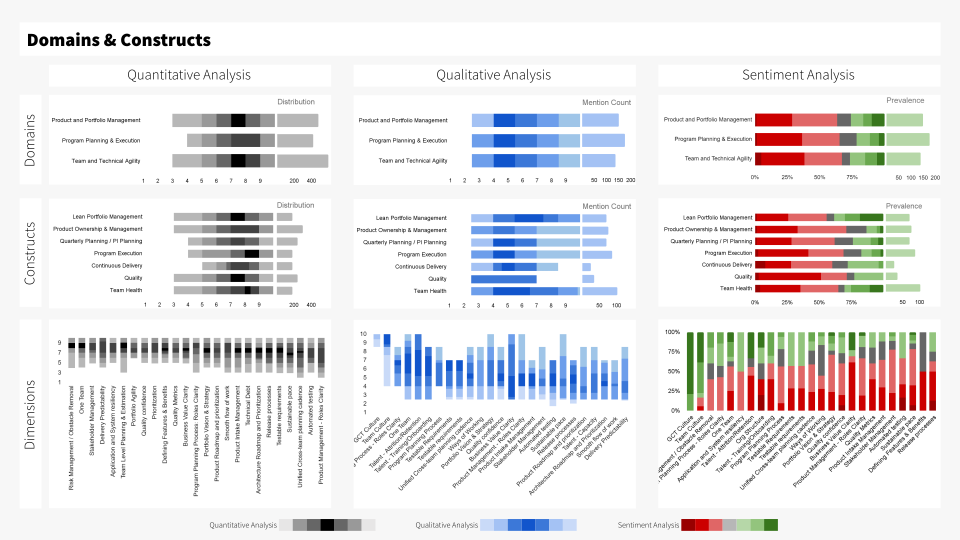
Where Agile Teams Meet Organisational Inertia
Most organisations have agile teams. The gap between team-level agility and enterprise-level responsiveness — where strategy changes fast, operations flow, and the whole organisation reorganises around value instead of protecting silos — that's where the real transformation challenge lives.

What We Evaluate
Domains that shape Organizational Agility
- Lean Thinking People and Agile Teams: How broadly lean-agile thinking extends — from cross-functional teams and trained business units to agile HR practices, optimised workspaces, and hiring for team fit and cultural agility.
- Lean Business Operations: Your value stream visibility — from defined development and operational value streams to WIP limits, batch size optimisation, and customer-centricity across internal and external customers.
- Strategy Agility: How quickly your organisation adapts strategy — from continuous market research and customer feedback to hypothesis-driven innovation, sunk-cost discipline, and fluid reorganisation around value creation.
Proven Business Outcomes
Organisations that act on findings see movement in the areas that matter to their business:
Enterprise-Wide Agility
Agile practices extending beyond development into business operations. The whole organisation responds to change, not just the engineering teams.
Strategic Responsiveness
Faster response to market changes because strategy flows through connected kanban systems, not annual planning cycles.
Value Stream Optimisation
Visible, measured, and continuously improving value streams. Bottlenecks, delays, and WIP are managed, not hidden.
Cultural Alignment
Lean thinking embedded in hiring, operations, and leadership — not confined to the development organisation.
Sunk-Cost Discipline
Strategic decisions based on future value, not past investment. The organisation pivots when the data says to, regardless of what's already been spent.
Customer-Centric Operations
Internal and external customer focus across all value streams. Teams understand the operational value streams they support.
Our Assessment Approach
Calibrated discovery, multi-lens analysis, diagnosis with direction
Step 1
We start with where you are, not where a framework says you should be.
We talk to the people who make investment decisions and the people who live with those decisions. Most organizations describe their process one way on paper and operate differently in practice. This is very common. We find out what’s actually happening.

Step 2
No two assessments measure the same things.
An organization where good ideas take nine months to get funded needs different measurement than one where everything gets approved but nothing finishes. We select what to measure based on your situation, then collect the numbers, the qualitative patterns, and the sentiment data.
Step 3
Findings without a next step are just an expensive mirror.
We identify the changes that will make the biggest difference. Every recommendation connects to the business outcomes your leadership cares about — revenue, cost, time to market, customer satisfaction — not framework compliance scores.
Comprehensive Reports
Enterprise leaders don't need more dashboards — they need someone to tell them where organisational agility actually breaks down. Our reports give clear sight lines from current state to concrete next steps.
Quantitative, Qualitative and Sentiment Analysis
We combine metrics, context, and emotional indicators to give you a complete picture of your organization.
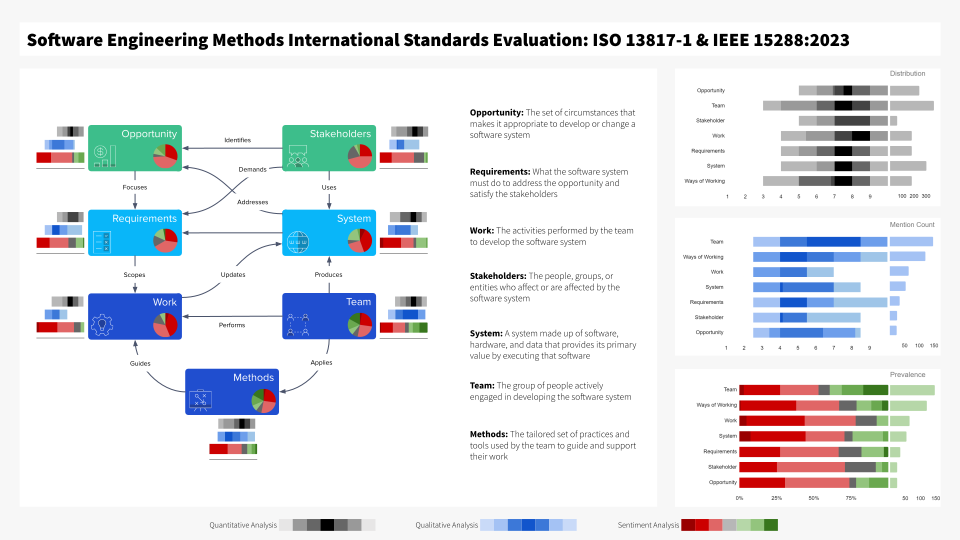
- The numbers: How long decisions take, how much work is in flight, where money goes, whether investments deliver what was expected.
- What your people say: Decision-making patterns, friction points, workarounds, and the things that numbers don’t capture. This is where the real picture emerges — people in the same room often don’t realize they disagree about how things work.
- How your people feel: Whether stakeholders trust the investment process, whether leaders feel they have authority to act, and whether teams believe their work connects to something that matters. Execution capability lives in confidence as much as in process.
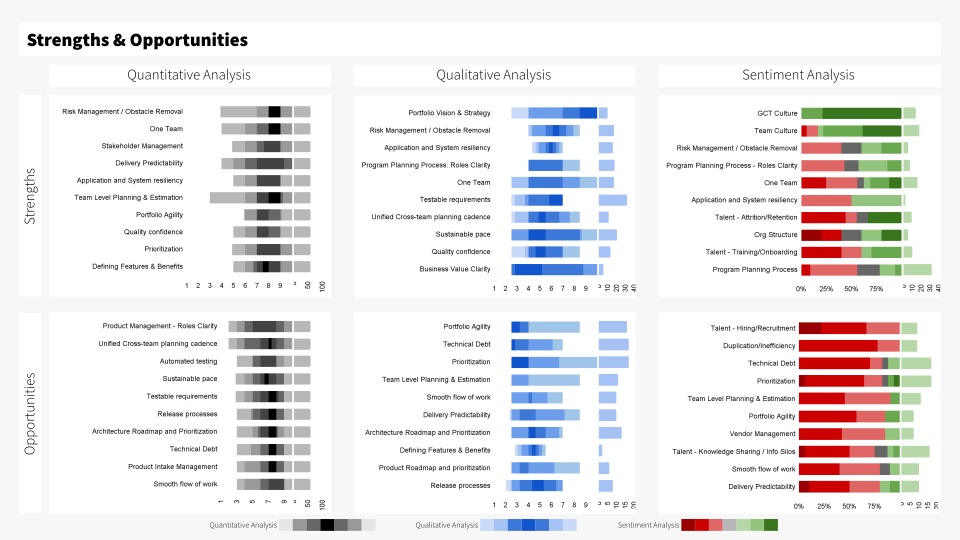
Strengths and Opportunities
We combine multiple analysis perspectives to show where you excel and where to improve.
- Strengths with specificity: Not “your teams are engaged” but “your operational leaders already make budget decisions informally — formalize that and you remove three layers of approval.”
- Opportunities mapped to actions: Each gap connects to a specific change — not a generic recommendation. “Reduce approval layers” with a clear mechanism, not “improve governance maturity.”
- Balance across domains: Where investment capability outpaces decision-making readiness (or vice versa), we surface the imbalance so you invest effort where it compounds.
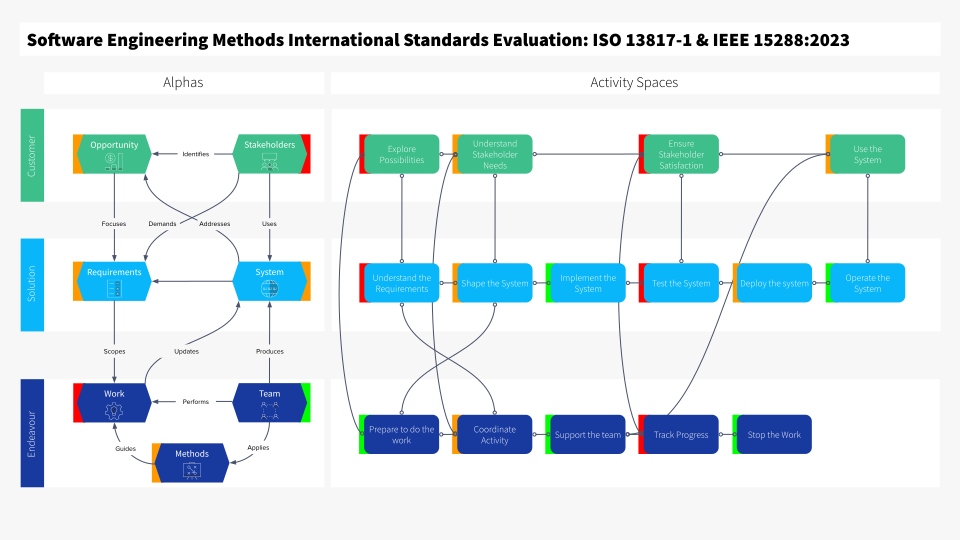
Software Engineering Methods
We assess your development practices through a universal lens that works across all methodologies and frameworks.
- Delivery capability: How effectively your teams translate funded initiatives into working products — whether they can actually deliver on the autonomy that faster investment decisions provide.
- Technical standards at scale: How architectural standards enable consistency across teams without creating bottlenecks — the technical counterpart to financial governance.
- Continuous delivery maturity: Whether your teams can validate investment hypotheses incrementally, or whether batch releases undermine the entire model of incremental funding.
Detailed Analysis
Beyond summary findings, we examine the structural patterns that determine whether organisational agility develops or plateaus.
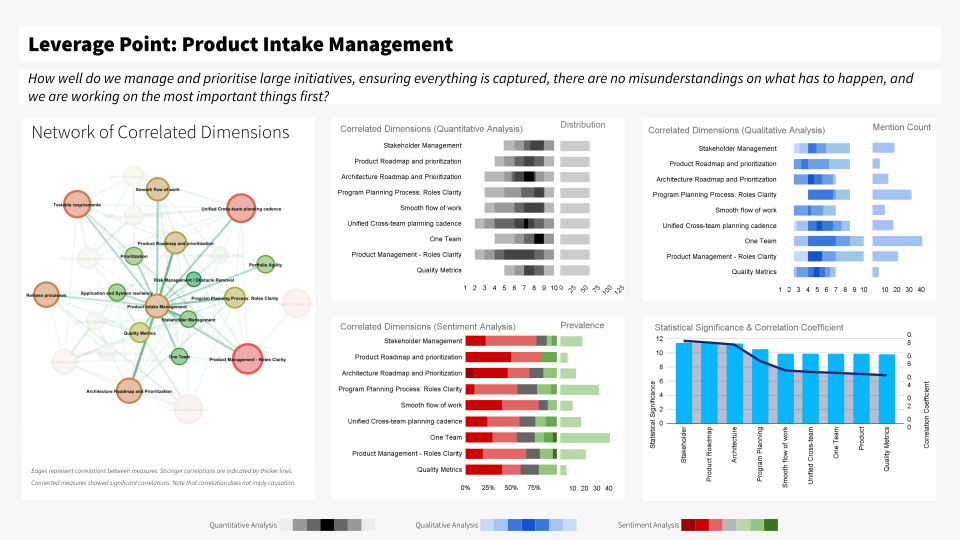
Network Analysis
We map how your organizational capabilities connect and identify where focused improvements will have the greatest impact.
- Decision flow mapping: How investment decisions propagate — which people accelerate execution and which create queues. Most organizations discover two or three individuals who are bottlenecking decisions that should be made elsewhere.
- Cross-team dependencies: Where teams share platforms or markets, dependencies emerge that regular coordination meetings alone won’t resolve. We map interaction patterns to surface structural gaps.
- Strategic alignment flow: How strategic intent travels from leadership to execution — and where it degrades. If nobody can connect their current work to a strategic priority, the connection is broken.
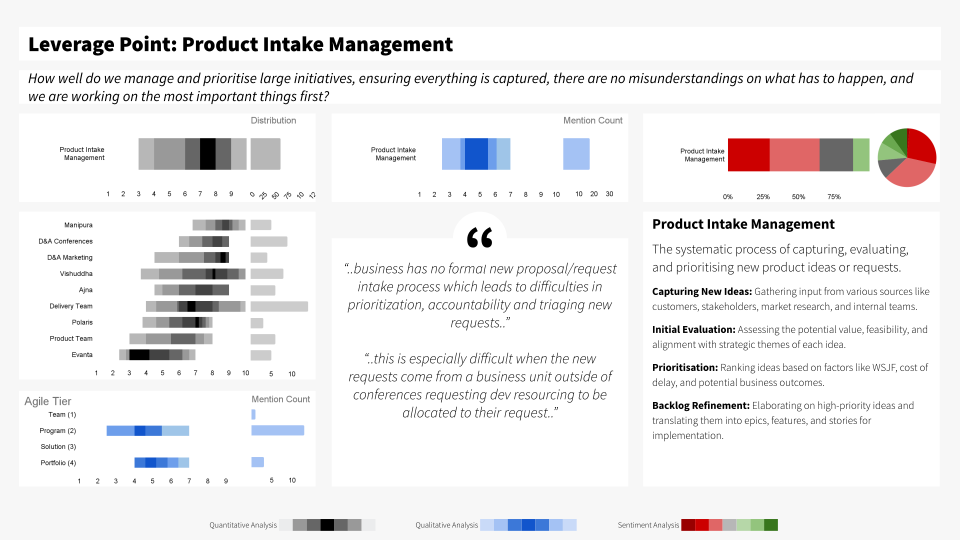
Leverage Point Analysis
We analyze how critical improvement areas affect different teams and roles.
- Highest-impact changes: The two or three interventions that produce cascading improvement — the investment policy change that unlocks three governance improvements, the capacity limit that clears the dependency backlog.
- What’s actually in the way: Slow approvals? Analysis paralysis? Cross-team coordination? Decision overhead? The real constraint determines what to fix first.
- Readiness-weighted prioritization: A correct improvement the organization can’t absorb creates resistance, not progress. We sequence by readiness, not just impact.
Change Roadmap
Diagnosis becomes direction. Everything from here translates findings into executable change — sequenced to build momentum, sized to minimise disruption, connected to the enterprise outcomes your leadership defined at the start.
Change Backlog and Strategy Map
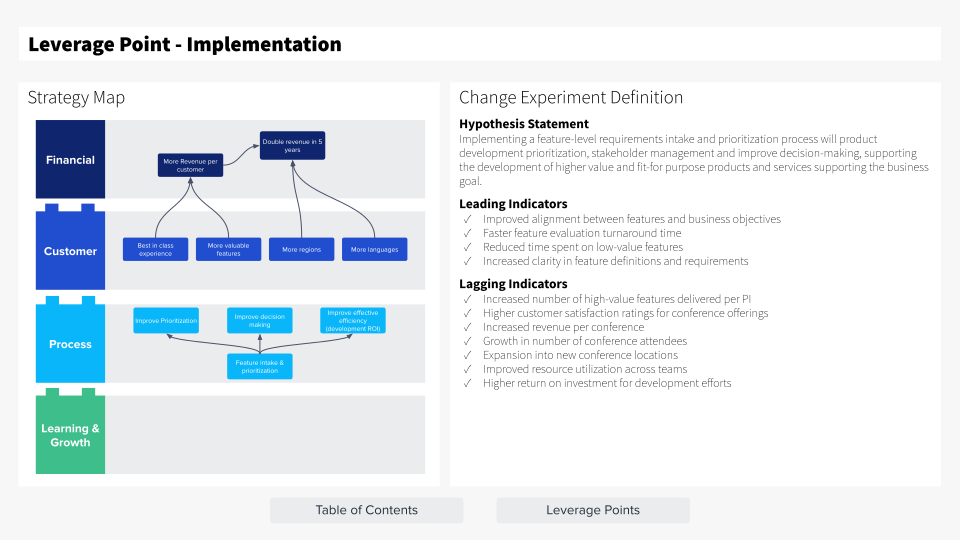
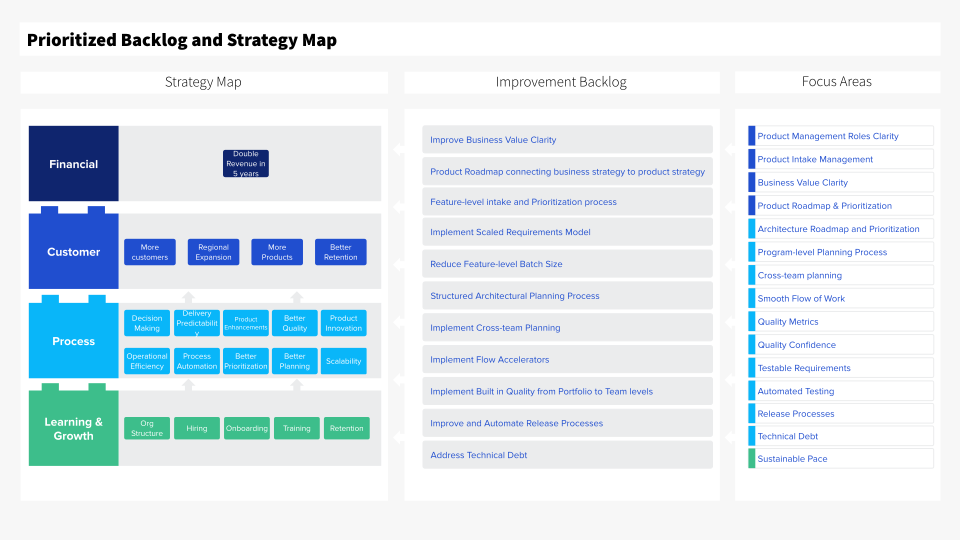
We identify each high-impact, low-effort leverage point and organize these points in a prioritized backlog that aligns with the business objectives defined in the strategy map.
- Change backlog: Findings converted into a prioritized list of improvement initiatives with clear acceptance criteria — managed with the same discipline we assessed.
- Strategy map: Visual linkage from what we found through what to change to what it delivers — making the reasoning behind every recommendation traceable to a business outcome.
Implementation Projects
We translate insights into targeted improvements that align with your business goals.
- Quick wins: Changes you can make within existing authority — decision boundaries, capacity limits, business case templates — demonstrating value in the first 30 days.
- Structural improvements: Investment model transitions, coordination redesign, PMO capability shifts — time-boxed with incremental validation.
- Capability development: Targeted skill building for the people who need to operate differently as a result of the changes.
Change Roadmap
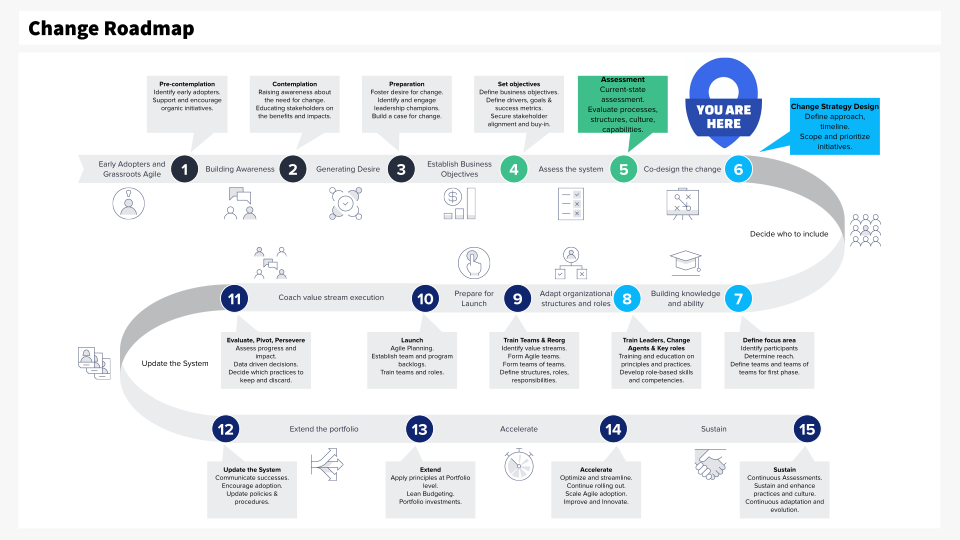
The Change Roadmap transforms our analytical insights into actionable initiatives.
- Sequenced for dependency and readiness: Investment changes precede governance redesign because decision boundaries need budget context. Coordination improvements precede performance metrics because you need the system before you measure it.
- Milestone-based validation: Not “implement Lean Budgets” but “operational leaders make three autonomous funding decisions within agreed boundaries this quarter.”
- Adaptive by design: Review at defined intervals, adjust sequence based on what the organization learns, move effort to where it produces results.
Minimal Disruption by Design
Our process fits into how your organisation already operates — not a parallel workstream competing for executive attention.
Discovery
Runs alongside your normal cadence — we observe real meetings, not staged ones.
Data Collection
Integrates with your existing tools — we work with what you already capture.
Analysis
Delivers within weeks, not months — because conditions change and stale findings mislead.
Recommendations
Sized for your capacity to absorb change.
Executive Readout
A single session covers findings, highest-impact changes, and the proposed roadmap.
Self-Service Insights
Interactive reports let you explore data by team, dimension, or tier — on your schedule.
Industry Expertise and Certifications
Our practitioners hold SPC, Enterprise Coaching, and Lean Portfolio Management credentials with direct experience guiding enterprise transformations across financial services, technology, healthcare, and manufacturing.


Customer Testimonials
When one size doesn’t fit all: See how organisational agility assessment revealed what transformation programs missed
Rachel Thornton, VP of Portfolio Management, Meridian Financial Services
We thought our investment model was modern because we’d stopped writing traditional business cases. The assessment showed us every team still queued for the same centralized approval — we’d changed the paperwork but not the decision structure.
David Okafor, CFO, Vantage Health Systems
The governance findings were uncomfortable but accurate. We had decision boundaries on paper and approval committees in practice. The assessment gave us the evidence to redesign around spending limits and return thresholds instead of approval chains.
Sarah Chen, Head of Operations, Atlas Technology Group
What set this apart was the work-in-progress analysis. No capacity limits, initiatives stuck in analysis for months, nobody could tell me our actual throughput. The analysis showed us which three changes would unlock the rest.
Marcus Lindqvist, SVP of Enterprise Strategy, Nordic Industrial Partners
Our strategic priorities existed in a deck nobody referenced when making investment decisions. The assessment mapped exactly where strategy-to-execution broke down and gave us a sequenced roadmap to fix it.
Faq
Common Concerns
Answers to the questions enterprise leaders ask before engaging.
Development agility is necessary but insufficient. If strategy still changes annually, budgets are locked, and business operations run on batch processing, the enterprise can’t respond to change regardless of how agile the teams are.
We focus on three measurable domains: how deeply lean thinking extends beyond development, how well value streams flow, and how quickly strategy adapts. Each has specific observable practices.
We don’t ask them to adopt agile ceremonies. We examine whether their operations create or prevent flow — visible queues, batch sizes, customer feedback loops. Business leaders care about those outcomes regardless of methodology.
2-3 weeks. Data collection via a 15-minute survey per participant, followed by analysis and a comprehensive report with recommendations.
Org health assessments measure sentiment and generic capability. This assessment measures specific Lean-Agile practices — value stream flow, strategy adaptation speed, and lean operations maturity — against a structured framework.
Contact our team to schedule a call. We’ll understand your specific organisational agility challenges, provide a customised proposal, and handle the implementation.