SAFe Framework
A comprehensive collection of articles covering the Scaled Agile Framework; from Lean Portfolio Management and PI Planning to Team Technical Agility and Organizational Agility.

AI-Native SAFe: Inside the 2026 Framework Update
AI-Native SAFe: Inside the 2026 Framework Update Scaled Agile has rebuilt its flagship framework around a bet most enterprises cannot yet cash: that AI belongs inside the operating model, not bolted onto it. AI-Native SAFe is that bet. This guide goes inside the 2026 framework update and the operating model for the AI era; what changed, what it costs, and how to decide. What Is AI-Native SAFe? Inside Scaled Agile's June 2026 Release AI-Native SAFe is the new version of the Scaled Agile…

SAFe TTA Case Studies: Real-World Success Stories
SAFe TTA Case Studies: Real-World Success Stories Case Studies and Examples of SAFe adoption crowd the search results, but most report only that teams became more agile: not whether the organization delivered more, faster, or with fewer defects. A cable television company that scaled Scrum with SAFe across 150 people found the real evidence: release cycles fell from twelve-plus months to four, bounded by the physical cost of pushing firmware to eleven million set-top boxes, not by any planning…
Coaching SAFe TTA: Scaling Agile Across the Enterprise
Coaching SAFe TTA: Scaling Agile Across the Enterprise Add a coach to every team on an Agile Release Train and coordination still breaks down; because coaching and scaling Team and Technical Agility is not a bigger version of coaching one team. The unit that needs coaching changes: from a team's behaviour to the quality of interactions, dependencies and technical flow across a whole network of teams. What Coaching and Scaling Team and Technical Agility Means in SAFe Coaching and scaling Team…
The Inspect and Adapt Workshop: PDCA and Learning Culture at ART Scale
The Inspect and Adapt Workshop: PDCA and Learning Culture at ART Scale Does your ART's Inspect and Adapt event change anything, or does it just produce a tidy backlog nobody funds? Most Inspect and Adapt sessions fail quietly: teams surface real problems, write real improvement stories, and watch them evaporate before the next PI Planning because the people with budget authority never left the room. What Is the Inspect and Adapt Event in SAFe? Inspect and Adapt is the ART-level event held at…
Restructuring the Agile Release Train for AI: Sizing & Topology
Restructuring the Agile Release Train for AI: Sizing & Topology Most organizations restructuring the Agile Release Train for AI start with an org chart, before naming what changed: a second flow of model training, deployment, and drift response now runs through the same value stream as feature delivery, and nobody drew the boundaries around it. Sizing, topology, and the Release Train Engineer's own job all move because of that fact. The Agile Release Train, and Why AI Forces a Structural…

Flow Predictability
Flow Predictability A portfolio can post 95 percent ART predictability for three straight Program Increments and still miss every date on its roadmap. Flow Predictability is the SAFe metric built to catch that gap, and most Lean Portfolio Management teams read only half of what the number is telling them. What Is Flow Predictability in SAFe Lean Portfolio Management? Before the calculation, the healthy band, or the anti-patterns, the term needs a fixed definition as the anchor for everything…

Role-Specific Principle Application (RTE, PO, SM, Architect, Exec)
Role-Specific Principle Application (RTE, PO, SM, Architect, Exec) Most people learn SAFe roles as a checklist: what a Release Train Engineer does, what a Product Owner owns, what a Scrum Master facilitates. That checklist gets the causal direction backwards. Role-Specific Principle Application (RTE, PO, SM, Architect, Exec) starts from the ten Lean-Agile principles a role inherits, then asks what changes when a specific person, in a specific title, applies one of them under real constraints:…
Inherited vs Invented: Per-Principle Intellectual Lineage Audit
Inherited vs Invented: Per-Principle Intellectual Lineage Audit SAFe's principles page opens its ten-principles section with a quote from W. Edwards Deming, a direct admission that the framework compiles existing thought. Yet training decks, consultant blog posts, and even secondary SAFe commentary routinely credit the wrong decade, the wrong book, or the wrong person for ideas the framework borrowed openly. This inherited-vs-invented audit checks every one of SAFe's ten Lean-Agile principles…
SAFe Framework Version History
SAFe Framework Version History Ask a SAFe consultant which version their client runs, and the frank answer is usually two numbers, tracked separately, neither of which is the framework's ten principles. SAFe Framework Version History looks like a straight timeline from the outside: it isn't, and the axis most explanations flatten out is the one that actually matters. SAFe Version History: How Ten Immutable Principles Survived Six Major Framework Releases Dean Leffingwell, co-founder of Scaled…
Competing Agile Frameworks: LeSS, Kanban, Scrum, DA
Competing Agile Frameworks: LeSS, Kanban, Scrum, DA Most comparisons of SAFe against LeSS or Scrum-native scaling start in the wrong place; they line up feature lists before anyone asks whether the organization has decided what kind of team it's building in the first place. Ryan Nelson and Thomas Davenport's 2026 Harvard Business Review argument shows why that ordering fails: a scaling framework governs how permanent product teams coordinate, but if the organization is still funding temporary…

Governance-as-a-Service: The Missing Layer in SAFe AI Compliance
Governance-as-a-Service: The Missing Layer in SAFe AI Compliance Most enterprises running agents inside a SAFe train have a governance policy and nothing that enforces it: the document exists, the agent acts anyway. Governance-as-a-service, the missing layer between AI agents and SAFe compliance, replaces the PDF reviewed once a quarter with an enforcement layer that watches and blocks in real time. The Agent Governance Gap: Why Policies on Paper Stopped Working AI agent governance is the set…
Organize Around Value
Organize Around Value Most reorganizations that call themselves value-stream transformations never touch the mechanism that actually blocks flow: the org chart underneath the new labels. Teams get renamed Agile Release Trains, roadmaps get renamed epics, and the same handoffs that stalled work under the old structure persist intact; because Organize Around Value is a structural claim, and renaming a department doesn't make it true. What Organize Around Value Means as SAFe Principle #10 SAFe's…
SAFe and Lean: TPS, Toyota, and the Lean Heritage
SAFe and Lean: TPS, Toyota, and the Lean Heritage Ask a Lean-Agile coach where Lean began, and most name Toyota. That answer skips three decades. SAFe and Lean: TPS, Toyota, and the Lean Heritage actually opens in a Michigan auto plant in 1913, and the fact that gets buried, what Ford's system couldn't do, explains why every SAFe economic-view conversation still runs into the same wall today. Where Lean Manufacturing Began: Henry Ford's Flow Production at Highland Park Lean manufacturing's…

Principle-Practice Diagnostic: Symptoms of Principle Violations
Principle-Practice Diagnostic: Symptoms of Principle Violations A SAFe train can pass every practice audit on the books and still violate half its principles. In fact, most can. The scorecard checks whether ceremonies happened, not whether Take an Economic View or Apply Systems Thinking ever shaped a real decision. A principle-practice diagnostic closes that gap: it traces the symptoms of principle violations back to the specific principle each one corrupts. Why Compliant SAFe Practice Doesn't…
Missing Principles: What SAFe Left Out
Missing Principles: What SAFe Left Out Ask a room of certified practitioners whether SAFe's ten principles cover everything Agile and Lean thinking has to offer, and most will say yes: the list is official, so it must be complete. It isn't: two Agile Manifesto principles have no SAFe counterpart, a validated organizational-psychology finding never made the synthesis, and a named critique of SAFe's own structure argues the framework contradicts one of its own ten. Tracing the missing principles…

SAFe Implementation Case Studies
SAFe Implementation Case Studies SAFe implementation case studies are rhetoric before they are proof: a quoted executive, a named company, a bulleted list of percentages, and by the time a reader reaches the numbers the story has already done its persuasive work. Get the reading wrong, and a portfolio sponsor builds a business case on a result nobody can actually attribute to the framework it names. What a Case Study Can, and Can't, Prove A case study can show that a named organization…

Agile Manifesto and SAFe’s Relationship to Foundational Agile
Agile Manifesto and SAFe's Relationship to Foundational Agile Scaled Agile's own Product Owner page quotes the Agile Manifesto's principle on business people and developers working together daily, then defines a permanent, full-time role the document's authors never specified: the clearest evidence that even SAFe's official pages can't decide whether they're honoring the Agile Manifesto and SAFe's relationship to foundational Agile or quietly rewriting it. The Agile Manifesto's Origins: Who…
Apply Cadence, Synchronize with Cross-Domain Planning
Apply Cadence, Synchronize with Cross-Domain Planning Cadence and synchronization get folded into the same habit, the standing two-week rhythm, the recurring status call, and that habit is why coordination stalls the moment two teams depend on each other. Apply Cadence, Synchronize with Cross-Domain Planning, the seventh of SAFe's ten Lean-Agile Principles, treats them as two separate mechanisms solving two separate problems; collapsing them turns a working Planning Interval into a scheduling…

Apply Systems Thinking
Apply Systems Thinking Most SAFe transplants fail after the ceremonies are already running: Iterations get planned, PI boxes get filled, the org chart matches the training deck; yet delivery stalls at the same handoffs as before. Apply Systems Thinking is the principle everyone recites and almost nobody applies, because applying it means managing the relationships between parts, not policing the parts themselves. What Apply Systems Thinking Means as SAFe Principle #2 Principle #2 of the ten…
SAFe Certifications and Training Ecosystem
SAFe Certifications and Training Ecosystem Passing a SAFe exam demonstrates you can pass a SAFe exam: not that you can run a Program Increment, coach a stalled Release Train, or rescue a value stream nobody trusts anymore. The SAFe Certifications and Training Ecosystem now spans four separate credentials, a global network of training partners, and a documented 60-day exam window paired with Scaled Agile's own advice to sit the test within 30 days. The credential still hasn't answered one thing.…
Unlock the Intrinsic Motivation of Knowledge Workers
Unlock the Intrinsic Motivation of Knowledge Workers Most leaders treat Unlock the Intrinsic Motivation of Knowledge Workers as license to remove management; hand out autonomy, flatten the chart, and expect self-direction to fill the gap. SAFe Principle #8 makes a narrower, more specific claim: extrinsic rewards measurably degrade performance on the heuristic, open-ended work that fills most knowledge workers' days, and the fix runs through what leaders actually delegate, not through how far…

Assume Variability; Preserve Options
Assume Variability; Preserve Options Assume Variability; Preserve Options reads like permission to stall; teams cite it to avoid choosing anything. Read the source correctly and it does the opposite: it names the mechanism that decides which option persists and exactly when the set finally narrows. What Assume Variability; Preserve Options Means as SAFe Principle #3 Assume Variability; Preserve Options is the third of the ten SAFe Lean-Agile Principles, and it states that solution development…

SAFe Principles Anti-Patterns
SAFe Principles Anti-Patterns Most SAFe transformations fail from inverting the economic logic their own ceremonies exist to serve: the exact definition of SAFe Principles Anti-Patterns. Most SAFe transformations fail from inverting the economic logic their own ceremonies exist to serve: the exact definition of SAFe Principles Anti-Patterns. A team can hit full PI Planning attendance and still run principle theater that caps velocity for years. What Is SAFe Principles Anti-Patterns? SAFe…

Why SAFe Principles Fail
Why SAFe Principles Fail Most SAFe transformations don't collapse from missing ceremonies; they collapse while every ceremony still runs on schedule. Most SAFe transformations don't collapse from missing ceremonies; they collapse while every ceremony still runs on schedule. Why SAFe Principles Fail usually traces back to a simpler defect: the ten founding principles never touch a single decision, so PI Planning, System Demos, and Inspect and Adapt keep the calendar full while WSJF quietly…

Base Milestones on Objective Evaluation of Working Systems
Base Milestones on Objective Evaluation of Working Systems A Program Increment can hit every date on the roadmap and still fail the business it serves: a phase-gate milestone proves only that a calendar turned; the system underneath can still be broken. Base Milestones on Objective Evaluation of Working Systems is SAFe's fifth Lean-Agile Principle, and it exists because teams that satisfy a schedule while the system stays broken cost organizations far more than teams that simply miss a date.…
Take an Economic View
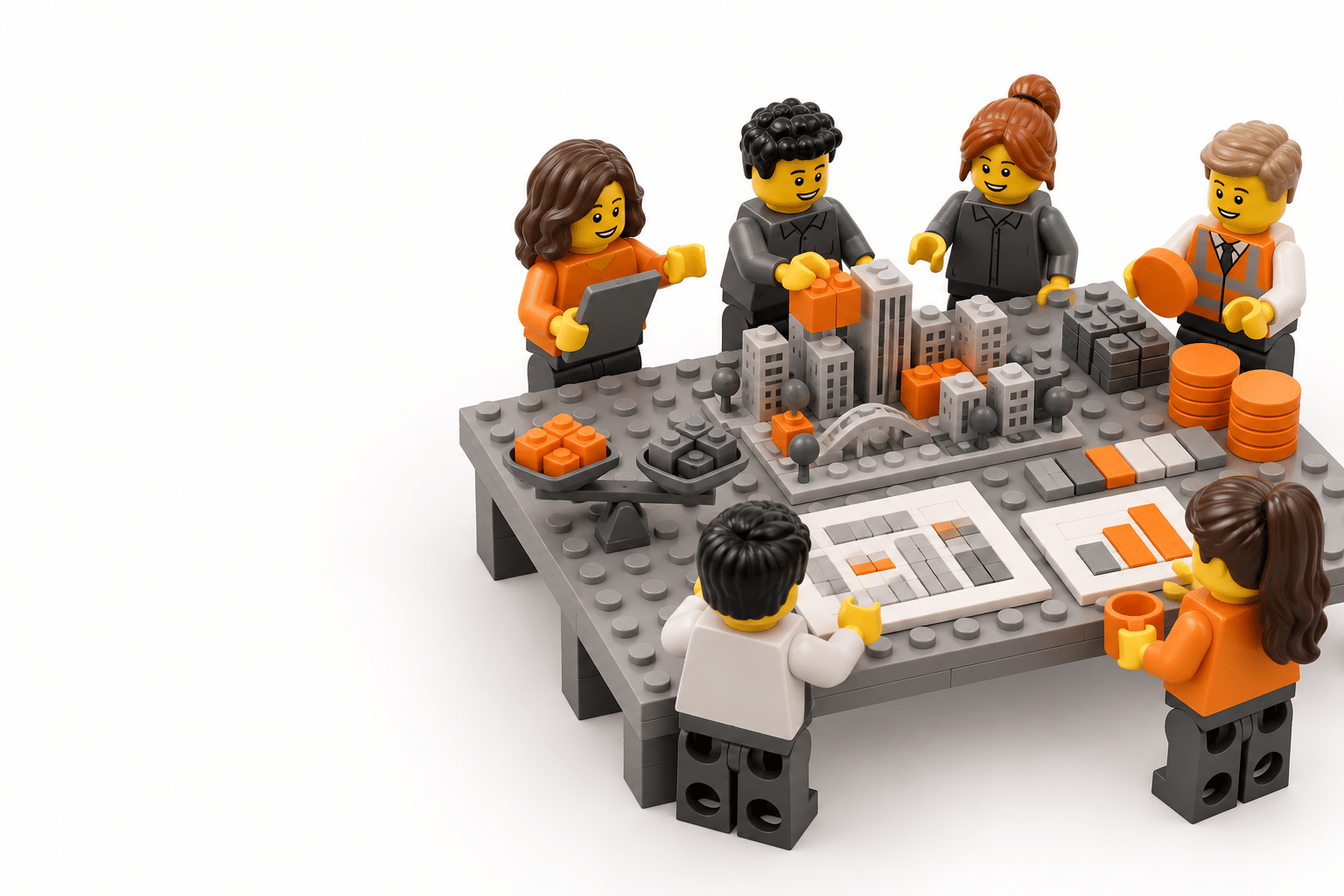
Take an Economic View Every SAFe rollout can recite Principle #1: Take an Economic View. Few can name the last sequencing decision it actually changed; and that gap between reciting a principle and deciding through one is where budgets, backlogs, and PI Planning quietly shift back to whoever argues loudest. What Taking an Economic View Means in SAFe Take an Economic View is the first of the SAFe Lean-Agile Principles: deliver value early and often while operating inside a comprehensive…
Make Value Flow Without Interruptions
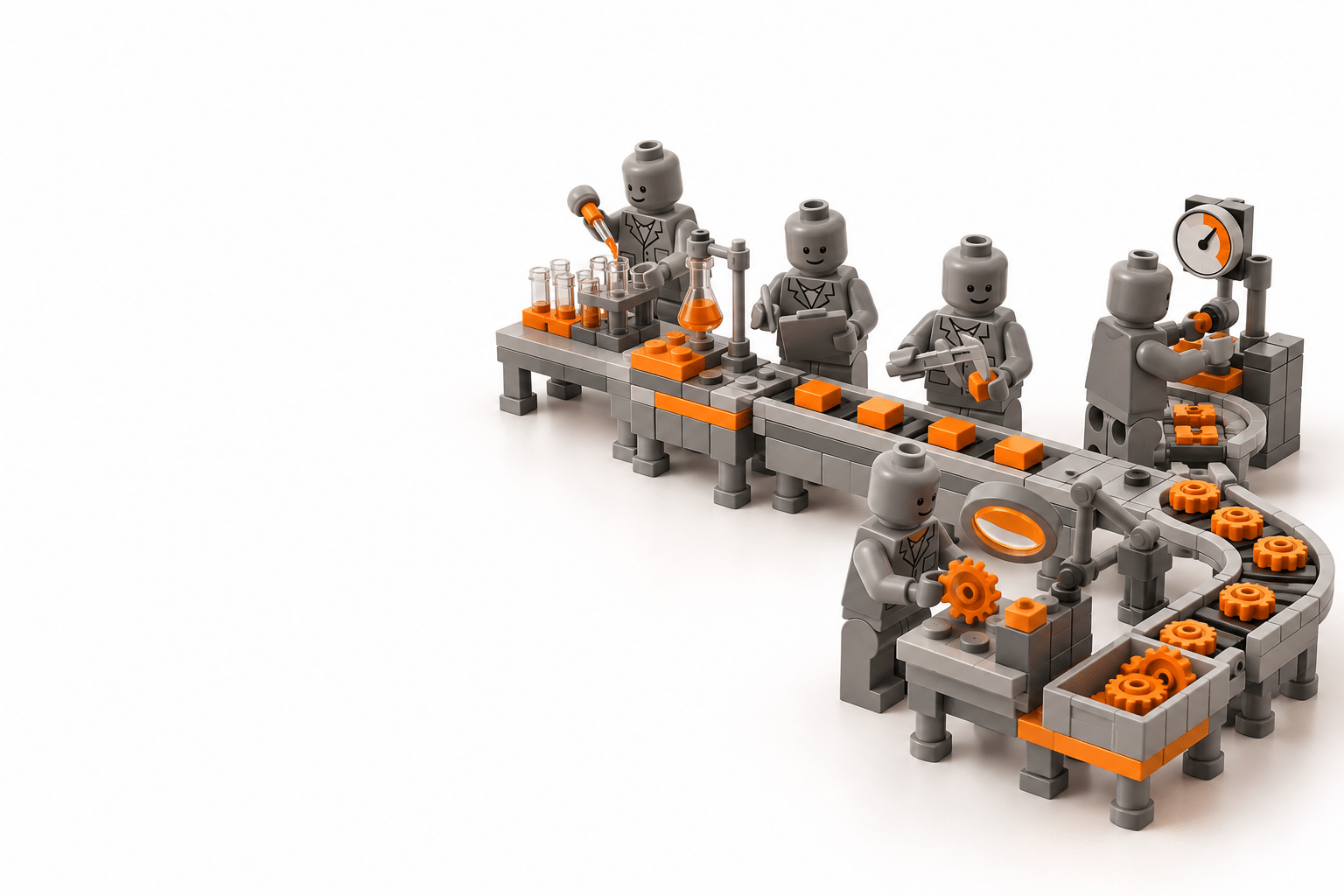
Make Value Flow Without Interruptions A team can hit every Iteration Goal and still violate Make Value Flow Without Interruptions, because SAFe's sixth Lean-Agile Principle measures how work moves through the whole value stream, not how busy any single team stays. Most Agile Release Trains chase local velocity while epics sit motionless in queues nobody is watching. What Make Value Flow Without Interruptions Means as SAFe Principle #6 SAFe defines flow as "a smooth, linear, and fast movement…
Principle Tie-Breakers: When SAFe Principles Conflict
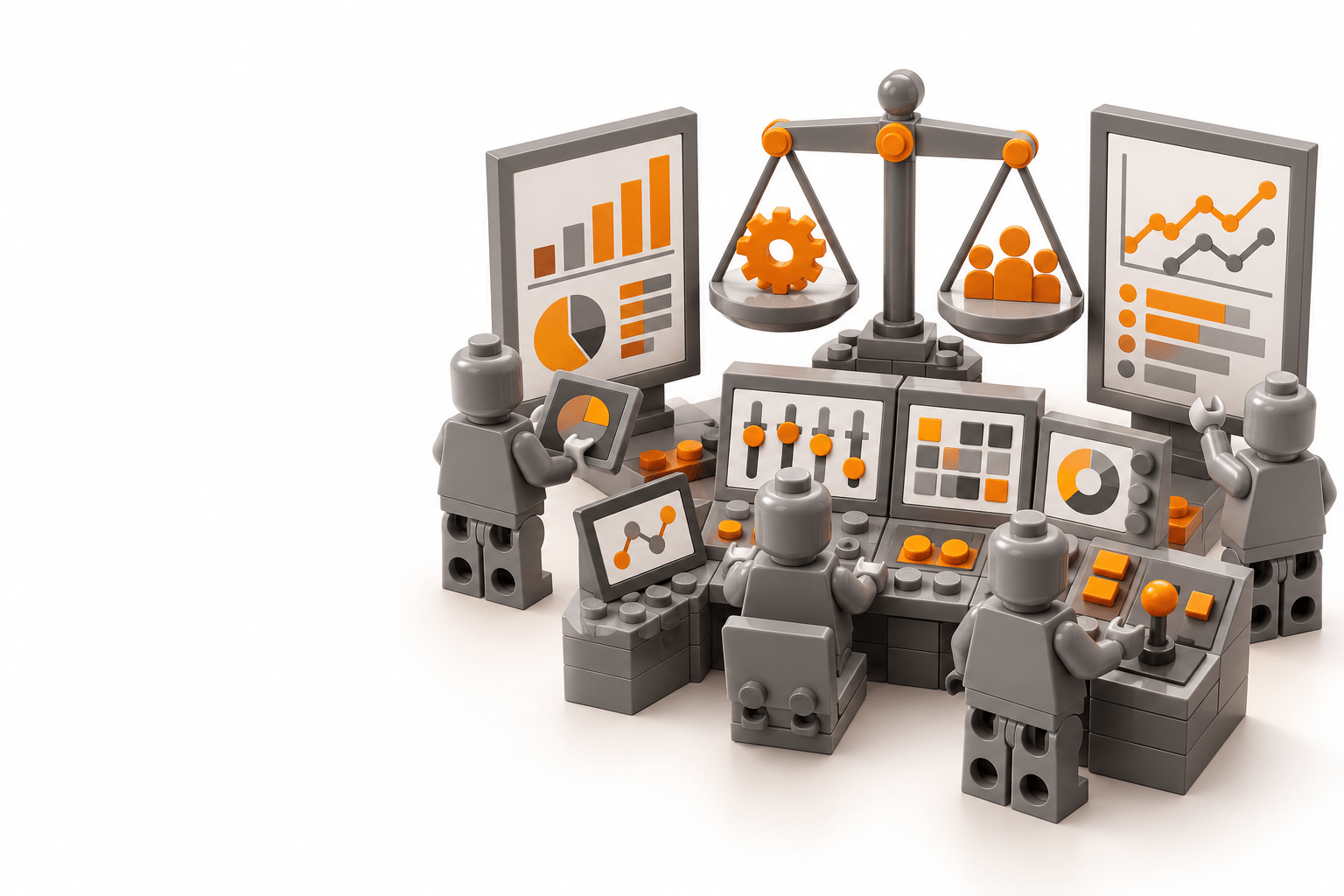
Principle Tie-Breakers: When SAFe Principles Conflict Two correctly-applied SAFe principles can point at the same decision and demand opposite answers, and the framework's own canon has no principle tie-breaker for when SAFe principles conflict this way. A Release Train Engineer who has memorized all ten Lean-Agile principles by name hits the same wall a Product Owner does: knowing what each principle means doesn't say which one governs when Take an Economic View and Assume Variability and…
Named Anti-Pattern Catalog: 30 SAFe Principle Anti-Patterns
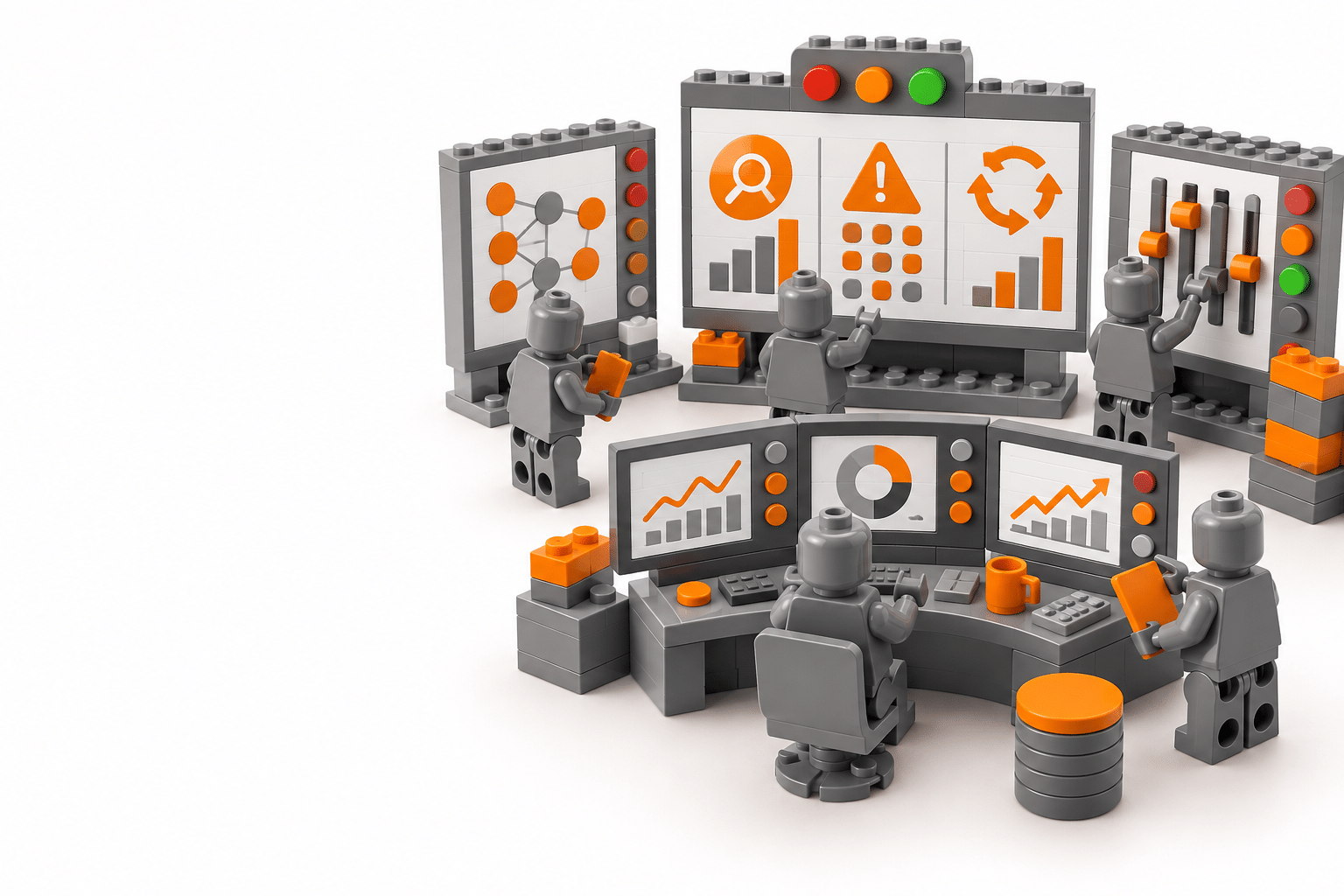
Named Anti-Pattern Catalog: 30 SAFe Principle Anti-Patterns Most SAFe anti-patterns get named the moment someone notices they went wrong: one team, one ceremony, one bad Sprint. This named anti-pattern catalog groups SAFe principle anti-patterns differently: portfolio-level failures cluster in five predictable dimensions, and the fix that works for one entry in a dimension usually works for the next. How This Anti-Pattern Catalog Is Organized An anti-pattern is a process that initially looks…

Decentralize Decision-Making: SAFe Principle #9
Decentralize Decision-Making: SAFe Principle #9 Decentralize Decision-Making sounds like permission granted. In SAFe it's closer to a diagnosis: Principle #9 exists because centralized approval creates a queue of decision requests no organization can clear fast enough, and pushing authority downward only works once the people receiving it actually use it. What Decentralize Decision-Making Means as SAFe Principle #9 Principle #9 in SAFe's ten Lean-Agile Principles instructs organizations to…

Key Roles Supporting LPM: Who Owns Portfolio Strategy?
Key Roles Supporting LPM: Who Owns Portfolio Strategy? Key Roles Supporting LPM each own distinct decisions; from portfolio funding to technical vision. Their collaboration model makes strategy executable. Most organizations that adopt Lean Portfolio Management (LPM) get the framework right but stumble on something more fundamental: who actually owns it? Without clearly defined roles and accountabilities, portfolio strategy becomes a document that no one executes, and Lean-Agile Leadership…
Build Incrementally with Fast, Integrated Learning Cycles
Build Incrementally with Fast, Integrated Learning Cycles Recite the principle to build incrementally with fast integrated learning cycles in a Program Increment retro and every Release Train Engineer nods; then the same team ships an increment next quarter that rediscovers a problem it already solved. Fast cadence and fast learning are not the same claim, and SAFe's fourth Lean-Agile Principle only pays off when a team can tell which one it is actually running. What Build Incrementally with…
Kanban vs Sprints for AI Teams: A SAFe Decision Framework
Kanban vs Sprints for AI Teams: A SAFe Decision Framework Ask ten agile coaches whether AI-augmented teams should run Kanban or Sprints and you'll get ten confident, contradictory answers. Underneath the debate sits one variable the tribal framing hides: batch size; how much work moves through the system before anyone reviews it. Get that number wrong, and AI-generated pull requests pile up faster than any team can review them. This SAFe decision framework for Kanban vs Sprints in AI-augmented…
Cognitive Load in the AI Era: Team Topologies Meets SAFe
Cognitive Load in the AI Era: Team Topologies Meets SAFe AI made your teams faster at producing work; and slower at everything that happens after. AI made your teams faster at producing work; and slower at everything that happens after. Cognitive load in the AI era is why: where Team Topologies meets SAFe, production capacity inflates while thinking capacity stays fixed. Team structure now decides which teams convert AI into flow and which convert it into burnout. Why Team Cognitive Load Is…

PI Planning from the Team’s Seat: What Team and Technical Agility Requires
PI Planning from the Team's Seat: What Team and Technical Agility Requires Teams walk into PI Planning assuming the two-day event itself will produce alignment. Alignment only happens when the team already resolved its architectural runway, technical debt, and Built-in Quality gaps before the agenda started; arrive without that preparedness, and the gap surfaces in front of the entire Agile Release Train. What Is PI Planning in SAFe? PI Planning is a two-day, face-to-face event defined in SAFe…
ROAM Risk Management in SAFe: Complete Guide
ROAM Risk Management in SAFe: Complete Guide ROAM Risk Management in SAFe persists contact with a hundred-person planning room because it refuses to analyze anything: it disposes. A train that spends its confidence-vote hour debating probability never reaches the vote. ROAM works because it forces one public decision per risk: nothing leaves the room undecided. What ROAM Is: SAFe's Four-Way Risk Disposition Protocol ROAM is the acronym Scaled Agile Framework uses for the four dispositions a…
SAFe Program Board: Creation, Management, and Best Practices
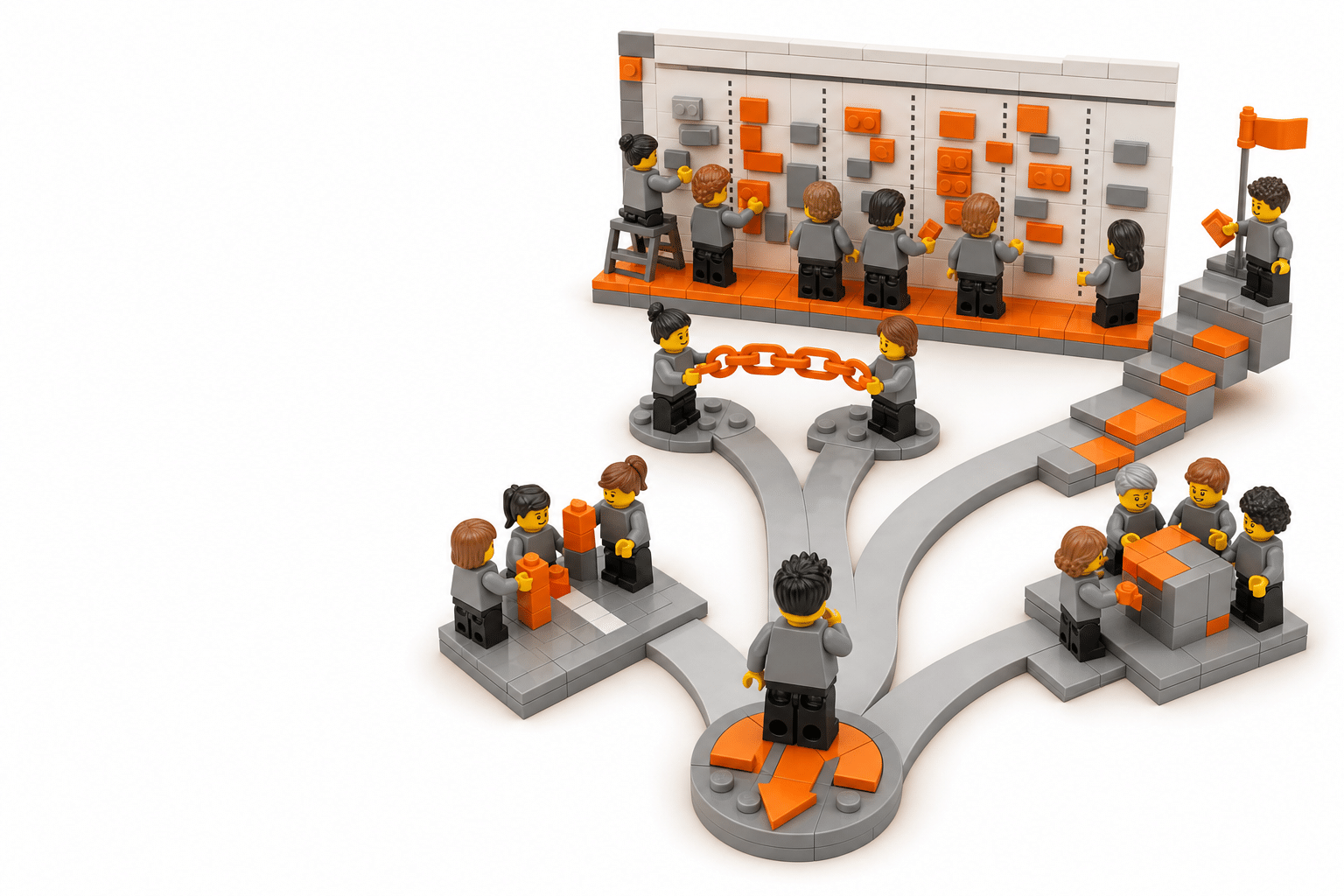
SAFe Program Board: Creation, Management, and Best Practices A SAFe Program Board captures the moment a Program Increment gets planned, then starts decaying the second the room empties, one unmoved feature card at a time. Most Release Train Engineers can point to the exact week their board stopped matching the plan; almost none can name who was supposed to prevent it. What the SAFe Program Board Is and What It Exists to Show The SAFe Program Board is the grid built during PI Planning that…

Lean Portfolio Management Metrics
Lean Portfolio Management Metrics Why do portfolio dashboards read green the same quarter finance cuts the budget by a third? Why do portfolio dashboards read green the same quarter finance cuts the budget by a third? Most Lean Portfolio Management metrics measure activity, hours logged, tickets closed, ceremonies held, while the real signal, whether the portfolio delivered value against its strategic themes, goes unmeasured until the money is already gone. What Lean Portfolio Management…

Gemba Walks: A Lean Leadership Practice for Going to Where Value Is Created
Gemba Walks: A Lean Leadership Practice for Going to Where Value Is Created Most leaders believe they understand what happens on the ground. They review dashboards, read status reports, and attend briefings. Yet the problems that derail transformations live in the spaces between those reports; visible only to someone willing to go and see for themselves. What Is a Gemba Walk? A Gemba Walk is a structured leadership practice rooted in Lean Management where leaders physically go to the place…

Leading Inspect and Adapt: Scaling I&A Across ARTs and Building Kaizen Culture
Leading Inspect and Adapt: Scaling I&A Across ARTs and Building Kaizen Culture Most Agile Release Trains run Inspect and Adapt (I&A) at the end of every Program Increment (PI) and wonder why nothing changes. The demo gets applause, the metrics get reviewed, the workshop produces a list; and by the next PI Planning, those improvement items have quietly disappeared. It's not effort that's missing. It's that I&A is being run as three disconnected activities instead of a single,…

SAFe Change Agents: Roles, Skills, and Development Pathways
SAFe Change Agents: Roles, Skills, and Development Pathways Most SAFe transformations do not fail because the framework is wrong. They fail because the people charged with driving change were never properly developed for the role. Organizations invest millions in Agile Release Trains while underinvesting in the change agents who determine whether adoption actually sticks. What is Change Agent Development in SAFe? Change Agent Development is the structured, intentional cultivation of internal…

SAFe Implementation Roadmap: The 12 Steps to Enterprise Agility
SAFe Implementation Roadmap: The 12 Steps to Enterprise Agility Most Scaled Agile Framework (SAFe) transformations don't fail because organizations chose the wrong framework. They fail because teams skip the foundational steps that make everything else work. The official 12-step SAFe Implementation Roadmap exists precisely because ad hoc adoption creates expensive chaos at scale; yet most organizations still treat it as optional reading rather than operational guidance. What Is the SAFe…

ROI of SAFe Events
ROI of SAFe Events Does your organization spend thousands of person-hours each quarter on Program Increment (PI) Planning, Inspect and Adapt (I&A) workshops, and System Demos without knowing whether any of it moves the needle? Most do. SAFe events deliver enormous value, but organizations that cannot measure it are the ones most likely to gut these ceremonies when budgets tighten. What Is ROI of SAFe Events? Return on Investment (ROI) in the context of SAFe events is fundamentally different…

Why SAFe Events Fail
Why SAFe Events Fail Most organizations holding SAFe ceremonies believe they are doing agile at scale. Yet the same impediments resurface every Program Increment (PI), confidence votes cluster around a safe three, and teams treat these events as calendar obligations. The gap between holding events and making them effective is where transformation quietly stalls. What Is Why SAFe Events Fail? SAFe event failure does not mean someone forgot to schedule PI Planning or that a System Demo got…

How to Measure SAFe Event Effectiveness
How to Measure SAFe Event Effectiveness Most organizations running Scaled Agile Framework (SAFe) ceremonies can tell you whether Program Increment (PI) Planning happened on time. Almost none can tell you whether it actually worked. The gap between executing events and measuring their impact is where agile transformations quietly stall; teams go through the motions, leadership sees attendance numbers, and nobody asks the harder question: are these events producing the outcomes they exist to…

PI Planning vs Quarterly Business Reviews
PI Planning vs Quarterly Business Reviews Most organizations assume their Quarterly Business Reviews keep strategy and execution aligned. Then they scale to multiple delivery teams, and the gap between what the business approved and what teams actually built becomes impossible to ignore. The real question is not whether Program Increment (PI) Planning is better than QBRs: it is whether your current governance rhythm can keep pace with how your teams actually deliver. What Is PI Planning vs…

Why Continuous Learning Culture Fails
Why Continuous Learning Culture Fails Retrospectives run on schedule, Inspect and Adapt happens every PI, yet the same estimation errors and dependency failures keep resurfacing. Why Continuous Learning Culture Fails comes down to one uncomfortable truth: most organizations are running the ceremonies of learning without the precondition that makes learning possible. What Continuous Learning Culture Failure Actually Means in SAFe Continuous Learning Culture failure means an organization runs…

PDCA Problem Solving: Plan-Do-Check-Act for Continuous Improvement
PDCA Problem Solving: Plan-Do-Check-Act for Continuous Improvement Most teams treat PDCA Problem-Solving as four boxes to tick before the retrospective ends; and that's exactly why the same defects keep resurfacing three sprints later. The cycle only works when Check compares real results against a stated hypothesis; skip that comparison and Plan-Do-Check-Act becomes theater, not improvement. What Is the PDCA Cycle? The PDCA cycle is a four-phase iterative discipline, Plan, Do, Check, Act,…

Improvement Stories in SAFe: How to Write and Track Team Improvements
Improvement Stories in SAFe: How to Write and Track Team Improvements Most retrospectives end with a whiteboard photo and good intentions nobody revisits. SAFe treats that as a preventable failure: Improvement Stories convert a retrospective or Inspect & Adapt finding into a sized, committed piece of backlog work: the same visibility and prioritization system that governs every feature. The tricky part isn't writing one. It's protecting it once delivery pressure arrives. What Are Improvement…
Agentic Engineering: What Karpathy’s Vision Means for SAFe Roles
Agentic Engineering: What Karpathy's Vision Means for SAFe Roles Most organizations scaling agile assume AI coding agents simply make developers faster. The real disruption runs deeper: agentic engineering restructures which humans hold which decisions, and the governance architecture SAFe already provides becomes the control surface for an entirely new class of autonomous worker. When Andrej Karpathy coined the term to describe the disciplined orchestration of fallible AI agents, he wasn't…

The Cybernetic Teammate: What Mollick’s P&G Study Means for SAFe Team Composition
The Cybernetic Teammate: What Mollick's P&G Study Means for SAFe Team Composition Most SAFe leaders still size teams by counting chairs. The cybernetic teammate research suggests they have been using the wrong metric entirely; and the difference matters more in July 2026 than it did when the paper dropped. A single rigorously designed field experiment now licenses a fundamental rethinking of how ARTs should be composed, and the 2026 adoption wave makes that rethinking urgent rather than…

OWASP Top 10 for Agentic AI: What SAFe Teams Need to Know
OWASP Top 10 for Agentic AI: What SAFe Teams Need to Know Every ASI risk on the OWASP Top 10 for Agentic Applications can be checked off, control documented, audit trail complete; and the agent still gets compromised the same quarter. That gap is what SAFe teams need to know before agent-based enabler stories reach the Program Backlog: ten agentic AI failure modes that no application-security checklist ever had to score. What the OWASP Top 10 for Agentic Applications Is; and Who Wrote It The…

Lean Portfolio Management vs Quarterly Business Reviews
Lean Portfolio Management vs Quarterly Business Reviews Most organizations assume their quarterly business reviews keep strategy and execution aligned. But when market conditions shift mid-quarter and your portfolio can't respond until the next review cycle, that alignment becomes an illusion. The real question isn't whether your reviews are thorough enough: it's whether your entire governance model can keep pace with the decisions your business actually needs to make. What Is Lean Portfolio…
DORA 2025 for AI Teams: Seven Archetypes Every SAFe RTE Should Know
DORA 2025 for AI Teams: Seven Archetypes Every SAFe RTE Should Know DORA 2025 for AI teams delivers an uncomfortable finding for every SAFe RTE: seven archetypes, not one performance curve, describe how Agile Release Trains respond to AI adoption. Identical tooling across ten trains produces evidence for all seven; because AI magnifies whatever pattern, healthy or dysfunctional, a team already runs. DORA 2025: What the State of AI-Assisted Software Development Report Changed DORA 2025 retitled…

LPM Anti-Patterns Guide
Lean Portfolio Management Mistakes and Anti-Patterns Most organizations adopting Lean Portfolio Management (LPM) don't fail because they chose the wrong framework. They fail because they transplant old habits into new structures and call it transformation. When the PMO gets renamed but the behavior stays the same, when budgets get "lean" labels but still lock annually, the result is worse than doing nothing: it's the illusion of agility with all the overhead of tradition. What Makes LPM…

SAFe Lean Business Case: From Epic Hypothesis to Go/No-Go
SAFe Lean Business Case: From Epic Hypothesis to Go/No-Go Most organizations treat the Lean Business Case (LBC) as a form to fill in; check the boxes, get Epic Approval, move on. The real power of the LBC isn't the document itself: it's the discipline of treating every significant investment as an experiment with a clear exit ramp. What is a Lean Business Case in SAFe? The Lean Business Case sits at the intersection of strategy and execution within the Scaled Agile Framework (SAFe). It is the…

SAFe Lean Budget Guardrails: Governing Without Gatekeeping
seo_title: "SAFe Lean Budget Guardrails: Governing Without Gatekeeping" h1_title: "Portfolio Guardrails" SAFe Lean Budget Guardrails: Governing Without Gatekeeping Most organizations scaling agile eventually face the same uncomfortable question: how do you give teams financial autonomy without losing control of portfolio spending? The answer isn't more approvals. It's smarter boundaries. Lean Budget Guardrails replace the slow machinery of project-based funding with lightweight policies that…

SAFe Portfolio Flow: Accelerating Strategic Value Delivery
SAFe Portfolio Flow: Accelerating Strategic Value Delivery Topic: Portfolio Flow Cluster: SAFe_LPM Article ID: U057 URL: https://agility-at-scale.com/safe/lpm/safe-portfolio-flow-accelerating-strategic-value-delivery/ Author: Morne Wiggins Published: 2026-03-16 | Updated: 2026-06-22 Read Time: 20 minutes What Is Portfolio Flow in SAFe? Portfolio Flow is the mechanism through which Lean Portfolio Management (LPM) provides a continuous flow of new Epics to Solution Trains and Agile Release…

SAFe Flow Metrics as AI Paradox Diagnostic: The Three-Metric Signature
SAFe Flow Metrics as AI Paradox Diagnostic: The Three-Metric Signature Your teams adopted AI coding tools three months ago. Sprint Velocity is up 60%. And yet deliveries to production haven't accelerated at all. What's going wrong? The answer isn't visible in velocity: it's hiding in the pipeline stages velocity was never designed to measure. Why Velocity Alone Cannot Diagnose the AI Paradox Sprint Velocity tells you how much work teams complete per iteration. It does this well. But when AI…

SAFe Portfolio Canvas: Your Strategic Planning Tool
SAFe Portfolio Canvas: Your Strategic Planning Tool Most organizations treat portfolio strategy as a slide deck exercise; impressive in the boardroom, invisible on the ground floor. The SAFe Portfolio Canvas forces a different discipline: map your Development Value Streams, their Value Propositions, and their economics onto a single artifact, and suddenly the gap between strategic intent and actual investment becomes impossible to ignore. What Is the SAFe Portfolio Canvas? !The three…

Release Train Engineer in SAFe LPM Explained
Release Train Engineer Can 50-125 people across multiple teams actually move in sync without drowning in bureaucracy? Most organizations discover the answer too late: the coordination that worked at three teams breaks catastrophically at ten. The Release Train Engineer (RTE) exists precisely to solve this problem, acting as the essential enabler of flow across the Agile Release Train (ART). What is ART Coordination in SAFe Lean Portfolio Management? ART coordination represents one of the most…

SAFe Sprint Cadence for AI Teams: The Dual-Rhythm Architecture
SAFe Sprint Cadence for AI Teams: The Dual-Rhythm Architecture AI-assisted developers produce 98% more pull requests while organizational delivery speed stays flat. That disconnect should alarm every Release Train Engineer (RTE) reading this. The sprint was never a coding container: it was a coordination mechanism. AI just made that painfully obvious by compressing the one activity everyone assumed defined the iteration, while leaving the actual bottlenecks untouched. Does AI Actually Make…

SAFe Built-in Quality When AI Agents Write the Code
SAFe Built-in Quality When AI Agents Write the Code Most organizations scaling AI coding agents discover a painful irony: the faster agents produce code, the faster quality degrades. You can't train an AI agent to care about quality the way you'd mentor a junior developer. Agents have no quality consciousness, no craft values, no professional pride. And yet they're generating code at volumes that make traditional inspection physically impossible. The resolution isn't better agents: it's better…

LPM Implementation: A Step-by-Step Guide
LPM Implementation Guide: Steps and Strategy Most organizations attempt Lean Portfolio Management (LPM) implementation the way they've always done transformation; with a big-bang rollout and detailed upfront planning. The irony is lost on them: using traditional methods to implement a framework designed to replace traditional methods. The organizations that succeed start smaller, learn faster, and scale what works. What is LPM Implementation in SAFe? Lean Portfolio Management (LPM)…

SAFe Team Topologies for AI-enabled Teams
SAFe Team Topologies for AI-enabled Teams Most organizations add AI tools to their existing team structures and then wonder why value delivery doesn't accelerate. The problem isn't the tools: it's the topology. Team structures designed for human-only cognitive load actively constrain what AI can accomplish. Getting this right before you scale is not optional. What Are Team Topologies in SAFe? Team Topologies, developed by Matthew Skelton and Manuel Pais, gives SAFe organizations a principled…

Lean-Agile Center of Excellence (LACE) in SAFe: Role and Setup
Lean-Agile Center of Excellence Most enterprise transformations stall: not from lack of commitment, but from coordination that never clicks. The Lean-Agile Center of Excellence (LACE) exists precisely to solve this problem: a dedicated team that turns transformation intent into organizational capability. When done well, LACE becomes the engine that sustains Business Agility long after the initial implementation push ends. What is the Lean-Agile Center of Excellence (LACE) in SAFe? The…

Enterprise Architect Role in SAFe Lean Portfolio Management
Enterprise Architects When strategy meets technical execution at portfolio scale, most organizations discover an uncomfortable truth: the people making investment decisions rarely understand the architectural implications, while the people who understand the architecture lack influence over those decisions. Enterprise Architects in SAFe bridge this gap; or fail trying. What is the Enterprise Architect Role in SAFe? The Enterprise Architect (EA) operates at the Portfolio Level in SAFe,…

Portfolio Kanban: Visualizing and Managing Flow
SAFe Portfolio Kanban: Managing Epic Flow at Scale Portfolio Kanban fails more organizations than it helps: not because the system is flawed, but because they treat it as a status board rather than a decision system. As the primary flow management mechanism within Lean Portfolio Management (LPM), Portfolio Kanban governs how the largest strategic investments move from ideation through analysis to implementation. When epics pile up without clear governance, strategy becomes theater and delivery…

SAFe Lean Budgets: Fund Value Streams, Not Projects
SAFe Lean Budgets: Fund Value Streams, Not Projects Most organizations scaling agile hit the same wall: not in their teams, not in their backlogs, but in the budget process that was never designed for continuous delivery. Lean Portfolio Management (LPM) recognizes this friction: the coordination that worked when you had five funded projects breaks down when you need sustained investment in the capabilities that actually produce value. Get this wrong, and every agile transformation stalls at the…

Portfolio Vision: Aligning Strategy with Execution
SAFe Portfolio Vision: Connecting Strategy to Execution Most organizations have a vision statement. Few have one that actually changes how money gets allocated or which projects get funded. The gap between strategic intent and portfolio execution is where most Lean Portfolio Management (LPM) efforts quietly fail: not because strategy was wrong, but because the vision never made it into the decision-making machinery that runs daily work. What is Portfolio Vision in SAFe? !The Big Picture of the…

SAFe Lean Governance: Portfolio Oversight Without the Overhead
seo_title: "SAFe Lean Governance: Portfolio Oversight Without the Overhead" h1_title: "Lean Governance" source_url: "https://agility-at-scale.com/safe/lpm/safe-lean-governance-portfolio-oversight-without-the-overhead/" scraped_at: "2026-07-11" SAFe Lean Governance: Portfolio Oversight Without the Overhead Most organizations scaling agile discover an uncomfortable truth: the governance structures that kept them compliant at three teams become the very thing strangling agility at thirty. Get…

Strategy and Investment Funding in SAFe
Strategy and Investment Funding When strategy meets execution at the portfolio level, organizations face a critical test: does investment actually flow to what matters most, or does budget approval become theater? Most portfolio transformations fail not from bad strategy but from funding mechanisms that never quite connect strategic intent to delivery reality. What is Strategy and Investment Funding in SAFe Lean Portfolio Management Strategy and Investment Funding represents one of three…
Multi-Agent DevOps: NemoClaw, A2A, and MCP Enterprise Stack
Multi-Agent DevOps: NemoClaw, A2A, and MCP Enterprise Stack Is Model Context Protocol competing with Agent-to-Agent Protocol for control of the enterprise stack? Most teams assembling a multi-agent DevOps stack, NemoClaw, A2A, and MCP running together, treat the question as a contest to settle, then lose a quarter integrating two protocols that were never rivals. The Enterprise Agent Stack: Three Layers, Three Protocols The enterprise agent stack fixes three layers before any vendor comparison…

Mollick’s Leadership-Lab-Crowd: AI Blueprint for SAFe Portfolios
Mollick's Leadership-Lab-Crowd: AI Blueprint for SAFe Portfolios Your teams are quietly achieving 2-3x productivity gains with AI tools. Individually, they cut hours-long tasks to minutes. But when you zoom out to the organizational level, the needle barely moves; 10-20% improvement at best. This disconnect isn't a technology gap; it's an organizational design problem that Wharton professor Ethan Mollick has documented extensively. Mollick's Leadership-Lab-Crowd: An AI Adoption Blueprint for…
Andrew Ng’s Four Agentic Patterns Mapped to SAFe’s Continuous Delivery Pipeline
Andrew Ng's Four Agentic Patterns Mapped to SAFe's Continuous Delivery Pipeline Can a coding assistant's design patterns actually govern a production release pipeline, or does that stretch a useful idea past its breaking point? Andrew Ng's four agentic patterns, Reflection, Tool Use, Planning, and Multi-Agent Collaboration, describe how AI agents behave, not how a Continuous Delivery Pipeline is staged, and treating "add AI to the pipeline" as one decision instead of sixteen is why so many…
From Two-Pizza to Two-Slice: AI Team Sizing in SAFe ARTs
From Two-Pizza to Two-Slice: AI Team Sizing in SAFe ARTs Bezos’s two-pizza rule has anchored agile team sizing for two decades, and Agile Release Trains built on it are now shrinking teams below the number it was designed to protect. Two-pizza to two-slice AI team sizing in SAFe ARTs renegotiates what the original rule optimized for, now that agents absorb the coordinating work headcount used to buy. The Two-Pizza Rule: What Amazon’s Heuristic Actually Optimized Every argument…

Token Capacity Funding: AI Rewires Lean Portfolio Management
Token Capacity Funding: AI Rewires Lean Portfolio Management The most important funding rule in Lean Portfolio Management, fund streams, not projects, faces its first real stress test, and the pressure comes from an unexpected direction. Token Capacity Funding: How AI Rewires Lean Portfolio Management for Value Streams addresses what happens when AI compute and inference costs become a first-class capacity line, metered and instantly reallocatable in a way headcount never was. The question…
Definition of Done 2.0: Provenance, Attestation, and Sandbox Compliance in SAFe
Definition of Done 2.0: Provenance, Attestation, and Sandbox Compliance in SAFe Definition of Done 2.0 asks a question the classic checklist in SAFe was never built to answer: can you prove where this increment's AI-generated pieces came from? Teams shipping model weights, generated code, and agent actions against a DoD written for human-authored work discover the gap during an audit or an incident review; provenance, attestation, and sandbox compliance become the missing criteria at the exact…

SAFe Epics: Strategic Portfolio Initiatives
SAFe Epics: Strategic Portfolio Initiatives Most practitioners equate SAFe epics with “big user stories” tracked in Jira epics. That framing misses the mechanism that makes portfolio-level governance work: a SAFe epic is an investment vehicle carrying a Lean business case hypothesis, governed through the Portfolio Kanban as an economic bet on a measurable outcome. Without that investment framing, epics become unbounded commitments rather than testable hypotheses. What Are SAFe…

SAFe Inspect and Adapt: The Practitioner’s Facilitation Guide
SAFe Inspect and Adapt: The Practitioner's Facilitation Guide Can a single quarterly event prevent your ART from repeating the same dysfunctions PI after PI? SAFe 6.0 positions Inspect and Adapt (I&A) as the structured improvement mechanism that closes the Program Increment loop; without it, the same bottlenecks, quality gaps, and coordination failures resurface every 8-12 weeks. I&A is not a longer iteration retrospective; it is a three-part, data-driven event designed to surface…

Agile Release Train (ART): Structure, Events, and Roles in SAFe
Agile Release Train: SAFe’s Value Delivery Engine The Agile Release Train is the primary value delivery mechanism of the Scaled Agile Framework (SAFe): a persistent team of agile teams that turns the problem of coordinating dozens of teams into a solvable cadence problem. Most scaling efforts fail not because individual teams are weak, but because there is no operating system to synchronise them. The ART is that operating system. ; What Is an Agile Release Train in SAFe? An Agile Release Train…

DORA Metrics: Measuring DevOps Delivery Performance
DORA Metrics: Measuring DevOps Delivery Performance Most organizations that track deployment and delivery metrics celebrate faster releases while customers notice no improvement in value delivery; and the gap between those two observations is the most important metric they never measure. DORA metrics have become the standard for DevOps delivery performance because they reveal not just how fast code moves through a pipeline, but how reliably and with what business impact. This distinction,…

SAFe Flow Metrics: Six Measures of Value Delivery
SAFe Flow Metrics: Six Measures of Value Delivery Most Agile teams can tell you their velocity within seconds. Fewer than one in five can tell you how long work actually takes to reach a customer, how much of that time is wasted waiting, or whether the work they are doing matches the strategy the business says it needs. Velocity answers one question; how much did we produce?; but it misses the questions that determine whether production actually matters. Flow metrics close that gap by measuring…

SAFe Program Increment (PI): The ART Execution Timebox Explained
SAFe Program Increment: The ART Execution Timebox Most SAFe teams treat the Program Increment as a planning window: a calendar block they endure every few months to set objectives and then get back to work. That view misses what makes the Program Increment the most consequential mechanism in large-scale agile: it is the structural precondition for predictable integration across teams that would otherwise optimise locally, accumulate dependency debt, and discover their misalignment only at the…

SAFe Portfolio Sync: Keeping LPM Aligned
SAFe Portfolio Sync: Keeping LPM Aligned When strategy is set but execution is underway, where does portfolio leadership actually see what is happening; and act before small problems become expensive surprises? Most organizations treat this as a reporting gap, filling it with slide decks that describe the past rather than decisions that shape the future. Portfolio Sync is the operational heartbeat of Lean Portfolio Management, and getting it right determines whether your portfolio governs with…

Lean Portfolio Management Tools
Lean Portfolio Management Tools Compare the top Lean Portfolio Management tools including Jira Align, Planview, and Businessmap. Learn how to choose the right LPM tool for your SAFe portfolio. Most organizations shopping for Lean Portfolio Management Tools end up buying expensive project management software with an “LPM” label slapped on, then wonder why strategy still feels disconnected from execution. The difference between tools that actually support portfolio-level…

SAFe ART Flow: Program-Level Flow Optimization
SAFe ART Flow: Program-Level Flow Optimization
When individual Agile teams hit their stride but the Agile Release Train (ART) still stumbles through every Program Increment, the problem is rarely about team performance. It is about what happens between teams. Most organizations scaling agile discover this the hard way: Team Flow does not automatically produce ART Flow, and the gap between them is where value delivery stalls.
What Is ART Flow in SAFe?

SAFe Continuous Improvement: Relentless Growth
SAFe Continuous Improvement: Relentless Growth Most organizations say they value continuous improvement. Far fewer can point to a single improvement story that actually shipped last quarter. The gap between aspiration and execution is where SAFe teams either build momentum or quietly stall out, and the difference comes down to whether improvement is a cultural slogan or an operational discipline with real ceremony, real backlog items, and real accountability. What is Continuous Improvement in…

LPM Challenges: Deep Dive
LPM Challenges Most Lean Portfolio Management (LPM) implementations fail: not from poor strategy, but from the collision between Lean-Agile principles and the organizational muscle memory of traditional portfolio management. When 44% of organizations struggle to scale agile beyond the team level Value Stream (PPM Express), the problem isn’t understanding LPM; it’s navigating the minefield of mindsets and governance structures. What Are the Core Challenges of Lean Portfolio…

SAFe Team and Technical Agility Challenges
SAFe Team and Technical Agility Challenges Most organizations adopt the Scaled Agile Framework (SAFe) expecting Team and Technical Agility to follow naturally. It rarely does. The coordination that works at three teams breaks down at ten, and technical practices that seemed optional during pilot become the bottleneck that stalls everything. What Are SAFe Team and Technical Agility Challenges? Team and Technical Agility (TTA) is one of the seven core competencies of Business Agility in SAFe, and…

Scaled Agile Framework (SAFe) TTA vs Other Frameworks: A Comparison Guide
Scaled Agile Framework (SAFe) TTA vs Other Frameworks: A Comparison Guide Most organizations choosing a scaled Agile framework treat it like picking software off a shelf. But the coordination model you adopt shapes how teams think, build, and deliver for years. Pick wrong, and you get process overhead disguised as agility. What actually separates SAFe Team and Technical Agility from the alternatives? This SAFe Team and Technical Agility Comparison breaks down the practical differences that…

SAFe TTA Implementation: A Step-by-Step Roadmap
SAFe TTA Implementation: A Step-by-Step Roadmap Most transformations stall not because teams lack talent, but because nobody connected the dots between team practices, technical discipline, and the coordination structures that make scaling actually work. When organizations adopt the Scaled Agile Framework (SAFe) and invest in Team and Technical Agility (TTA) without a clear implementation sequence, they end up with pockets of agility surrounded by the same old bottlenecks. This SAFe Team and…

TTA Metrics and Performance Measurement
TTA Metrics and Performance Measurement What Are TTA Metrics and Why They Matter in SAFe? Team and Technical Agility sits at the foundation of SAFe as one of its seven core competencies. TTA metrics are the instruments that tell you whether teams are genuinely building agile capability or just going through the motions. Without them, continuous improvement becomes guesswork. The Three Measurement Domains Organizations that measure TTA effectively work across three distinct domains: Outcomes,…

SAFe System Demo: Showcasing Integrated Progress
SAFe System Demo: Showcasing Integrated Progress Can ten Agile Teams build toward the same vision and actually prove it works together; or does integration remain a fiction until release day? Most organizations scaling the Scaled Agile Framework (SAFe) discover the answer during the System Demo, the one event that forces teams to show real, integrated progress rather than isolated accomplishments. What is System Demo in SAFe? The System Demo sits at the heart of how an Agile Release Train…

Technical Debt in Agile: Strategies for Management
Technical Debt in Agile: Strategies for Management
When your team’s velocity declines despite everyone working harder, the culprit is rarely motivation. It’s the invisible tax of technical debt; accumulated shortcuts that compound silently until they choke delivery. In the Scaled Agile Framework (SAFe), this burden cascades across the entire Agile Release Train (ART).
What Is Technical Debt in SAFe?

Automated Testing in SAFe: Scaling Quality Assurance
Automated Testing in SAFe: Scaling Quality Assurance What Is Automated Testing in SAFe? Automated testing within the Scaled Agile Framework (SAFe) goes beyond simply replacing manual test execution with scripts. It’s a foundational Built-in Quality practice that enables the speed and confidence organizations need to deliver value continuously across multiple teams. At its core, automated testing is the use of software tools to execute predefined tests against a System Under Test, compare…

SAFe Built-in Quality: Five Practice Dimensions
SAFe Built-in Quality: Five Practice Dimensions Most teams think they practice quality because they have a QA phase. But when defects pile up late in the cycle, rework devours capacity, and releases slip: that is not quality. That is inspection dressed up as a process. Built-in quality in the Scaled Agile Framework (SAFe) flips this pattern entirely, embedding quality at every step so problems surface early, when they are cheap to fix and easy to learn from. What Is Built-in Quality in SAFe?…

Lean Portfolio Management ROI
Lean Portfolio Management ROI When leadership asks for the ROI of Lean Portfolio Management (LPM), they typically expect a single number: a percentage return, a dollar figure, a clean before-and-after comparison. What they get instead is a conversation about why the question itself needs reframing. That gap between expectation and reality is where most LPM business cases stall, and where the real value argument actually begins. What Lean Portfolio Management ROI Actually Measures? LPM ROI is…

SAFe Epic Owners: Shepherding Portfolio Initiatives
SAFe Epic Owners: Shepherding Portfolio Initiatives Most organizations treat the Epic Owner role as a title on a Kanban card. Then they wonder why their portfolio initiatives stall somewhere between “great idea” and “actual delivery.” The gap between portfolio strategy and execution is where Epic Owners either create flow or become a bottleneck themselves; and most organizations discover the difference only after months of epics languishing in analysis. What Is an Epic…

SAFe Strategic Themes: Aligning Portfolio with Business Strategy
SAFe Strategic Themes: Aligning Portfolio with Business Strategy Most organizations have a strategy document. Fewer have a strategy that actually reaches the teams building software. The gap between boardroom intent and ART execution is where Strategic Themes either prove their worth or become another artifact nobody reads. When your portfolio investment decisions disconnect from enterprise strategy, every PI Planning session starts with misalignment baked in. What Are Strategic Themes in…

WSJF in SAFe: Prioritize by Economic Value
WSJF in SAFe: Prioritize by Economic Value How do you decide which initiative to fund next when every Epic owner argues theirs is the most important? Most portfolio prioritization fails because organizations sequence work based on who argues loudest rather than which jobs deliver the most economic value fastest. The Cost of Delay and WSJF frameworks replace that political negotiation with disciplined economic calculation, and the difference between teams that use it well and those that treat it…

Innovation Investment Percentage: How to Measure R&D Commitment
Innovation Investment Percentage: How to Measure R&D Commitment Ask ten portfolio leaders for their Innovation Investment Percentage and you'll get ten different numbers: not because their innovation programs differ, but because they're measuring different things. The metric is real, and independently documented, but only if you know what actually belongs in the calculation and what SAFe never mandated in the first place. What Is Innovation Investment Percentage? Innovation Investment…

SAFe Retrospectives: Formats and Facilitation for Teams and ARTs
Agile Retrospectives: Formats, Templates, and Facilitation Best Can a team run Retrospectives every single iteration and still be no better off a year later? Most discover the answer too late; after a dozen "Start-Stop-Continue" sessions that produced conversation but never changed how the team actually works. The mechanism that prevents this isn't a better format. It's a structural link between what a team learns and what a team commits to fixing. What Is a Retrospective in SAFe? A SAFe…

AI Maturity for SAFe Enterprises: The Missing Integration Framework
AI Maturity for SAFe Enterprises: The Missing Integration Framework Most enterprises running the Scaled Agile Framework (SAFe) have adopted AI tools. Far fewer have asked whether their organization is actually structured to benefit from them. The AI Amplifier Effect, DORA 2025’s most important finding, shows that AI magnifies whatever it touches: strong delivery pipelines get faster, dysfunctional ones collapse under the added volume. What’s missing isn’t another tool…

Agile Portfolio Operations
Agile Portfolio Operations When strategy meets execution at portfolio level, organizations face a critical test: does work actually flow across Value Streams, or does it just get approved and stall? Most portfolio transformations fail not from bad strategy, but from operations that never connect the dots between funding decisions and the teams doing the work. Agile Portfolio Operations is the connective tissue within Lean Portfolio Management (LPM) that makes strategy real. It coordinates Agile…

PI Planning ROI: How to Measure and Maximize Returns
PI Planning ROI: How to Measure and Maximize Returns
Most organizations treat Program Increment (PI) Planning as a two-day scheduling exercise and then wonder why executives keep questioning the investment. When 100 people disappear into a room for two days, that is 1,600 hours of capacity, the ROI question is not theoretical. It is existential. The tricky part is that the real return on PI Planning hides in places most teams never think to measure.
What Is PI Planning ROI?

PI Planning Alternatives: Comparison Guide
PI Planning Alternatives: Comparison Guide Most organizations don’t fail at PI Planning because the ceremony is flawed. They fail because they never assessed whether PI Planning was the right planning approach for their context in the first place. The result? Teams burning two full days every quarter on a ritual that doesn’t match their dependency patterns, team structures, or delivery cadence. The path forward isn’t abandoning structured planning: it’s identifying which…

PI Planning vs Quarterly Planning
PI Planning vs Quarterly Planning
Does your organization plan quarterly and call it agile, or does it actually align 50+ people around shared objectives every ten weeks? The gap between Program Increment (PI) Planning and quarterly planning is where most scaling efforts quietly break down, and choosing the wrong planning model for your context creates coordination debt that compounds every cycle.
What Is PI Planning vs Quarterly Planning?

Continuous Integration in SAFe: Merge Early, Test Often
Continuous Integration in SAFe: Merge Early, Test Often Most teams say they practice Continuous Integration (CI). But when the build breaks at 2 PM and nobody fixes it until morning, what they actually have is periodic integration with a CI label. The gap between running a CI server and practicing genuine CI is where most scaling efforts quietly fall apart, and in a SAFe environment with multiple teams integrating into the same Deployment Pipeline, that gap becomes a chasm. What Is Continuous…

Test-Driven Development: Quality Through Tests First
Test-Driven Development: Quality Through Tests First Most teams claim they value code quality, yet they write tests after the code is already wired together; when assumptions are baked in and design flaws are hardest to uncover. Test-Driven Development (TDD) inverts that sequence deliberately, and the shift changes more than test coverage. It changes how developers think about design, risk, and what “done” actually means. What Is Test-Driven Development? Test-Driven Development is…

SAFe Team Flow: Accelerating Team Delivery
SAFe Team Flow: Accelerating Team Delivery
Most teams think they have a delivery problem when what they actually have is a flow problem. Work starts but doesn’t finish, queues grow silently, and context-switching becomes the default operating mode. The difference between teams that deliver consistently and those that struggle often comes down to one thing: whether they’ve learned to see, measure, and accelerate the flow of value through their system.
What is Team Flow in SAFe?

SAFe Iteration Execution: Delivering Value Each Sprint
SAFe Iteration Execution: Delivering Value Each Sprint
Most teams think they know how to run iterations. They plan, they build, they demo. But when you scale beyond a single team and suddenly ten Agile Teams need to deliver a cohesive system increment on the same cadence, the coordination that felt natural at small scale breaks in ways nobody warned you about.
What Is Iteration Execution in SAFe?

Team and Technical Agility Assessment
Team and Technical Agility Assessment Can your teams honestly tell you where they stand on agility; or are they just going through the motions? Most organizations discover the gap between perceived and actual team capability only after a missed PI, a quality crisis, or a transformation that stalls at the team level. What Is the SAFe Team and Technical Agility Assessment? Team and Technical Agility is one of the seven core competencies that the Scaled Agile Framework (SAFe) identifies as…

Alternatives to Lean Portfolio Management
Alternatives to Lean Portfolio Management Most organizations adopting Lean Portfolio Management (LPM) assume SAFe is the only path. What they discover too late is that the framework’s ceremonies, prescribed roles, and structural overhead may not match their organizational reality, and by then, they’ve invested months into an approach that creates more friction than flow. The real question is not whether LPM works, but whether SAFe’s version of it is the right fit for your…

Why Lean Portfolio Management Fails
Why Lean Portfolio Management Fails Most organizations that adopt Lean Portfolio Management (LPM) don’t fail because they chose the wrong framework. They fail because they implemented the processes without changing the organizational assumptions those processes depend on. The result looks like LPM on paper but behaves like traditional portfolio management in practice; and the gap between those two realities is where strategy goes to die. What Lean Portfolio Management Failure Actually…

SAFe DevOps: Bridging Development and Operations
SAFe DevOps: Bridging Development and Operations When strategy meets execution at the pipeline level, organizations face a critical test: does value actually flow from idea to production, or does it stall between development and operations? Most Scaled Agile Framework (SAFe) transformations hit this wall because DevOps integration never moves beyond tooling into the Cultural Transformation that makes continuous delivery real. What Is DevOps Integration in SAFe? DevOps in SAFe is not a team, a…

SAFe Continuous Delivery Pipeline: Concept to Cash
SAFe Continuous Delivery Pipeline: Concept to Cash Most organizations think adopting Continuous Delivery means installing a pipeline automation tool and writing some deployment scripts. Then they wonder why releases still feel like controlled explosions. The real challenge is not the tooling: it is building the operational model that moves ideas from exploration through integration, deployment, and release with the kind of predictability that transforms how your business delivers value. What…

Technical Agility in SAFe: Engineering Excellence
SAFe Technical Agility: Engineering Excellence at Scale The engineering practices inside SAFe, Built-in Quality, continuous integration, test-driven development, DevOps, are what determine whether team-level agility translates into sustainable delivery speed or accumulates debt instead. This article covers those engineering practices in depth. For the Team and Technical Agility competency overview, see Team and Technical Agility. Built-in Quality as a Foundation for Technical Agility Built-in…

Team Agility in SAFe: Building High-Performance Teams
SAFe Team Agility: High-Performing Team Practices Team agility is the people and process dimension of the SAFe Team and Technical Agility competency; how Agile Teams organize, run ceremonies, choose between Scrum and Kanban, build cross-functional capability, and self-manage within an Agile Release Train. This article covers those team practices in depth. For the Team and Technical Agility competency overview, see Team and Technical Agility. — Built-in Quality Practices for Team Agility…

Business Owners in SAFe LPM: Deep Dive
Business Owners Can organizations scale Agile delivery without someone who actually owns the business outcomes? Most discover the answer when their Agile Release Trains (ARTs) start drifting from strategic priorities; producing technically excellent work that no longer connects to what the business needs most. What Are Business Owners in SAFe? Business Owners are key ART stakeholders with business and technical responsibility for Return on Investment (ROI), governance, and compliance Business…

Lean-Agile Center of Excellence
Lean-Agile Center of Excellence Most enterprise transformations stall: not from lack of commitment, but from coordination that never clicks. The Lean-Agile Center of Excellence (LACE) exists precisely to solve this problem: a dedicated team that turns transformation intent into organizational capability. When done well, LACE becomes the engine that sustains Business Agility long after the initial implementation push ends. What is the Lean-Agile Center of Excellence (LACE) in SAFe? The…

The 7 SAFe Core Competencies
The 7 SAFe Core Competencies
Discover the transformative power of the seven SAFe Core Competencies in driving Business Agility.
What Are The SAFe Core Competencies?
The SAFe Core Competencies encompass seven areas vital for achieving Business Agility. They are central to PI Planning as this event aligns teams on the business strategy and execution for the upcoming Planning Interval.

Implementing Essential SAFe
Implementing Essential SAFe
What is Essential SAFe?
Essential SAFe is the simplest starting point for SAFe implementation, providing minimal elements necessary for Agile Release Trains (ARTs) to deliver solutions.


Mastering the SAFe Confidence Vote
Mastering the SAFe Confidence Vote The Confidence Vote is a crucial element in the Program Increment (PI) Planning process within the Scaled Agile Framework (SAFe). What Is The Confidence Vote in SAFe? The Confidence Vote is a crucial element in the Program Increment (PI) Planning process within the Scaled Agile Framework (SAFe). It serves as a quantitative and qualitative assessment of the confidence level that Agile Release Train (ART) members have in the feasibility and successful execution…

SAFe Agile Product Delivery Assessment and Implementation Guide
SAFe Agile Product Delivery Assessment and Implementation Guide This comprehensive guide explores Agile Product Delivery in the context of the Scaled Agile Framework (SAFe). What is SAFe Agile Product Delivery? SAFe Agile Product Delivery is a customer-centric approach to defining, building and releasing a continuous flow of valuable products and services. For organizations implementing or evaluating their product delivery capabilities, understanding current maturity across the core dimensions…

Mastering Team and Technical Agility with SAFe
Mastering Team and Technical Agility with SAFe Dive into this comprehensive exploration of Team and Technical Agility - a crucial element in contemporary organizations. What is SAFe Team and Technical Agility? Team and Technical Agility refers to the ability of development teams to adapt rapidly to changing customer needs, business goals, or technology while maintaining a high standard of work and technical excellence. Originating from the Agile Manifesto (Kent Beck, Mike Beedle, Arie van…

Implementing SAFe: Requirements Model (v6)
Implementing SAFe: Requirements Model (v6) Software development is a complex and often challenging process. As development teams grow in size, managing requirements becomes increasingly difficult. What is the SAFe Requirements Model? The SAFe Requirements Model is a hierarchical structure that manages and organizes requirements in large-scale Agile projects. The SAFe Requirements Model helps organizations align their business objectives with their development efforts, ensuring that teams…

SAFe Requirements Model (v6) – Program Level
What is the Scaled Agile (SAFe) Program Level? The SAFe Program Level is where Agile teams and stakeholders collaborate to deliver fully integrated, potentially shippable increments of a system or product. The Scaled Agile Framework (SAFe) Program Level is the second level of the SAFe model, where multiple Agile teams come together to deliver value through working, tested software. The Program Level operates under a construct known as an Agile Release Train (ART), which is a long-lived team of…

SAFe Planning and Execution Series: An Introduction
SAFe Planning and Execution Series: An Introduction What Is SAFe Planning and Execution Series Overview? In this first post of our SAFe Planning and Execution Series, we will introduce the Scaled Agile Framework (SAFe) and its key principles, components, and levels. We’ll also discuss the prerequisites for adopting SAFe. In the following posts, we will dive deeper into SAFe Planning and Execution on the Portfolio Level SAFe Planning and Execution on the Program Level and PI Planning to…

SAFe Requirements Model (v6) – Portfolio Level
What is the Scaled Agile Portfolio Level? The Scaled Agile Portfolio Level is the highest level of concern in the Scaled Agile Framework (SAFe), providing strategic direction and funding to value streams. The Scaled Agile Portfolio Level is the highest in the Scaled Agile Framework, where the organization’s strategy is aligned with the execution of the work. It provides the necessary business alignment, strategy, and investment funding. This level involves formulating strategic themes…

SAFe Requirements Model (v6) – Team Level
Why the Focus on Scaled Agile Teams? As we dive into the realm of software requirements, one might question the need to commence with a thorough examination of the organization, roles, and responsibilities within a Scaled Agile team. The essence of Agile diverges so drastically from traditional methodologies that we are compelled to reevaluate the foundational practices of software development. For many, embracing Agile entails questioning the prevailing organizational structures, reassessing…
The estate · 16 territories · 285 articles
Your trail so far
The articles you visit light up on this map.
In this section
- AI-Enabled SAFe
- Enterprise Solution Delivery in SAFe: The Complete Guide
- PI Planning: The Complete SAFe Guide
- SAFe Agile Teams: Cross-Functional Value Delivery
- SAFe Continuous Learning Culture
- SAFe Lean Portfolio Management
- SAFe Organizational Agility: The Three Dimensions Explained
- The 10 SAFe Lean-Agile Principles: Where Each One Comes From