Systems Thinking: The Ultimate Guide for Organizational Change
Where this article sits
Journey stage 1 of 7: Readiness
readiness → use-cases → roi → pilots → kpis → operationalize → scale
Your trail so far
The articles you visit light up on this map.
The Pattern Seekers: A History of Systems Thinking
In the winter of 1961, Edward Lorenz was conducting ground-breaking research on weather prediction using computer simulations in his MIT lab. Using his Royal McBee LGP-30 to process multiple atmospheric variables with its 113 vacuum tubes and 1,450 solid-state diodes, the machine produced the results of complex calculations on paper printouts.
That day, he decided to extend the simulation’s running time. To save time, he chose to use the midpoint results from a previous run as starting conditions rather than beginning anew. Lorenz entered the data precisely as they appeared on the printout and restarted the simulation. When he returned from getting coffee, he found something perplexing: while the new outputs initially tracked closely with his original run, the values began to diverge, gradually at first, then more rapidly, until the two sequences bore no resemblance to each other.
Lorenz first suspected a hardware problem, perhaps a faulty vacuum tube in the computer, but when he checked the machine, everything was functioning correctly. Examining the numbers more carefully, he discovered the actual cause: his printout displayed values rounded to three decimal places while the computer calculated internally to six. What seemed like an insignificant difference, inputting 0.506 instead of 0.506127, caused the entire simulation to drift dramatically over time.
 Royal Precision LGP-30 Electronic Computer Advertisement (1956)
This accidental discovery revealed something significant about complex systems: minute changes in initial conditions could lead to vastly different outcomes over time. As a result, long-term weather forecasting may be impossible due to the atmosphere’s extreme sensitivity to tiny variations. Lorenz would publish these findings in his 1963 paper “Deterministic Nonperiodic Flow,” laying the groundwork for what would later become chaos theory.
Does the Flap of a Butterfly’s Wings in Brazil Set Off a Tornado in Texas?
In 1972, he captured this concept in a paper with a title that would seize the public imagination: “Predictability: Does the Flap of a Butterfly’s Wings in Brazil Set Off a Tornado in Texas?“
The atmospheric system that fascinated Lorenz defines the core characteristics of complex systems: interconnected elements, nonlinear relationships, and emergent behaviors that arise from countless interactions from these components. But what exactly makes something a system, and how do these properties manifest in other domains?
What Is Systems Definition?
In post-war Japan, an unlikely revolution in manufacturing emerged. While Western factories focused on optimizing individual processes – faster assembly, more precise machining, better welding – Japanese manufacturers explored a fundamentally different question: how could they make these processes work together as a unified whole? At Toyota, this question led to the development of a production system that would ultimately revolutionize global manufacturing. The catalyst for this fundamental shift came from an unexpected source: an American statistician named W. Edwards Deming, whose teachings about quality and systems thinking flourished in Japan’s rebuilding economy. What emerged surpassed merely improving car production – it established a new paradigm for understanding complex systems that went on to reshape fields far beyond manufacturing.
Decades earlier, in pre-revolutionary Russia, two scientists had independently begun exploring similar ideas from different perspectives. Alexander Bogdanov, publishing his work between 1912 and 1917, proposed a universal science of organization called ‘Tektology.’ By studying systems across nature and society, Bogdanov recognized that all complex biological, social, or industrial systems followed similar organizational principles. He saw how systems formed through what he called ‘conjunction,’ evolved through interaction with their environment, and maintained stability through self-regulation – ideas that would later become fundamental to our understanding of everything from ecosystems to modern factories.
While studying Earth’s chemical processes, Vladimir Vernadsky demonstrated that living matter doesn’t just exist within the environment: it actively reshapes it through growth, decay, and renewal cycles. Plants don’t simply grow in soil; they alter their composition and structure, and biological activity creates the air we breathe. Vernadsky’s findings established the foundation for modern environmental science by revealing the interconnected nature of Earth’s systems.
These parallel discoveries, in manufacturing, organizational science, and Earth systems, demonstrated that the behavior of complex systems cannot be understood by studying their parts in isolation. Success in building cars or understanding ecosystems requires grasping how components work together as an integrated whole.
Organizations navigating change see this system thinking in action every day. Success doesn’t come from implementing individual technologies or process frameworks but from understanding how they work together within the broader business ecosystem. We see how supply chains adapt to disruption, how digital platforms evolve with users, and how businesses respond to environmental pressures.
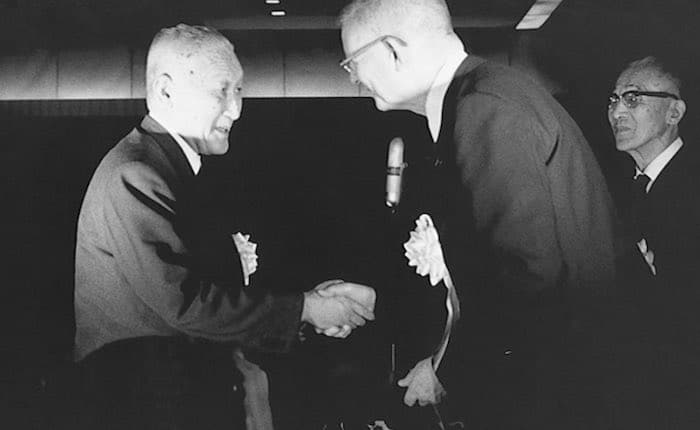 Professor Deming and Toyota President Fukio Nakagawa at the Deming Prize award ceremony (1965)
What Deming saw at Toyota, Bogdanov described in his organizational science, and Vernadsky observed in Earth’s systems are different views of the same fundamental dynamics that shape how complex systems operate. Whether managing a global enterprise or studying climate systems, the key insight remains: meaningful change requires understanding how components work together as an integrated whole.
What Makes a System?
A system is more than just a collection of connected parts: it’s a complex whole where the interactions between components create something greater than their sum. While individual elements may change, the system maintains its identity through consistent patterns, self-regulation, and environmental adaptation. This understanding rests on seven fundamental principles:
Core Principles of Systems
Interconnectedness and Relationships, Components in a system don’t exist in isolation, they form a network of relationships where changes in one element propagate to affect others. In a forest ecosystem, for instance, the relationship between trees and soil fungi persists even as individual trees die and new ones grow, maintaining the forest’s nutrient cycles.
Emergent Properties – Systems exhibit behaviors and characteristics arising from component interactions rather than individual parts alone. Toyota’s production system demonstrates this principle, while individual workers and processes are important, the company’s efficiency emerges from how these elements work together in unique patterns like the Kanban scheduling system.
Boundaries and Identity, Systems maintain distinct boundaries that separate them from their environment while allowing necessary exchanges. A car’s mechanical systems, for example, are bounded but interact with their environment through fuel intake, exhaust, and heat exchange while maintaining their core identity.
Purpose and Organization – Every system exhibits purposeful organization, whether designed or natural. Organizational patterns emerge either explicitly, as in a car’s transportation function, or implicitly, as in a forest’s role in maintaining biodiversity and ecological balance.
Feedback and Self-Regulation: Systems maintain stability through feedback loops that enable self-correction and adaptation. Modern digital organizations like Amazon demonstrate this through data-driven feedback systems that continuously optimize operations, similar to how predator-prey relationships regulate population levels in natural ecosystems.
Hierarchical Structure – Systems often exist as hierarchies, with larger systems containing smaller subsystems. In nature, organs form subsystems within the body, just as cells form subsystems within organs. Similarly, in organizational systems, departments form subsystems within the larger corporate system, each with its own patterns and feedback loops while contributing to the whole.
Adaptive Capacity; Successful systems can modify their structure or behavior to maintain essential functions despite environmental changes. For example, the clothing company Patagonia demonstrates this through its evolution from a small climbing gear manufacturer to a global sustainability leader. It has adapted its business operations and supply chains to meet changing market demands while maintaining its core environmental values and identity.
Systems Across Scales
These principles manifest differently but consistently across various scales and domains. Consider how a car’s engine demonstrates these principles: Its components form tightly interconnected relationships, producing the emergent property of controlled combustion. The engine maintains clear boundaries while exchanging fuel, air, and exhaust with its environment. Multiple feedback loops regulate temperature and fuel mixture, allowing adaptation to different driving conditions while maintaining optimal performance.
Ecological systems like forests exhibit these same dynamics in nature. Species form complex webs of interactions that create emergent properties at the ecosystem level. These systems maintain permeable boundaries, allowing vital flows of energy and nutrients. They maintain population and resource balance through multiple feedback loops, continuously adapting to environmental changes while preserving their core identity.
Modern organizations demonstrate similar patterns. Their digital systems create feedback loops that enable rapid adaptation to market changes while organizational boundaries remain permeable enough to maintain vital connections with customers and partners. Their structures balance local autonomy with system-wide coordination, creating new capabilities through the dynamic interaction of people, processes, and technology.
We can better design, manage, and interact with the systems that shape our world when we understand these principles and how they manifest across different domains. Whether we’re engineering mechanical systems, building organizations, or protecting ecosystems, success depends on working with rather than against these fundamental systems principles.

Key Themes in System Behavior
Understanding systems as networks of relationships rather than collections of parts reveals several fundamental themes that will recur throughout this exploration:
Feedback Loops: Systems maintain stability and drive change through continuous feedback. Feedback mechanisms shape systems’ behavior and evolve from Deming’s quality improvement cycles to Toyota’s Andon cord system, from forest ecosystem regulation to market price adjustments. Our section on system feedback loops will explore these mechanisms in detail.
Emergence: Complex systems generate new capabilities and behaviors through component interactions rather than individual parts. Toyota demonstrated this principle when their coordinated processes produced unprecedented efficiency levels, surpassing what individual optimizations could achieve. Similar patterns manifest across scales, from cellular systems to global networks.
Adaptation: Successful systems maintain stability by adapting to change. Whether a business adjusts to market shifts, an ecosystem responds to climate changes, or an organism adapts to new conditions, systems must evolve to survive. We’ll explore these adaptation mechanisms by discussing leverage points and system evolution.
Boundaries and Interfaces: Systems define themselves through boundaries that separate and connect them with their environment. These boundaries aren’t just physical; they can be informational, cultural, or functional. Understanding how systems manage their boundaries informs everything from organizational design to ecosystem management.
Component Interactions: How system components interact often matters more than the components themselves. These interactions create patterns that determine system behavior and capabilities. We’ll examine how physical, digital, social, and hybrid components create system functionality.
Mental Models: How we think about systems shapes our interactions. Our mental models determine what we notice, what we ignore, and how we respond to system behavior. These cognitive frameworks become especially important when dealing with complex systems where cause and effect aren’t always obvious.
Hierarchical Structure: Systems often organize themselves in hierarchical layers, with each level exhibiting patterns and properties. Understanding these hierarchical relationships helps us understand how changes at one level affect the entire system.
Leverage Points: Some points in a system have more influence on overall behavior than others. Identifying these leverage points – and understanding when and how to use them – enables effective system intervention.
Information Flow: How information moves through a system shapes its behavior and capabilities. From market signals to ecosystem feedback, organizational communication to digital networks, information flow patterns determine how systems sense and respond to change.
Scale and Complexity: Systems behave differently at different scales, and what works at one level may fail at another. Understanding how complexity changes with scale helps us avoid the trap of applying small-system solutions to large-system problems.
These themes weave through every aspect of system behavior, from the simplest mechanical assemblies to the most complex global networks. As we explore more sophisticated concepts like system archetypes and leverage points, we’ll see how understanding these fundamental themes helps us better manage and influence complex systems.
By considering these themes, we can better understand how systems maintain stability while adapting to change, how they create new capabilities through component interaction, and how we can more effectively guide their evolution. In later sections, these insights provide a foundation for examining specific tools and techniques for system analysis and intervention.
How to Use This Guide
This exploration of systems thinking goes beyond a quick reference manual or step-by-step guidebook. Instead, it delves deep into how complex systems behave, adapt, and evolve. Understanding these patterns will reshape how you approach complex challenges, whether you lead organizational change, navigate market transitions, or build resilient teams.
As you read, you’ll encounter stories from diverse fields – from space exploration to manufacturing, from healthcare to technology. These aren’t just illustrations; they’re windows into universal patterns that appear across different systems. While Toyota’s production system might seem far removed from your daily challenges, the patterns it reveals about feedback loops and system behavior likely mirror dynamics in your organization.
Rather than providing prescriptive solutions, this guide invites you to:
- Recognize Patterns: Notice how similar dynamics appear across different contexts. NASA handled the Spirit rover crisis, which might mirror how your organization responds to technical debt.
- Draw Connections: As you read about system archetypes or leverage points, consider how these patterns might manifest in your environment.
- Build Understanding: Instead of looking for quick fixes, use these insights to understand better why your organization behaves the way it does.
- Reflect on Application: After each section, consider how these concepts reframe your current challenges or opportunities.
The most valuable insights often come not from direct application but from allowing these patterns to reshape how you see and think about your systems. As you proceed, let the examples and concepts simmer; their practical relevance often emerges in unexpected ways.
What Are System Components?
Understanding Component Types
When Dmitri Mendeleev sat at his desk in 1869 to tackle “the problem of the elements,” he faced a puzzle familiar to anyone studying complex systems. Scientists had identified 63 chemical elements with unique properties and behaviors, but no one could explain the underlying patterns connecting them. Previous attempts at organization, by atomic weight, chemical properties, or physical characteristics, each captured part of the story but failed to reveal the hidden connections that would revolutionize our understanding of the physical world.
 Dmitri Mendeleev – the father of the periodic table
Mendeleev approached the challenge methodically. By documenting each element’s properties on separate cards, he began to recognize recurring patterns. When arranged by atomic weight, elements with similar properties appeared at regular intervals. More remarkably, gaps in his arrangement predicted the properties of elements not yet discovered.
This systematic approach to component classification revolutionized chemistry and catalyzed breakthroughs beyond the periodic table. Mendeleev demonstrated how elements exist in multiple states while maintaining their essential properties, establishing a framework that parallels modern systems, where components transcend simple categorization.
Technological advances continually redefine the boundaries between physical and digital components, underscoring how human and social elements propel system evolution. Let’s follow a pre-dawn journey through Sydney’s streets to understand how this classification works.
At 4:15 AM on a Monday, an armored vehicle rolled through the gates of the Sydney cash center, its 6mm armored body and bulletproof glass windows gleaming under the security lights. Inside the vehicle’s vault compartment, $20 million in cash sat secured in biometrically sealed canisters. Driver James Baker and his assistant Sarah O’Connor had just completed their pre-route safety checks.
“Route 271 authenticated; you are clear to proceed,” the controller said in a voice-over of their encrypted radio system. Be advised of reported congestion on Western Distributor due to early morning road works.”
James adjusted his mirrors, mentally mapping alternate routes as Sarah confirmed their first delivery location on their secure navigation system. Both veterans of cash-in-transit operations knew their nine-hour route through Sydney’s metropolitan area would require constant situational awareness.
A cash-in-transit operation reveals how different components work together in complex systems. Some elements are tangible and obvious, like the armored vehicle’s reinforced chassis or the vault’s locking mechanisms. Others are digital, like GPS tracking systems and real-time telemetry feeds. Still, others are more abstract, as protocols and standard operating procedures guide every action.
Component Classifications
Complex systems comprise distinct types of components, each playing essential roles in system operation. While these components differ, they share a common purpose: enabling the system to function reliably and adapt to changing conditions. Let’s examine each type through our journey through Sydney’s pre-dawn streets.
Physical Components
As they approached a busy intersection, James kept three car lengths between his vehicle and the taxi ahead. The armored vehicle’s reinforced compartments, interlocking vault door systems, and specialized access mechanisms represent the visible aspects of its security infrastructure. Inside the cab, a hardened DVR system records multiple camera feeds while sensors monitor everything from speed and tilt to brake pressure and temperature.
Physical components in cash handling infrastructure include:
- Armored vehicles with bulletproof glass windows
- Interlocking vault door systems with external and internal doors
- DVR systems hardened for automotive environments
- Physical security elements like CCTV cameras and barrier systems
- Vehicle monitoring sensors measuring speed, tilt, temperature, and brake pressure
While physical components provide the system’s tangible foundation, modern security operations increasingly rely on digital components, which extend capabilities beyond physical infrastructure.
Digital Components
Sarah O’Connor checked their routing system while James navigated the pre-dawn streets. Digital displays tracked their position, speed, and route compliance, relaying data to the control room. Their first stop would be a major shopping center, and its location, timing, and access protocols would be all managed through encrypted digital systems designed to make each journey unique and unpredictable.
The controller updated, “The J-17 intersection ahead shows the red light camera is active. ” The control room’s screens displayed real-time data, including vehicle telemetry, traffic conditions, security alerts, and live video feeds. Every parameter outside normal bounds triggered automated alerts for operator review.
Digital components in cash handling operations include:
- Vehicle tracking and dynamic route optimization systems
- Access control and multi-factor authentication software
- Real-time vehicle telemetry monitoring systems
- Just-in-time route delivery systems
- Video analytics and surveillance software
- Remote monitoring and control systems
Yet neither physical nor digital components can function effectively without the guidance of abstract components – the protocols and procedures that govern their use.
Abstract Components
James methodically scanned their surroundings at the intersection – a practiced routine drilled into every driver. Three cars back on the right: had it been following them? The light turned green: was the crossing traffic fully stopped? These security protocols weren’t just guidelines – they were essential components of the system, shaping every action and decision.
In the control room, operators adhered to strict procedures. They timed operator rotations precisely to maintain alertness and followed exact protocols for communications. They had rehearsed defined response procedures for every potential scenario, from mechanical failure to security threats, until they became instinct.
Abstract components in secure operations include:
- Strict sequential security protocols for every guard action
- Control room staff rotations
- Dual-role team protocols for drivers and assistants
- Emergency response procedures
- Quality control standards
- Audit and verification processes
Hybrid components now combine physical, digital, and abstract elements, transcending traditional system boundaries.
Hybrid Components
Sarah reached for her electronic key fob as they approached their first delivery point. The shopping center’s secure entrance combined physical barriers with digital authentication systems. Their vehicle’s transponder had already initiated a handshake sequence with the center’s security system, and overhead cameras tracked their approach. The security door would only open when all systems, physical locks, digital authentication, and human verification, aligned perfectly.
Hybrid components combine physical and digital elements to create integrated capabilities:
- Smart vehicle access systems combining physical locks with digital authentication
- Vehicle monitoring systems merging physical sensors with digital tracking
- Smart safes combining physical security with digital monitoring
- Integrated facility management systems
Ultimately, these technological components serve human needs and operate within human contexts, making social components fundamental to system success.
Social Components
As they waited for clearance, James kept the engine running. His eyes never stopped moving; he checked mirrors, scanned rooftops, and watched the early morning delivery trucks for anything unusual. Night shift operators prepared for handover in the control room, methodically reviewing every active vehicle’s status. Each person in the system had a role, training, and specific responsibilities that meshed with others to create a seamless operation.
Social components encompass the human elements that operate and maintain the system:
- Highly trained security personnel in specific roles (drivers and assistants)
- Control room operators working precise shift patterns
- System administrators
- Maintenance specialists
- Compliance officers
- Emergency response teams
- Security clearance personnel
While each component type serves distinct functions, the true power of modern systems emerges from how these components work together. For example, a security officer’s expertise combines with digital monitoring systems and physical infrastructure to create capabilities beyond what any single component could achieve alone. This interplay between components reveals patterns that help us understand how complex systems function and evolve.
Component Interactions and Emergence
The power of component classification lies in identifying different types and understanding how they interact to create new capabilities. Internet of Things (IoT) sensors and AI analytics enhance and refine how physical components operate. These digital tools enable teams to implement predictive maintenance of physical infrastructure. Social components guide how abstract components evolve. As teams develop new ways of working, they actively modify and improve procedures and protocols.
These interactions often blur traditional component boundaries. A modern security camera isn’t simply a physical device: it’s a hybrid component combining physical hardware, digital processing, and AI-driven analytics. Similarly, a DevOps pipeline isn’t merely a set of abstract procedures: it combines digital automation, physical infrastructure, and social collaboration patterns.
Understanding these interactions helps leaders:
- Anticipate how changes in one component type will affect others
- Identify opportunities for innovation at component intersections
- Design more resilient and adaptive systems
- Guide organizational change initiatives
By examining these diverse components, their properties, and their interactions, we understand how systems maintain stability while adapting to change.
Component Patterns Across Systems
Component classifications continue to adapt to technological advancements. The rise of artificial intelligence, IoT devices, and augmented reality creates new components that challenge traditional categorizations. Examining these diverse components and their properties, we understand how systems maintain stability while adapting to change. While we’ve explored these concepts through a cash-in-transit operation, the same component types exist in any complex system; from healthcare delivery to software development, manufacturing, and education.
For instance, a hospital emergency department has similar component types:
- Physical components like medical equipment and facility infrastructure
- Digital components, including patient monitoring systems and electronic health records
- Abstract components in the form of triage protocols and treatment guidelines
- Hybrid components where physical care delivery intersects with digital tracking systems
- Social components encompassing medical staff, administrators, and support personnel
A software development team shows the same pattern:
- Physical components in development infrastructure and hardware
- Digital components in code repositories and deployment systems
- Abstract components through development methodologies and practices
- Hybrid components in continuous integration/deployment pipelines
- Social components in the development teams and their interactions
Leaders and architects can better understand their systems by mapping component interactions systematically. This systematic analysis uncovers potential vulnerabilities and opportunities while showing how changes in one component cascade throughout the entire system. Such insights guide strategic improvements and help organizations predict how modifications in one area will influence overall system performance. By examining these relationship patterns, organizations can make more informed decisions about where to focus their improvement efforts and how to manage system evolution effectively.
What Is Systems Structure?
After 1,892 sols of faithful service deep in Mars’ Gusev crater, NASA’s Spirit rover ground to a halt in the treacherous Martian sand. The rover, which had been exploring the crater, showed minimal forward progress despite wheel operation at full power. Engineering telemetry confirmed that soft soil had trapped Spirit, with its wheels failing to gain traction in the fine Martian sand. After traversing 7.5 kilometers across the Red Planet, the rover could not advance, and the approaching Martian winter threatened its operational status.

This incident demonstrated key aspects of complex systems – how their components interact, maintain purpose within constraints, and adapt to changing conditions. The Spirit Rover case illustrates how understanding system anatomy – the interplay of elements, relationships, and purpose – informs response strategies to technical challenges.
Components and Relationships
Spirit’s predicament revealed a core insight about systems: They comprise both tangible and intangible components that work in concert to shape behavior. The rover clearly displayed its physical elements, its wheels, motors, solar panels, and scientific instruments, yet its success hinged equally on invisible forces: the software orchestrating its movements, the algorithms guiding its decisions, and the intricate protocols enabling its dialogue with Earth.
The relationships between these components proved even more critical than the components themselves. Spirit’s ability to function depended not merely on having working parts but on the coordination between them. The power from the solar panels had to be distributed optimally among mobility, heating, and scientific instruments. Sensor data had to inform motion planning. Communication systems had to manage limited bandwidth to transmit essential information back to Earth.
The Spirit Rover crisis revealed how components influence each other through reciprocal interaction. As engineers adjusted power allocation to the wheels, they triggered cascading effects across different systems; heating requirements changed, communication bandwidth needs changed, and scientific instruments required recalibration. Each adjustment affected multiple interconnected systems, demonstrating how component relationships form cycles of mutual influence rather than simple linear chains of cause and effect.
Purpose and Function
NASA’s engineers confronted a complex systems challenge with Spirit. They needed to understand how the rover’s interconnected components, power, mobility, sensors, and thermal regulation, worked together under extreme conditions. The approaching Martian winter meant Spirit’s solar panels would receive less sunlight, reducing available power just when the rover needed more energy to attempt an escape.
This situation demonstrated how system purpose shapes component interaction. Spirit’s primary mission objectives – scientific exploration and discovery – must be balanced against immediate survival needs. Every joule of power spent on attempted movement was unavailable for heating or communication. Engineers had to consider how each potential solution would affect immediate mobility and the rover’s overall ability to fulfill its mission.
Systems maintain purpose through regulatory mechanisms that monitor and adjust operations. In Spirit’s case, these mechanisms included:
- Power Management: Automated systems that redistributed power based on critical needs and available sunlight
- Thermal Control: Heating systems that maintained operational temperatures for vital components
- Fault Protection: Software that could detect and respond to dangerous conditions without waiting for Earth commands
Feedback Mechanisms
The Spirit mission demonstrated how feedback shapes system operation. Engineers actively monitored and adjusted their commands based on the rover’s responses rather than simply sending instructions and hoping for success. The sophisticated feedback cycle operated through multiple channels:
- Immediate Telemetry: Real-time data about wheel torque, power consumption, and movement
- Environmental Feedback: Information about soil conditions and terrain characteristics
- System Status: Updates on the health and performance of various rover subsystems
NASA’s engineers developed an adaptive response to Spirit’s predicament through multiple feedback loops. Real-time telemetry data revealed how different movement strategies affected power consumption and wheel torque. Direct observations captured the soil’s characteristics and terrain conditions. System status updates painted a comprehensive picture of how each attempted solution impacted the rover’s overall health. The multi-layered monitoring approach allowed engineers to gradually refine their strategy, learning from each attempt to free the rover while maintaining its operational integrity.
Emergence and Synergy
After extensive testing in Earth-based simulations, NASA developed a novel approach. Rather than trying to drive Spirit forward, they would have it drive backward, dragging its partially immobilized right front wheel. This unconventional solution emerged from understanding how the rover’s systems could adapt – redistributing weight, altering power consumption patterns, and repurposing components in ways not originally intended.
This adaptation demonstrated how system capabilities emerge from component interactions rather than individual elements. The ability to drive backward while dragging a wheel wasn’t a designed feature – it emerged from the collective operation of Spirit’s various subsystems in a new configuration.
Adaptation and Evolution
While Spirit ultimately remained trapped, this systems-level analysis helped it survive far longer than expected. Even after losing its mobility, the rover continued to conduct valuable science. Its evolution from mobile explorer to stationary science platform illustrated how systems can maintain core functionality even when key capabilities are compromised.
The Spirit team’s adaptation process demonstrated three notable patterns in system evolution. Engineers redistributed functions and resources by adjusting power allocation and modifying operational priorities to maintain rover functionality. The team developed new capabilities, pioneering methods to achieve scientific objectives despite mobility constraints. Mission leaders reoriented the mission’s direction by aligning goals with the rover’s altered operational state. Through this evolution, Spirit evolved from a mobile explorer into a stationary scientific platform, illustrating how systems can continue to deliver value even when facing significant operational constraints.
The Foundation for System Behavior
Spirit’s story reveals how system anatomy, the components, relationships, feedback mechanisms, and emergent properties, establishes the foundation for system behavior. By understanding these structural elements, we can understand how systems achieve their purpose, regulate themselves, and adapt to change.
This understanding sets the stage for exploring more complex dynamics, such as feedback loops, system archetypes, and leverage points, which reveal the deeper patterns that shape system behavior and evolution. Just as Spirit’s engineers used their knowledge of system anatomy to extend the rover’s mission far beyond its original design parameters, leaders who understand system anatomy can guide their organizations through strategic adaptations and systematic reforms.
What Are System Boundaries?
In November 1989, thousands of East Germans streamed through checkpoints in the Berlin Wall, demonstrating one of history’s most dramatic examples of system boundaries dissolving and reconstructing. The wall’s sudden permeability unleashed decades of pent-up social and economic pressures, catalyzing cascading changes throughout European society. The historic collapse illustrated how boundaries actively shape systemic beginnings and endings, influencing behavior, adaptation, and evolutionary capacity.

System boundaries function beyond simple dividing lines, serving as interfaces that regulate the flow of resources, information, and energy between a system and its environment. The Berlin Wall is a powerful metaphor for understanding how boundaries shape system behavior. Its 1961 construction established an almost impermeable boundary between East and West Berlin, dramatically altering the flow of people, ideas, and economic activity. Such extreme compartmentalization revealed fundamental principles about boundary influence on system behavior.
Theoretical Foundations of System Boundaries
System boundaries define the limits of a system’s domain while simultaneously governing its interactions with the external environment. The Berlin Wall’s evolution, from its initial construction through its eventual fall, illustrates three core principles of system boundaries:
- Boundary Permeability: This refers to how easily elements traverse the boundary. The Wall demonstrated how varying degrees of permeability affect system behavior. Initially, its near-total impermeability created distinct economic and social systems on either side. However, even this seemingly absolute barrier couldn’t prevent information flow; West German television signals reached East Berlin, and underground networks maintained connections across the divide.
- Boundary Dynamics: Boundaries evolve in response to internal and external pressures. The Wall’s evolution from a simple barrier to a sophisticated system of checkpoints, guard towers, and control mechanisms reflects how boundaries adapt to changing circumstances. As pressure for movement between East and West increased, the boundary system became increasingly complex in its attempts to maintain control.
- System Identity: Boundaries define how systems maintain their coherence and identity. The Wall physically embodied the ideological separation between East and West, shaping distinct cultural and economic identities in both parts of the city. Yet these identities evolved about each other, demonstrating how boundaries paradoxically both separate and connect systems.
Boundary Permeability and System Behavior
The permeability of system boundaries influences how external factors affect the system and how internal processes interact with the external environment. High permeability facilitates rapid adaptation and innovation but can make systems vulnerable to disruption. In contrast, rigid boundaries provide stability but risk isolation. The Berlin Wall demonstrated both extremes. Its rigid boundary initially created stability through control. Still, it ultimately proved unsustainable as it prevented the natural flow of ideas, commerce, and human connections that cities need to thrive.
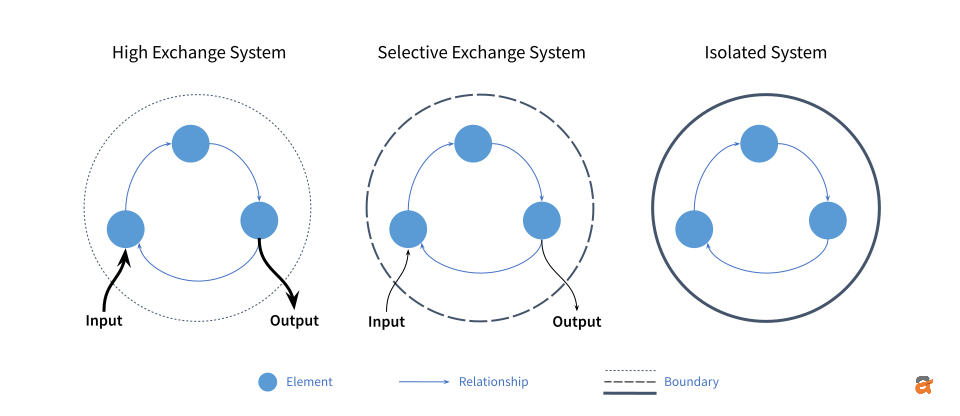
Modern organizations face similar boundary challenges, though rarely as stark. Tech startups often maintain highly permeable boundaries, rapidly integrating user feedback and adapting to market changes. This openness enables innovation but can make it harder to maintain consistent processes or protect intellectual property. Traditional manufacturing organizations, in contrast, might establish more rigid boundaries to maintain quality control and operational efficiency but risk becoming inflexible and slow to respond to market changes.
Boundary Dynamics and Adaptation
Boundaries exhibit dynamic characteristics as they evolve. Just as the Berlin Wall evolved from a simple barrier into a complex system of checkpoints and control mechanisms, organizational boundaries adapted and reconfigured as systems grew. When a local retail company transitions to e-commerce, its boundaries expand to incorporate digital platforms, global logistics, and cybersecurity concerns. These boundary shifts enable growth while introducing new complexities and vulnerabilities.
As systems mature, they often develop sophisticated mechanisms for regulating boundary permeability. The Wall’s checkpoint system attempted to maintain control while allowing limited, regulated movement. Similarly, modern organizations develop protocols for managing information flow, resource allocation, and external partnerships. A software company might create API gateways to control how external systems interact with its services, or a manufacturer might establish structured supplier qualification processes to manage supply chain relationships.
Boundaries and system identity reveal their intricate relationship during periods of systemic change. When the Berlin Wall fell, East and West Berlin undertook a comprehensive redefinition; extending beyond administrative reforms to encompass cultural and economic restructuring. This process parallels how organizations reconfigure their identity when established boundaries erode. As telecommunications companies expanded from voice services into data and entertainment, they moved beyond merely acquiring new capabilities; they fundamentally reconceptualized their market position and customer relationships.
Interactions Between Boundaries and System Characteristics
Boundaries interact dynamically with other key system characteristics, such as emergent properties and complexity, rather than existing in isolation. The Berlin Wall’s impact extended far beyond its physical presence, reshaping economic systems and redefining cultural identity. When boundaries shift, they trigger cascading changes throughout the system’s network of relationships and feedback loops.
Emergent properties arise from interactions among components within defined boundary conditions rather than from the elements themselves. For example, an organization’s emergent culture depends on how internal boundaries regulate interactions among departments and with external stakeholders. The fall of the Berlin Wall demonstrated this dramatically; when the boundary suddenly became permeable, new social and economic patterns emerged that neither side had anticipated. In real estate, for instance, instead of the expected demolition of Soviet-era buildings, artists and creatives organically revitalized cheaper neighborhoods like Prenzlauer Berg, establishing cultural hubs through their presence and activities. Similarly, rather than smooth economic integration, structural challenges in productivity led to persistent wage gaps. At the same time, culturally, an unexpected “Ostalgie” emerged: a nostalgic preservation of certain GDR elements that no one had predicted.
Complexity refers to how boundaries moderate interactions by defining their scope. Well-defined boundaries allow systems to manage complexity more effectively by isolating key processes while enabling adaptive interactions with external elements. Despite its oppressive nature, the Berlin Wall’s checkpoint system illustrated this principle by attempting to regulate complex social and economic interactions between East and West Berlin.
Strategic Implications of Boundary Management
Boundaries also shape how systems respond to external pressures and internal changes. During the COVID-19 pandemic, organizations had to rapidly adjust their boundaries to accommodate remote work while maintaining operational coherence. Those with flexible, well-designed boundaries adapted more readily than those with rigid structures. This adaptability echoes how some sections of the Berlin Wall became more permeable through official and unofficial channels, responding to the persistent human need for connection and exchange.
The strategic implications of boundary management extend beyond operational concerns to fundamental questions of system purpose and identity. Leaders must constantly balance the need for stability with the imperative for adaptation. Balancing might involve establishing rigid boundaries around core processes while maintaining flexibility at the periphery or creating structured pathways for external collaboration while protecting essential capabilities. For example, a pharmaceutical company might maintain strict boundaries around its research and development processes while encouraging innovation networks for early-stage drug discovery.
Managing Dynamic Boundaries
Dynamic boundary management extends beyond reactive responses, requiring organizations to anticipate and shape how systems interact with their environment. The fall of the Berlin Wall in 1989 required Germany to integrate systems that had evolved separately for decades. This integration process revealed key principles for managing dynamic boundaries during systematic reorganization.
The reunification demanded ongoing assessment of systemic boundaries. Officials had to determine which barriers between East and West should be removed and which needed to remain. Organizations today face similar decisions when evaluating whether their boundaries – from security protocols to departmental divisions – serve their intended purpose without stifling innovation or hindering collaboration.
The success of reunification depended on extensive involvement from diverse stakeholder groups. Political leaders, citizens, businesses, and community organizations all contributed essential perspectives on boundary management. Their experience demonstrates how modern organizations must actively engage all stakeholders – whether employees, customers, partners, or regulators – to understand how interfaces affect their needs and operations.
Resource allocation required significant flexibility as boundaries shifted and realigned. When the Berlin Wall fell, East and West German authorities redirected substantial resources from maintaining separation to facilitating integration. Organizations face comparable challenges when adapting their boundaries for operational scaling, market-entry, or business model reconfiguration. Their success depends on the ability to reallocate resources dynamically as boundary requirements evolve.
While boundaries define external interfaces, internal organization demands equal analytical rigor. System decomposition provides methodological frameworks for analyzing these internal structural relationships. Understanding how internal boundaries work complements the analysis of external system interfaces.
While these theoretical foundations are essential, the true power of systems thinking emerged most clearly not in academic halls but on the battlefields of World War II, where many key principles like feedback loops were first discovered. These historical examples will be explored in subsequent sections.
What Are System Feedback Loops?
The German bomber dove through the London clouds, engines screaming. Royal Artillery gunners tracked it, but the bomber was gone by the time their shells reached their previous position. In a cluttered MIT laboratory, Norbert Wiener – a former child prodigy who had earned his Ph.D. at 18 – noticed something fascinating about experienced gunners: they didn’t aim at where the plane was, but where it would be, constantly adjusting based on their previous misses. This observation of feedback between action and result would become a foundational concept in understanding how systems work.
Earlier, physiologist Walter Cannon, studying wounded soldiers from WWI, discovered that the body uses complex feedback mechanisms to maintain “homeostasis” – regulating temperature, blood pressure, and countless other variables. Though separated by decades, these discoveries revealed feedback loops as the fundamental regulators of complex systems, from biological organisms to social organizations.
Types of Feedback Loops: Reinforcing vs Balancing Feedback
Feedback loops create circular paths where a system’s outputs become future inputs. These mechanisms come in two distinct forms that shape system behavior: reinforcing feedback that amplifies change and balancing feedback that maintains stability. Understanding these types reveals how systems grow, stabilize, and sometimes spiral out of control.
Reinforcing Feedback: The Amplification Engine
In 1956, Jay Forrester observed a peculiar pattern at a General Electric factory. Slight increases in orders prompted managers to overorder parts to prevent shortages. The resulting surplus forced temporary order freezes, creating artificial shortages and triggering even larger orders: a reinforcing cycle that amplified small changes into major swings.
 “Reinforcing feedback loops accelerates change by amplifying the original signal. Each cycle strengthens the effect: more orders lead to bigger surpluses, larger surpluses trigger more extended order freezes and longer freezes create more severe shortages. Similar patterns emerge across multiple domains:
- In economics, bank interest generates more money, which earns more interest
- In social media, popular posts get more visibility, driving even more engagement
- In software development, technical debt makes code harder to maintain, forcing more shortcuts that create more debt
Balancing Feedback: The System Stabilizer
While studying how frogs catch flies, Warren McCulloch discovered that the frog’s visual system uses feedback loops to maintain a stable image of its prey. The system automatically adjusts as both the frog and the fly move. This balancing feedback works like a thermostat: When conditions deviate from a desired state, the system triggers changes that push back toward the target.
 Balancing loops function as an invisible hand to maintain stability. When conditions deviate from their desired state, the system initiates corrective actions and continues adjusting until reaching equilibrium. Similar self-regulating patterns emerge across diverse contexts:
- In biology, the body maintains a constant temperature by sweating when too hot and shivering when too cold
- In market dynamics, high prices reduce demand while low prices increase it, helping stabilize around equilibrium
- In project management, teams adjust resources and schedules when they detect variance from planned milestones
The power of balancing feedback lies in its ability to maintain system stability despite external disturbances. When blood sugar rises, the pancreas releases insulin to bring it down. If a company’s customer service quality drops below target levels, management implements training and process improvements until it meets the standards. A skilled cyclist maintains balance through countless tiny adjustments, each responding to and correcting small deviations from the upright position.
Multiple Feedback Loops: The System Orchestra
Real systems rarely contain single feedback loops. Instead, they operate through networks of reinforcing and balancing mechanisms. Consider a software team adopting automated testing. A reinforcing loop emerges as better testing catches bugs earlier, giving developers the confidence to write new features, which motivates more testing. Simultaneously, a balancing loop operates in resource allocation; as testing coverage increases, the team must balance time spent on new tests against other priorities.
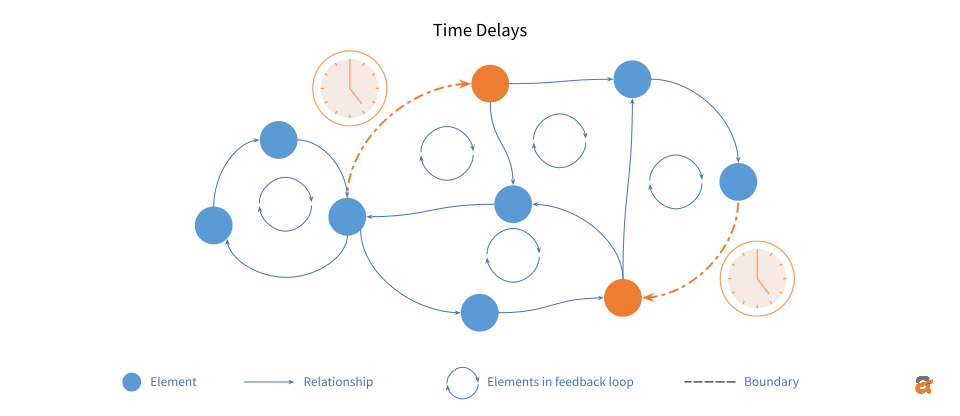
 Time Delays: The Hidden Complexity
 Time Delays: The Hidden Complexity
Wiener’s key insight was not just the existence of feedback loops but also the role of delays between action and response. In the 1962 “Beer Game” simulation, John Sterman demonstrated how supply chain delays consistently led managers to overorder inventory, creating massive oscillations despite their best intentions.
Delays explain many system behaviors:
- Market bubbles form when feedback about true asset values lags behind investment decisions
- Traffic jams persist long after their original cause disappears
- Organizational changes often appear to fail before suddenly succeeding
Feedback Design: Engineering System Behavior
 Feedback Design: Engineering System Behavior
Modern systems deliberately engineer feedback loops to shape behavior. Netflix’s recommendation system, for instance, creates reinforcing loops between viewing habits and content suggestions, gradually refining its understanding of user preferences while subtly guiding viewing choices. Similarly, social platforms craft intricate feedback mechanisms that drive engagement – likes to generate visibility, which creates more engagement, forming self-reinforcing cycles of user interaction. Even cryptocurrency systems employ feedback loops to maintain security and consensus through complex interactions between miners, validators, and network participants.
Understanding these engineered feedback mechanisms reshapes our approach to system design and intervention. When designing systems, engineers can incorporate self-regulating capabilities that maintain stability without constant adjustment. For example, cloud computing platforms scale resources automatically based on demand, employing feedback loops to sustain optimal performance. Engineers must carefully monitor potential amplification effects, as poorly designed mechanisms for automatic scaling can trigger destructive oscillations in resource allocation.
Leaders who seek to intervene effectively in these systems must comprehend their feedback structures deeply. They need to identify which loops drive undesired behavior, often discovering that subtle interactions between multiple feedback mechanisms underlie apparent problems. When adding or modifying feedback loops, engineers must consider timing carefully; delays between action and response can convert stabilizing feedback into destructive oscillations. As Forrester observed at GE, planners who fail to account for these delays often implement well-intentioned changes to feedback systems that generate unexpected consequences.
Wiener’s wartime insights did more than improve anti-aircraft guns – they revealed the mechanisms that regulate all complex systems. By understanding these feedback loops, we can better design, diagnose, and modify the systems that shape our world.
What Are System Classifications?
When President Kennedy declared in 1961 that America would put a man on the moon before the decade’s end, NASA engineers faced an unprecedented challenge. In July 1962, they gathered in a crowded conference room at the Manned Spacecraft Center in Houston, grappling with a daunting question: how to classify and manage the thousands of interconnected systems needed to achieve Kennedy’s vision.
The Saturn V alone had over 3 million parts. Still, the objective complexity lay in how these components interacted: the interplay between propulsion and guidance, life support and human psychology, and the relationship between spacecraft and space itself. Traditional engineering approached everything as an ordered, mechanical system, but Apollo was about to reveal the limitations of this mindset.
As the Apollo program progressed, engineers discovered that different aspects of the mission behaved fundamentally differently. The rocket’s propulsion system followed precise, predictable physics; more fuel meant more thrust in a perfectly linear relationship. However, other elements defied such straightforward analysis. Small changes in trajectory could compound into massive course deviations. Additionally, human factors such as crew fatigue or stress introduced unpredictability during mission operations. The systems they thought they understood began revealing hidden complexities.
NASA’s Apollo program demonstrated how different systems behave through its encounters with near-disasters and trial-and-error learning. These insights shaped our understanding of complexity across domains, from organizations to ecosystems.
Ordered vs. Unordered Systems
The Apollo missions’ unexpected challenges revealed a fundamental distinction in how different types of systems behave and respond to intervention. While the physics of rocket propulsion adhered to precise mathematical formulas, adding X amount of fuel yields Y amount of thrust, other aspects of the mission defied predictability. Factors such as the human response to prolonged isolation, the reliability of new equipment in space, and the interaction between spacecraft and the space environment resisted simplification into basic equations.
 Apollo Mission Control – Houston Space Centre
This distinction between ordered and unordered systems reshapes how we analyze and influence complex situations. SpaceX’s early attempts to land reusable rockets illustrate this principle. The basic physics of descent, gravity, air resistance, velocity, represented an ordered system with clear mathematical relationships. However, the real challenge emerged from the unordered elements: how rockets responded to unexpected wind patterns, how different components performed under varying stress conditions, and how control systems adapted to rapidly changing circumstances?
Ordered systems exhibit clear, consistent relationships between cause and effect. These are systems where similar inputs reliably produce similar outputs, making them responsive to systematic analysis and structured intervention. They appear in two forms:
- Simple-ordered systems demonstrate straightforward, predictable relationships. The Apollo program’s propulsion systems are a good example: A specific quantity of fuel generates a precise amount of thrust. These systems benefit from standardization and efficiency-focused improvements.
- Complicated Ordered Systems contain many interrelated parts but still follow deterministic patterns. Mission Control’s communication protocols exemplify complicated ordered systems. While involving many interlinked components – from radio networks to relay stations to human operators – these systems followed predictable patterns and established procedures. They required expertise to operate but maintained consistent behavior under normal conditions. Managing such systems focused on optimization and coordination rather than fundamental change.
Unordered systems resist prediction and control since their behavior emerges from countless interactions that can’t be reduced to simple formulas or procedures. Consider the early days of the International Space Station. While engineers could precisely calculate orbital mechanics and life support requirements, they couldn’t predict how different national teams would collaborate or how the equipment would perform in long-term space exposure. These systems require a different approach – instead of trying to control every variable as we can with rocket thrust, leaders must create environments where desired outcomes are more likely to emerge. For example, rather than dictating exactly how international crews should work together, NASA focused on creating shared protocols, cross-cultural training, and collaborative problem-solving frameworks that enabled effective teamwork to develop naturally. Unordered systems can be:
- Complex Systems are those in which patterns emerge from numerous interactions but remain challenging to predict. The interactions between crew members during extended missions, for example – despite rigorous training and protocols, new behavioral patterns would emerge during the stress and isolation of space flight. Managing complex systems requires adaptive approaches that focus on creating conditions for desired behaviors rather than attempting direct control.
- High uncertainty and rapid change characterize chaotic systems, where cause-and-effect relationships emerge only in retrospect. The Apollo 13 crisis exemplified a chaotic system, where multiple system failures created unprecedented challenges requiring rapid adaptation. Managers must first stabilize and establish basic order before applying more sophisticated interventions.
Open vs. Closed Systems
The Apollo Command Module initially appeared to be a perfect example of a closed system; designed to maintain a stable internal environment regardless of external conditions. Engineers focused heavily on perfecting their life support systems, ensuring stable temperature, oxygen levels, and CO2 filtration. But as missions progressed, they discovered that no system could be truly closed. Solar radiation impacted electronic systems, micrometeorites posed constant threats, and the astronauts’ biological processes influenced the internal environment in ways that couldn’t be fully predicted.
This experience revealed two fundamental system types:
- Open Systems maintain continuous exchanges with their environment, adapting to external changes while maintaining their core identity. Modern organizations operate as open systems, constantly exchanging resources, information, and energy with their environment. The dynamic exchange process enables adaptation and innovation but exposes organizations to external disruptions.
- Closed Systems operate with minimal external interaction, maintaining stable internal processes isolated from environmental influence. While pure closed systems rarely exist in organizations, specific processes or subsystems may operate in relatively closed conditions for particular purposes, such as maintaining security or compliance.
Linear vs. Nonlinear Systems
The Apollo missions illustrated the difference between linear and nonlinear system behaviors. While the Saturn V’s engine thrust demonstrated classic linear relationships – each kilogram of propellant produced a predictable amount of thrust – the spacecraft’s trajectory planning revealed deeply nonlinear dynamics. Small changes in launch angle or timing could compound into massive course deviations. These nonlinear relationships forced engineers to develop new mission planning and control approaches.
- Linear Systems exhibit proportional relationships between inputs and outputs, making their behavior more predictable and manageable. Simple manufacturing processes often demonstrate linear characteristics, where doubling inputs predictably doubles outputs. These systems benefit from traditional optimization approaches.
- Nonlinear Systems exhibit disproportionate or unexpected relationships between inputs and outputs. The rise and fall of social media platforms demonstrates this nonlinearity. When Facebook began competing with MySpace in the mid-2000s, small changes in user adoption near critical thresholds triggered massive, irreversible shifts in market dominance. MySpace had 100 million users and seemed unstoppable until Facebook reached a tipping point, after which MySpace’s user base collapsed rapidly and catastrophically. The relationship between user numbers and platform value wasn’t linear – small changes in the user base near the tipping point catalyzed massively disproportionate changes in overall platform value. Managing nonlinear systems requires attention to these feedback loops and tipping points rather than simple cause-and-effect relationships.
Static vs. Dynamic Systems
Apollo’s success depended on balancing static and dynamic systems. The spacecraft’s structural frame was a static system that maintained rigid stability during launch, space operations, and reentry. However, this static frame had to support highly dynamic systems like the guidance computer, which constantly adjusted to new inputs and changing conditions. The environmental control systems demonstrated this complexity most clearly, as they had to maintain stable conditions while dynamically responding to constantly changing demands from crew activity, solar heating, and equipment operation.
- Static Systems resist internal and external changes while maintaining consistent states over time. Organizations intentionally design specific processes for stability, such as compliance procedures or safety protocols, though purely static systems rarely exist.
- Dynamic Systems continuously evolve in response to internal and external factors. Most organizational systems demonstrate dynamic characteristics, requiring management approaches that balance stability with adaptability. Understanding dynamic system behavior helps leaders anticipate and guide change rather than resist it.
Hierarchical Systems
The Apollo program demonstrated a hierarchical system organization, most visible in mission control’s structure. Each flight controller monitored specific systems – EECOM for electrical and environmental, GUIDO for guidance, and CapCom for crew communication. Flight directors received reports from the specialists, integrated information, and made key decisions. The hierarchical structure proved particularly effective during crises like Apollo 13, where organized information flow enabled rapid problem-solving while maintaining clear lines of authority. The system remained flexible enough to allow direct communication when circumstances demanded it, as demonstrated when engineers devised new carbon dioxide filtration procedures quickly to save the crew.
Key characteristics include:
- Vertical Integration: Higher levels coordinate and constrain lower-level activities while receiving feedback and support from below.
- Modular Architecture: While contributing to overall system goals, components at each level can operate independently.
- Emergent Properties: The interaction of lower-level components generates properties at each level that transcend simple reduction to their constituent parts.
Understanding these classifications helps us manage complexity and design effective interventions by revealing the unique behaviors of different systems.
What Is Systems Thinking?
In 1961, Edward Lorenz studied weather patterns using computer simulations. He found that tiny temperature and wind speed measurement differences caused his weather predictions to diverge dramatically over time. Running identical simulations with slight variations in the input data produced completely different weather forecasts.
Around the same time, Jay Forrester at General Electric noticed that their factories showed extreme employment and inventory level swings, even when customer demand remained stable. Many assumed these fluctuations came from market changes or seasonal variations. However, Forrester discovered the instability came from within GE’s operations. When managers ordered extra inventory to prevent shortages or adjusted workforce levels to meet projected demand, their individual decisions created system-wide oscillations that grew larger over time.
Lorenz and Forrester’s discoveries showed that complex systems operate in surprising ways. Weather patterns and factory operations couldn’t be understood by examining their parts. Instead, their behavior emerged from many elements interacting with each other through feedback loops and nonlinear relationships. Small changes cascaded through these relationships to produce unexpectedly large effects.
The Shift in Perception
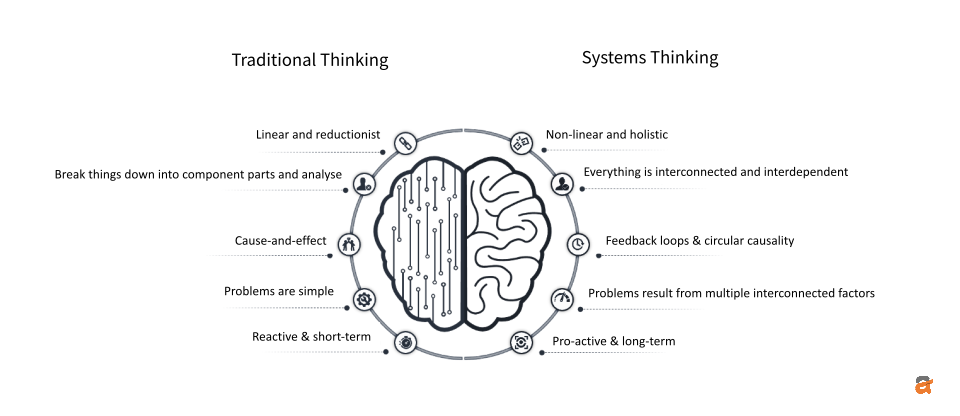 The Shift in Perception
The recognition that complex systems operate through interconnected relationships marked a progression in how we understand challenging situations. It represented an evolution from seeing parts in isolation to recognizing patterns of relationship and connection. The experience of a pioneering AI anti-money laundering software company powerfully illustrates this.
Founded in 2015, the company developed innovative technology for financial crime detection, successfully processing billions of transactions for major financial institutions. However, as they attempted to scale, mounting quality issues threatened their growth. Their traditional approach to solving problems – adding more specialists, implementing stricter controls, and increasing process requirements – failed to address the underlying systemic issues.
Individual departments operated in silos with competing goals, while sales and engineering remained disconnected. This experience mirrors what modern organizations are learning broadly: their most persistent challenges often stem from systemic relationships rather than isolated problems.
These traditional solutions failed because they approached each problem in isolation – treating symptoms rather than the underlying system. The company’s co-founders saw engineering as an easily outsourceable function where teams could be plugged in and swapped out at will. Incentivized purely by numbers, sales teams made promises to clients without consulting engineering capabilities. Departments – Development, QA, DevOps – maintained their silos, each pursuing competing KPIs. While individual fixes appeared logical, they collectively contributed to system deterioration. Organizations continue to learn from such experiences, recognizing how systemic relationships, rather than isolated problems, drive their most persistent challenges.
This new understanding emerges through three fundamental changes in perception:
- From Parts to Relationships: Instead of focusing on isolated elements, systems thinking examines how components interact and influence each other. The Spirit rover’s Mars mission demonstrated this principle in practice: NASA engineers had to consider power management not as isolated allocations to individual systems but as an interconnected network where each system’s energy use impacted the others. Applying similar integrated strategies, an AI software company restructured its organization, evolving from siloed engineering, sales, and quality departments to collaborative teams who shared ownership of delivery metrics and quality outcomes.
- From Snapshots to Patterns: Rather than reacting to individual events, systems thinking looks for underlying patterns over time. Just as Forrester discovered how GE’s inventory policies created recurring cycles of boom and bust, the software company’s leaders began recognizing how their siloed organizational structure, organized around function, manual deployments, and sales-driven commitments created predictable patterns of quality deterioration and deadline misses. Each missed deadline led to increased pressure, which led to more shortcuts, creating a reinforcing cycle of declining quality.
- From Symptoms to Structure: Systems thinking explores the underlying structures that generate problems, rather than treating surface symptoms. The software company launched a transformative experiment by creating an autonomous engineering team with dedicated infrastructure and the freedom to establish unique working methods. The new structural design empowered the team to break free from the crisis cycle, leading them to implement automated testing, continuous delivery, and collaborative planning between sales and engineering.
From Analysis to Understanding
To grasp how these developments reshape organizational practice, consider deeper aspects of the AI software company’s journey. Their initial approach followed a predictable route. They hired more QA specialists to catch bugs, implemented stricter code reviews and audit committees, added project managers to track deliverables, and increased testing requirements before releases.
Each solution made sense in isolation, just as GE’s managers made logical decisions about inventory levels. Yet, like GE’s case, these interventions often made things worse. More process controls slowed development, increasing pressure to take shortcuts. Additional testing requirements led teams to defer testing until late in development, making issues harder to address.
Their path to improvement emerged through gradual experimentation and learning. They created a separate engineering team with its product responsibility as an initial experiment. The resulting organizational patterns mirrored Forrester’s earlier findings at GE. Teams working in isolation created fragmented responsibility and finger-pointing across the organization. Manual deployment processes extended delivery times up to 8 weeks, while multiple client instances with different dependencies significantly increased testing complexity. Annual staff turnover of 25% steadily eroded institutional knowledge, undermining stability. Sales representatives’ unconsulted commitments regularly established unachievable deadlines.
These insights led them to reshape the structure and practices of their experimental team. Instead of adding more controls, they established a foundation based on clear principles: dedicated resources and infrastructure eliminated shared dependencies. At the same time, full autonomy allowed the team to develop its working methods. They fostered direct relationships between sales and engineering, ensuring shared ownership of quality metrics across the entire delivery lifecycle. Perhaps most significantly, they transitioned to small, frequent deliveries instead of large, risky deployments.
The results demonstrated the power of systems thinking: quality improved not through stricter controls but by understanding and restructuring the relationships generating behavior. Work that took 7-8 weeks could now be completed in 4-5 days. Teams maintained a consistent 2-week delivery cadence, and rework rates decreased significantly as quality processes became integrated throughout the entire lifecycle.
Preparing for Deeper Practice
The technology company’s challenges revealed several classic system patterns that would repeat across different organizations. When they relied on hiring more testers instead of addressing core development practices, they fell into what systems thinkers call “Shifting the Burden” – each new hire provided temporary relief but deepened their dependence on manual testing. Pressure for speed led to shortcuts in quality processes, creating a “Fixes that Fail” pattern where these shortcuts initially accelerated delivery but created technical debt that ultimately slowed everything down. Some teams received more resources and attention while others, particularly those managing legacy systems, fell further behind under mounting technical debt – a pattern known as “Success to the Successful.”
The company evolved by identifying key points where small changes generated large-scale effects. The innovation team shifted from rigid controls to fostering conditions for organic improvement. They implemented rapid delivery cycles that completed work in 4-5 days, enabling teams to learn and adjust quickly through consistent feedback. Their prioritization process naturally directed work toward high-value, low-effort initiatives by making trade-offs visible to all participants. Knowledge circulated more freely as team members formed informal networks, which grew into active communities that shared practices and solved problems collaboratively. Team members rotating facilitation duties developed leadership capabilities throughout the organization rather than concentrating them at the top.
The company’s journey illustrates key themes we’ll examine throughout this post. Its perspective on software engineering evolved from viewing it as a replaceable function to recognizing it as a strategic capability. These patterns emerge consistently across industries and contexts. The company’s discovery of effective leverage points, like rapid delivery cycles and organic knowledge networks, demonstrates how targeted changes reshape systems. Its implementation of lean principles and agile practices shows how theory converts into organizational advancement.
These themes connect directly to the sections ahead. The technology company’s experience illustrates how assumptions guide decisions, how common patterns recur across organizations, and how theoretical frameworks become practical tools for systematic improvement.
The company’s leaders had to change their perspective on software engineering, moving from treating it as an interchangeable commodity to recognizing it as a strategic capability that needed investment and development.
What Are Mental Models?
In 1984, a team of American automotive executives stood in a Toyota factory, watching the same production line for the third time that day. Despite hours of observation, they couldn’t see what made Toyota’s system so unique. The Japanese manufacturer was achieving unprecedented levels of quality and efficiency, yet it looked like a fairly ordinary production line to the American observers. These executives, leaders of America’s largest automotive companies, had traveled halfway around the world to unlock Toyota’s secrets. But their mental models of manufacturing, deeply rooted in mass production, quality inspection, and inventory management, prevented them from seeing what was right in front of them.
This blindness wasn’t unique to those automotive executives. Thirty years later, a global consulting firm faced a similarly invisible barrier. Their internal software development teams weren’t delivering fast enough, so leadership launched an initiative to “implement Agile.” Their mental model was compellingly simple: send everyone for Agile training, implement new processes, and their delivery problems would be solved. Just as the American manufacturers had reduced Toyota’s success to a set of practices they could copy, these leaders had reduced Agile to a simple recipe they could follow.
But mental models, the deeply ingrained assumptions and frameworks that shape how we interpret the world, are rarely so simple. Analyzing the global consulting firm’s operations revealed interconnected challenges that the leadership’s mental model had rendered invisible. Teams weren’t slow because they lacked Agile practices; they struggled to deliver high-value work; they were executing influential executives’ pet projects, which were prioritized on personal whims rather than a scientific consideration for what would bring the most value to their teams and clients. Leaders without a technical background and an appreciation of the impacts ignored technical debt, and product managers weren’t clear about their responsibilities either. The leaders’ mental model of “process change equals problem solved” had closed their eyes to this deeper systemic complexity.
The Power of Mental Models
Mental models shape not just what we see but what we can see. The automotive executives couldn’t understand Toyota’s system because their mental model of manufacturing excellence centered on efficiency, automation, and economies of scale. Toyota’s true advantage came from something their mental model didn’t include: a fundamentally different way of thinking about the relationship between workers, problems, and continuous improvement.
Similarly, the consulting firm’s leaders were operating from a mental model that viewed software development as a linear process that could be optimized through standardization and training. This model rendered invisible the complex interplay between technical architecture, business strategy, and human dynamics that determined their delivery performance.
These mental models interact directly with the fundamental systems concepts we’ve explored. When Toyota’s system challenged Western manufacturing assumptions, it wasn’t just about different practices: it revealed how mental models shape our interpretation of feedback loops, boundary definitions, and emergent properties. The Western executives’ mental models prevented them from recognizing the emergent properties of Toyota’s worker empowerment practices, just as their boundary definitions artificially separated workers from problem-solving processes.
When Mental Models Evolve
Just as Toyota’s methods gradually reshaped global manufacturing while Western companies iteratively developed new interpretations of these approaches, the consulting firm’s story illustrates how mental models evolve through continuous learning and experimentation. The firm underwent a fundamental shift when it began to view its challenges as strategic issues rather than process problems.
This evolution demonstrates how cognitive frameworks shape our interpretation of system behavior. The consulting firm’s journey required them to recognize how their existing mental model was limiting what feedback they could see and act on. Where they initially focused narrowly on process metrics, their understanding gradually expanded to include team dynamics and technical debt. This broader perspective helped them recognize previously hidden feedback loops and their influence on overall system performance.
As their understanding matured, the interconnections became clearer: The accumulation of technical debt affected team morale and productivity, which in turn influenced their ability to deliver features and maintain quality. Their prioritization methods, driven by immediate market pressures, often increased this technical debt. Most importantly, they began recognizing how these elements, technical capabilities, architecture, feature development, and team well-being, formed an interconnected system that needed to be understood and managed holistically.
The Role of Mental Models in System Behavior
Mental models don’t just influence individual understanding; they shape entire systems by:
- Determining what data we consider relevant
- Filtering which solutions we consider possible
- Establishing what we consider “normal” or “problematic”
- Guiding how we interpret feedback from our actions
The Toyota story illustrates this: American manufacturers collected extensive data about Japanese production methods but missed their significance because their mental models provided no framework for understanding what they saw. Similarly, the consulting firm had metrics showing declining delivery speed but interpreted this through a mental model that blamed process rather than system design.
Building Better Mental Models
Mental models and system archetypes interact in practical ways. Our mental models determine whether we can recognize recurring patterns in system behavior. When the consulting firm began seeing software development as a complex adaptive system rather than a linear process, it started recognizing patterns that had always existed but hadn’t been able to see.
These interactions affect several aspects:
- Pattern Recognition: Mental models determine which system patterns we can perceive and understand
- Intervention Design: Our mental models shape how we interpret system behavior and choose intervention points
- Future Anticipation: The sophistication of our mental models influences our ability to anticipate system behavior
The system archetypes we’ll examine next aren’t just abstract patterns; they’re templates that can help us evolve our mental models to recognize better and respond to complex system behaviors.
What Are System Archetypes?
Common System Archetypes
In 1956, Jay Forrester confronted a puzzle at General Electric’s Kentucky appliance plants. Despite stable market conditions, employment levels swung wildly in a persistent three-year cycle that no one could explain.
He noticed a similar pattern in the company’s inventory management, observing dramatic swings in factory production. Studying these fluctuations, he suspected there was something systemic driving these behaviors.
Understanding System Archetypes
System archetypes are recurring patterns of behavior that emerge across different organizations and contexts. Researchers have identified fundamental structures that shape system dynamics, revealing common patterns that repeat across different systems.
Like recurring plot structures in literature, these archetypes represent common “stories” in complex systems. Each has distinct characteristics:
- A specific structure of feedback loops and relationships
- Predictable behavior patterns that emerge from this structure
- Common failure modes and unintended consequences
- Characteristic intervention opportunities
Recognizing these archetypes is valuable because of their predictive power. When leaders identify these patterns early, they can take targeted action to prevent undesired outcomes. For instance, understanding the employment cycle as a “Fixes that Fail” or “Balancing Process with Delay” archetype at GE could have led to different hiring strategies that accounted for training delays.
Let’s examine each archetype through specific examples, starting with the patterns Forrester first observed at GE.
Fixes That Fail
When Forrester analyzed GE’s employment patterns, he found a classic example of what would become known as “fixes that fail.” In response to rising consumer demand for appliances, managers followed a seemingly logical approach: hire more workers to increase production.
Rather than increasing output, productivity initially dropped as experienced workers spent part of their time onboarding recruits. Once demand fell, GE had to lay off workers again, disproportionately affecting its newest workers, meaning GE lost the training investment it’d just made.
Each hiring and layoff cycle meant spending resources on training that never fully matured into expertise. Under pressure to meet production targets, managers would hire even more workers next time, trying to compensate for their workforce’s lack of developed skills.
Each decision seemed reasonable in isolation. Facing increased demand, what manager wouldn’t hire more workers? When demand dropped, how could they justify keeping excess staff? Yet these individually logical decisions created a destabilizing cycle:
- The problem appears (production capacity shortage)
- Quick fix implemented (hire more workers)
- Short-term improvement (staffing numbers look better)
- Unintended consequences emerge (productivity drops)
- Original problem returns, worse than before (fewer experienced workers)
- The system requires increasingly aggressive fixes (larger hiring waves)
Breaking this cycle required a different approach. First, GE needed to recognize that its reactive staffing approach perpetuated a self-reinforcing pattern of problems rather than solving isolated challenges. With this systemic understanding, they could develop more effective solutions: building flexibility into their baseline staffing model, creating training programs that minimize the impact on current production, and, most importantly, moving away from the cycle of reactive hiring and layoffs perpetuating the problem.
Supply Chain Amplification
How does a 10% increase in sales result in a 51% surge in factory orders? General Electric’s supply chain observations revealed the dramatic impact small changes can have across a system.
Store managers, noticing a slight uptick in sales, would increase their orders to maintain safe inventory levels. Regional warehouse managers, seeing increased store orders, would add their safety margin when ordering from distributors. Distributors would then increase their factory orders even more substantially. Simply by accumulating safety margins at each level, a 10% increase in in-store sales would result in a 50% increase in factory orders.
The problem was exacerbated by:
- Orders took weeks to move up the supply chain
- Production changes required months to implement
- Inventory adjustments happened in large, discrete jumps
- Each level of the chain had limited visibility into others’ actual demand
- Different departments interpreted the same signals differently
Breaking this cycle required understanding how local optimization creates system-wide instability:
- Individual managers optimize for their local metrics (avoiding stockouts)
- Each level adds its risk adjustments
- No single actor sees the full amplification effect
- The system lacks mechanisms to dampen these oscillations
- Traditional metrics often reinforce problematic behaviors
Success to the Successful
A provider of anti-money laundering software for financial institutions demonstrated how initial advantages compound into systemic success or failure. Their original product team had spent years building and maintaining their flagship platform, and years of expedient decisions had left them managing a sprawling codebase with multiple versions deployed across different clients. As front-end and back-end frameworks emerged, new technologies were added without removing the old, creating a complex web of dependencies.
The contrast became more evident when the company formed a new team to build a complementary product. Starting fresh, they could apply lessons learned from the team supporting legacy systems. They implemented strict technology standards, invested in automation from the start, and maintained a disciplined approach to technical debt.
The pattern manifested through clear cycles of advantage and constraint:
- The legacy team struggled with technical debt, making delivery slow
- The new team delivered faster, earning leadership trust and resources
- Additional resources enabled the new team to invest in automation
- These investments further widened the performance gap
- Legacy team couldn’t secure resources for improvements, creating a downward spiral
The new team’s initial advantages – a clean codebase, modern technology choices, and automated processes – generated the credibility to secure more investment. This investment enabled better practices, which produced better results, justifying even more investment.
Meanwhile, the legacy team faced compounding constraints. Each delayed delivery eroded confidence in their capabilities. Without modernization resources, they fell further behind, making it increasingly difficult to justify the investment they desperately needed to break free from technical debt.
Tragedy of the Commons
The DevOps challenges at a well-known enterprise identity provider, as well as access management solutions, illustrate how individual team optimization can damage shared resources. The company offers a comprehensive suite of security products, including multi-factor authentication and single sign-on, privileged access management, and identity governance.
While different product teams were responsible for developing these distinct capabilities, they all relied on the same central DevOps infrastructure for deployment and operations. Each team made independent decisions that increased deployment complexity, such as choosing different technology versions, implementing direct production fixes, and maintaining multiple product versions simultaneously. Since individual teams could push complexity downstream to DevOps, they had no incentive to reduce it.
The burden on the shared DevOps team gradually increased. Each team’s expedient decisions, a quick production fix here, a new technology version there, created additional deployment complexity. The DevOps team had to manually handle these variations, track different versions, apply production hotfixes to source code and manage an increasingly complex release process.
The pattern revealed itself through mounting operational friction:
- Release processes became increasingly manual and fragile
- Deployment complexity grew with each team’s independent decisions
- Production fixes created reconciliation overhead
- Technology version sprawl complicated environment management
- Standard processes broke down as exceptions became the norm
When deployments became unreliable, all teams suffered. Emergency fixes took longer, releases became unpredictable, and the DevOps team spent more time firefighting than improving infrastructure.
The system created no incentive for individual teams to consider the collective impact:
- Teams optimized for their local delivery speed
- Complexity costs were externalized to DevOps
- No single team bore the full consequences of their decisions
- Short-term fixes accumulated into systemic problems
- Each team’s “special case” became everyone’s problem
Shifting the Burden
A well-known global consulting firm’s internal technology teams built and maintained a suite of proprietary tools consultants use in client engagements – from data analytics platforms to project management systems. These tools were central to the firm’s competitive advantage, but QA remained a persistent bottleneck. In a siloed organizational structure, multiple development teams shared a small QA group, leading to predictable bottlenecks at the end of every sprint. Despite the strategic importance of these tools to the firm’s operations, leadership viewed QA as a cost and not an enabler of scale.
The pattern emerges as teams compete for limited QA resources:
- Multiple teams push code for testing on the same sprint end dates
- A small QA team must handle concurrent testing demands
- Time pressure prevents building automated tests
- Management sees QA as a necessary evil rather than a strategic asset
- Resources stay constrained as QA is viewed as a cost center
What makes this pattern particularly difficult to break is how it becomes self-reinforcing:
- Pressure to deliver leads teams to rely on manual testing
- Time spent on manual testing reduces the capacity for automation
- Lack of automation increases reliance on manual testing
- QA remains reactive rather than strategic
- The organization becomes trapped in a cycle of tactical fixes
The fundamental solution – investing in test automation and treating QA as a strategic enabler – gets pushed aside in favor of the quick fix of adding more manual testers or demanding faster testing turnaround. This burden devolves from systemic improvement to tactical response, perpetuating the pattern.
Other Common Archetypes
While we’ve explored several key archetypes in detail, systems thinking has identified many other common patterns that shape organizational and social dynamics. Each exhibits distinct characteristics and behaviors:
- A Growth and Underinvestment pattern emerges when success creates increased demand, but investment in necessary capacity lags. The resulting capacity constraints eventually limit growth, particularly in rapidly scaling organizations where infrastructure investment falls behind growth.
- Escalation occurs when two parties see their welfare as dependent on staying ahead of the other. This leads to an accelerating cycle of aggressive moves, such as price wars, arms races, and organizational power struggles.
- In Drifting Goals, performance standards gradually decline because pressure to lower standards (to resolve the gap between goals and actual performance) outweighs pressure to improve performance. Organizations commonly experience this effect in quality standards and culture.
- Accidental Adversaries develop when partners who initially work toward mutual benefit inadvertently undermine their collaboration through misaligned actions, resulting in deteriorating trust and cooperation, a pattern common in supplier relationships and strategic partnerships.
- With Eroding Goals, short-term solutions addressing immediate pressures reduce the focus on long-term goals, gradually compromising fundamental objectives, particularly in environmental protection, safety standards, and quality assurance.
- Under Rule Beating, imposed rules or targets create unexpected side effects as people find ways to meet the letter of the law while violating its spirit, frequently occurring in performance management systems and regulatory compliance.
- The Attractiveness Principle describes how growth becomes concentrated in already successful areas while other areas continue to decline, manifesting in urban development, market share dynamics, and talent acquisition.
- Seeking the Wrong Goal occurs when systems optimize for measurable targets while missing more important but harder-to-measure objectives, particularly evident in education, healthcare, and customer service metrics.
- Limits to Success arise as growth approaches external constraints, yet organizations continue pushing the same growth strategies rather than addressing fundamental limitations, a pattern common in market saturation scenarios and resource-constrained environments.
These archetypes represent just a subset of the patterns systems thinkers have documented over decades of research and practice. Scholars and practitioners continue identifying and analyzing new archetypes as they study complex systems across different domains; from organizational behavior to urban development, environmental systems, and technological evolution. Each newly identified pattern adds to our understanding of how systems behave and how we might better manage them.
Like those we’ve examined in detail, these patterns emerge from system structures and feedback relationships. Understanding them enriches our ability to recognize and respond to complex system behaviors. However, as we’ll explore next, the real challenge lies not in identifying individual archetypes but in understanding how they interact and reinforce each other in real-world systems.
Recognizing and Responding to Archetypes
System archetypes reveal themselves gradually, like patterns emerging from background noise. While we’ve examined these archetypes individually, real-world systems rarely present neat categorizations. Instead, multiple patterns interact and overlap, creating complex behaviors that defy simple classification.
Consider how patterns emerged in our earlier examples. The DevOps challenges at the identity security provider weren’t just a simple Tragedy of the Commons: the strain on shared resources interacted with Success to the Successful dynamics as faster-delivering teams gained more autonomy. Meanwhile, attempts at quick fixes created their reinforcing cycles of technical debt. Each attempted solution seemed to trigger or amplify other systemic issues.
This interweaving of archetypes demands a deeper kind of pattern literacy. Surface solutions often fail because they isolate single patterns, missing the wider web of relationships. Effective intervention requires understanding how archetypes interact, reinforce, and shape one another. In his studies of manufacturing organizations, Peter Senge found that successful companies developed this multi-pattern awareness. These companies could sense how pushing for immediate efficiency gains might trigger limits to growth or how resolving resource conflicts might reveal deeper balancing loops in organizational culture.
The challenge is not just to recognize these interactions but also to respond appropriately to their complexity. Teams that successfully navigate multiple archetypes develop what might be called pattern intelligence: the ability to read and respond to emerging system behaviors before they fully manifest. This capability emerges through experience, reflection, and, most importantly, understanding how attempted solutions can spread unexpectedly through the system.
This more nuanced understanding of archetype interaction sets the foundation for exploring how and where to intervene in complex systems – the subject of our next section on leverage points.
What Are Systems Leverage Points?
In 1970, an MIT computer processed dire predictions about humanity’s future. Donella Meadows realized the data revealed an uncomfortable truth: human activity pushed Earth’s systems toward complete collapse. The models showed that by 2100, pollution, resource depletion, and population growth would converge to create a world that could no longer sustain human life. Most troubling was that common policy fixes – technological efficiency improvements, pollution controls, even resource conservation programs – would barely alter this trajectory. The world was implementing solutions that looked good on paper but would fail to prevent catastrophe.
 This realization led Meadows to conclude that we were pushing the wrong levers. While governments focused on restrictive policies and industries tweaked efficiency metrics, the real power to change the system lay elsewhere.
Understanding Leverage Points
Core concept and definition
When Russell Ackoff started working with Anheuser-Busch in 1968, Marketing executives pushed for a significant increase in advertising spending, arguing that more ads meant more sales. However, Ackoff’s analysis revealed that, after a certain threshold, increasing the advertising budget did not change beer sales. The company was pushing hard on a lever that had stopped working.
This discovery confirmed a key principle in systems theory:
Leverage points are specific structures within a system where targeted interventions can produce outsized effects on system behavior.
Leverage points derive their power from their position within the system’s network of relationships and feedback loops rather than from the magnitude of the intervention itself.
Leverage points manifest in three primary forms within complex systems:
- Parameter modifications that alter system variables
- Architectural changes that reshape relationships between system components
- Transformative interventions that redefine the system’s governing rules or goals
Identifying leverage points requires systematic analysis of structural relationships (the system’s architecture) and dynamic patterns (how these relationships generate behavior over time). This analysis reveals where small changes can catalyze system-wide evolution by altering critical feedback loops, information flows, or decision rules. Most significantly, leverage points challenge traditional linear thinking about change in complex systems.
Why do some interventions work while others fail
Meadows discovered this pattern repeatedly in her environmental systems work: well-funded programs targeting obvious problems often produced disappointing results, while smaller interventions at key leverage points created cascading positive changes.
Success or failure hinges on three factors:
- First, system momentum matters more than force. When Ackoff analyzed IT system upgrades at companies like Anheuser-Busch and Bell Telephone, he observed that these initiatives often failed because they attempted to enforce radical changes rapidly, overlooking the entrenched work cultures and existing technological integrations. This mismatch led to resistance rather than adoption. Successful interventions, like his work at Anheuser-Busch, identified and harnessed natural system flows.
- Second, timing and sequence drive success. High-leverage interventions often fail when leaders implement them in the wrong order. Teams should adjust parameters after they restructure system relationships. When they reverse this sequence – like treating symptoms before addressing root causes – they waste resources and can entrench problematic patterns.
- Third, understanding feedback delays determines intervention success. Systems resist immediate change, often getting worse before improving. Most failed interventions are abandoned during this initial deterioration, while successful ones anticipate and persist through this phase.
These insights explain why identical interventions can produce dramatically different outcomes in similar systems. The key isn’t the intervention’s relationship to existing system dynamics.
Meadows’ Leverage Point Hierarchy
Through her work at MIT and subsequent research, Meadows systematically mapped these different power points within systems, creating a hierarchy of twelve leverage points ranked by their effectiveness in catalyzing change. This framework explained why seemingly obvious interventions like industrial pollution controls or agricultural subsidy adjustments produced such limited impact while other smaller changes could fundamentally reshape entire systems. It illuminated where the real power for change resided.
Parameters and Buffers (Points 1-4)
 Parameters and Buffers (Points 1-4)
The lowest leverage points involve changing system parameters and buffer sizes:
- Constants and Parameters (taxes, subsidies, standards)
- A sales organization repeatedly adjusting commission rates to drive different behaviors, only to find salespeople always optimizing around whatever the new structure is
- A manufacturing company continually tweaks machine settings and production line speeds but sees output quality continue to fluctuate around the same mean.
- Buffer Sizes (inventory levels, resource reserves)
- A retail chain adjusting safety stock levels at distribution centers but still experiencing the same stockout patterns during demand spikes
- A software company increasing its engineering team size to handle more projects but finding that development bottlenecks persist
- Physical Structure (transport networks, production layouts)
- A company redesigning its office layout to encourage collaboration but seeing communication patterns remain unchanged
- A warehouse implementing a new sorting system without addressing underlying inventory management issues
- Delay Lengths (response times, delivery schedules)
- A customer service department reducing their target response time from 24 to 12 hours but seeing no improvement in customer satisfaction
- A product team shortening their sprint cycles from two weeks to one week while still encountering the same delivery challenges
Both global and organizational change efforts often start here, with disappointing results. When Shell Oil attempted to improve efficiency in the 1990s, it focused on tweaking production quotas and inventory levels. Similarly, change initiatives often begin by adjusting KPIs, compensation structures, or reporting hierarchies. Yet, the systems inevitably drift back to their previous states in both cases. A technology company might revise performance metrics or adjust bonus thresholds, while a government might adjust tax rates or emission standards; but without deeper changes, these interventions rarely stick.
These points offer the least leverage because they don’t alter the underlying system structure. Like pushing a boulder uphill, changes here require constant force to maintain and often trigger compensating responses from other parts of the system.
Feedback and Information Flows (Points 5-8)
The middle tier of leverage points centers on system dynamics:
- Balancing Feedback Strength (market mechanisms, regulatory controls)
- A tech company implementing real-time customer satisfaction metrics that automatically adjust support team staffing levels
- A hotel chain creating dynamic pricing systems that respond to both competitor rates and demand patterns
- Reinforcing Feedback Strength (compound interest, viral growth)
- A B2B software company redesigning its referral program to leverage network effects within industry verticals
- An e-commerce platform adjusting its recommendation engine to amplify product discovery across related categories
- Information Flow Structure (who does/doesn’t have access to what information)
- A consulting firm replacing hierarchical reporting with open project dashboards, improving how teams collaborate and make decisions
- A manufacturing company connecting shop floor IoT data directly to procurement, creating autonomous supply chain adjustments
- System Rules (incentives, constraints, punishments)
- A professional services firm replacing billable hours targets with client outcome metrics, fundamentally changing service delivery
- An airline restructuring its loyalty program to reward total customer value rather than just miles flown
The success of Grameen Bank demonstrates these leverage points’ power at a societal level – by restructuring microfinance information flows and feedback loops, Muhammad Yunus fundamentally reshaped poverty reduction dynamics. At an organizational level, companies achieve similar systemic changes by redesigning their feedback systems. When leadership teams shift from annual reviews to continuous feedback loops or organizations advance from siloed information to transparent decision-making processes, they often see lasting cultural changes that parameter adjustments never achieved. A manufacturing company might discover that sharing real-time production data across teams creates more improvement than any efficiency mandate.
These points offer moderate leverage because they shape the system’s operation rather than just its parameters. Changes here can catalyze self-sustaining improvements by reconfiguring the relationships between system components.
System Goals and Paradigms (Points 9-12)
The highest leverage points involve reshaping the system’s fundamental nature:
- System Structure (the power to create new feedback and control mechanisms)
- A pharmaceutical company reorganizing from disease-specific departments to integrated therapeutic areas, enabling cross-disciplinary innovation.
- A retail bank evolves from transaction processing to financial wellness coaching, redefining every customer interaction.
- System Goals (the purpose or function of the system)
- An automotive company moving from “units sold” to “mobility solutions provided” as their core metric, revolutionizing their entire business model
- A consumer goods company redefines success from market share to circular economy leadership, reconfiguring its product development and supply chain
- Paradigms (the mindset out of which the system arises)
- An insurance company moving from risk assessment to risk prevention as its fundamental purpose, revolutionizing its entire business approach
- A telecommunications company evolving from infrastructure provider to digital ecosystem enabler, redefining its role in the market
- Transcending Paradigms (the freedom to choose among paradigms)
- A technology company evolving beyond traditional industry categorizations to create new market spaces
- A manufacturing company transcending the product-service dichotomy to create entirely new value delivery models
Interface Carpets exemplified this principle when it redefined success from “maximizing profit” to “zero environmental impact,” catalyzing innovations that efficiency programs never achieved. Organizations create significant change when they shift from command-and-control to participative management or when they adopt stakeholder-value models instead of pursuing only profit. When healthcare organizations evolve their metrics from patient throughput to long-term health outcomes, this shift reconceptualizes every aspect of care delivery. Software companies that progress from product vendors to customer success partners fundamentally restructure their approach to development, support, and innovation.
These points provide the highest leverage because they determine the system’s purpose and core conceptualization. Adjustments at this level can fundamentally restructure system behavior through relatively small interventions.
Finding Leverage Points in Practice
In 1994, a team of Shell Oil analysts puzzled over a peculiar pattern in their Venezuelan operations. Despite investing millions in the latest drilling technology, production wasn’t improving. The key insight came when a junior engineer noticed something unexpected: the constraint wasn’t drilling speed but decision-making delays in project approvals. This insight changed their focus from optimizing drill bits to redesigning their governance process: a classic example of finding the true leverage point in a complex system.
Analysis Methods
System leveraging requires both art and science. When Peter Senge worked with Ford in the 1980s, he developed a systematic approach combining data analysis with pattern recognition. His method revealed that Ford’s quality problems stemmed not from manufacturing processes (where they were investing heavily) but from the disconnect between design and production teams: a leverage point that competitors like Toyota had already mastered.
The core of leverage point analysis involves three key practices:
- Following the Energy: Tracking where system resources, attention, and resistance concentrate often reveals leverage points. When Southwest Airlines analyzed its operations, it discovered that rapid gate turnaround, not fuel efficiency or route optimization, was its critical leverage point for profitability.
- Mapping Feedback Loops involves identifying where system behaviors amplify or dampen changes. Netflix’s recommendation system shows this in action. The company found that improving prediction accuracy beyond 80% had diminishing returns, but diversifying recommendations created powerful new feedback loops in user engagement.
- Examining Boundaries: Investigating where system borders create constraints or opportunities. Toyota revolutionized manufacturing by recognizing that the boundary between manufacturer and supplier could drive quality and innovation through its supplier integration system.
Pattern Recognition
The Cleveland Clinic’s evolution began when leaders recognized a universal pattern: the gap between specialists’ expertise and patients’ holistic needs. This insight drove the organization to restructure around patient conditions rather than medical specialties, a model that numerous healthcare systems have since adopted.
Common patterns that signal leverage points include:
- Constraint Bottlenecks: Points where system flow consistently, slows, or stops
- Information Gaps: Places where critical data fails to reach decision-makers
- Misaligned Incentives: Situations where goals conflict across system components
- Delayed Feedback: Areas where cause and effect are separated in time
These patterns appear repeatedly across organizations because they mark places where system behavior diverges from the intended design. What makes them particularly powerful is that they’re visible from the ground – frontline employees often know exactly where work gets stuck, which decisions are made without key information, where goals conflict, and which problems take too long to surface. By actively looking for these patterns, leaders can quickly identify potential leverage points without needing to understand every detail of their complex systems. The key is learning to see these patterns not as inevitable frustrations but as signposts pointing toward opportunities for systemic change.
Common Intervention Points Across Systems
Over decades, systems analysts have consistently identified high-leverage intervention points across different domains. Ray Anderson restructured Interface Carpets’ operations to embrace sustainability by applying proven leverage points from other industries: redefining success metrics, reshaping information flows, and realigning the company’s fundamental purpose.
The most reliable intervention points typically involve the following:
- Information Access: Changing who gets what information when
- Decision Rights: Changing where and how choices are made
- Goal Alignment: Ensuring system components work toward compatible objectives
- Feedback Speed: Reducing delays between actions and their consequences
These patterns emerged repeatedly in Meadows’ work, from urban development to environmental conservation, suggesting their universal applicability across complex systems.
Success Patterns and Pitfalls
When Paul Polman became CEO of Unilever in 2009, he saw a system trapped in quarterly earnings cycles that prevented meaningful long-term initiatives. Rather than making incremental changes, he targeted a significant leverage point: he stopped providing quarterly guidance to shareholders. This controversial move initially shocked markets but created space for the company to pursue longer-term strategic changes. The key wasn’t the specific policy change but understanding when and how to implement it.
Timing and Sequence
TSMC demonstrates how timing shapes leverage point effectiveness. When it entered the semiconductor market in 1987, instead of competing directly with established players, TSMC identified a strategic leverage point: the growing need for dedicated manufacturing capacity. By waiting until this industry pattern fully emerged, TSMC’s pure-play foundry model reshaped the semiconductor industry’s structure and redefined its operational paradigm.
Three critical timing principles emerge from successful interventions:
- Preparation Before Action: Successful changes often require invisible groundwork. Before Southwest Airlines could leverage rapid gate turnarounds, it had to build operational capabilities and a culture to support them. Similarly, technology companies must lay down architectural foundations well before visible changes emerge. Expanding internationally means restructuring data centers, adapting data handling for different privacy regimes, and decoupling UI components to support multiple languages; all before serving the first customer in a new region.
- Rhythm of Implementation: Like Toyota’s famous “stop the line” quality system, effective interventions match the natural rhythm of their systems rather than forcing arbitrary timelines. This principle appears in how organizations optimize their batch sizes – considering both the value created and the transaction cost of the work itself. A software team might find that weekly releases create the optimal balance between delivery speed and integration overhead. At the same time, a manufacturing process might require daily adjustments to maintain quality without disrupting production flow.
- Sequence of Changes: High-leverage interventions often fail when implemented out of sequence. Interface Carpets succeeded because Ray Anderson redefined the company’s purpose before adjusting metrics and processes. Technology organizations learn this lesson repeatedly – attempting to implement cross-functional teams and measure cycle time before reorganizing around value streams often leads to failure. The sequence matters: first, reshape the organization around value delivery, then form cross-functional teams, and only then implement new metrics like cycle time and throughput.
Common Failure Patterns
Bill Gore, founder of W.L. Gore & Associates, observed that most organizational innovations fail not because they are incorrect but because they are implemented at the wrong leverage point or at the wrong time. The company’s lattice organization succeeded where others failed because Gore understood three common pitfalls:
- Force Overflow: Attempting to overpower existing system dynamics rather than redirect them. This often manifests as top-down mandated “best practice” frameworks that ignore team contexts and human factors. Even when the framework itself is sound, forcing it onto resistant teams typically leads to malicious compliance or outright rejection. IBM’s initial response to personal computers, trying to push the market to maintain mainframe dominance, shows how even industry leaders can fall into this trap.
- Symptom Over Structure: Addressing visible problems without changing underlying system structures. Organizations often diagnose their issues as “teams not delivering” and respond by training teams in new processes or methodologies. However, if the root cause lies in the enabling environment, unclear priorities, conflicting incentives, or missing infrastructure, no amount of team-level process improvement will solve the problem. Kodak’s massive investments in digital camera technology failed because they didn’t address their fundamental business model’s misalignment with digital photography.
- Speed Over Sequence: Rushing to implement changes without establishing necessary preconditions. This appears frequently in Agile implementations, where organizations make superficial changes without fundamental adjustments in how work happens. Project Managers become Scrum Masters, and Business Analysts become Product Owners, but their actual work remains unchanged. These “Product Owners” continue creating lengthy documents requiring multiple approvals, while “Scrum Masters” maintain detailed project plans and micromanage delivery. Teams still share floating resources across projects, and “sprints” merely break down what was previously a three-month development phase into two-week blocks, with testing still pushed to the end. The terminology changes, but the underlying system remains intact.
Building Systemic Change
Microsoft’s transformation under Satya Nadella demonstrates how successful leverage point interventions build lasting change. Rather than forcing immediate results, Nadella focused on what systems theorist Peter Senge called “the long arc of systemic change”:
- First, he altered information flows by breaking down the walls between divisions and creating transparency around project data and customer feedback across the organization.
- Then, he adjusted feedback mechanisms, moving performance reviews away from stack ranking and internal competition and toward collaboration and customer impact.
- Finally, he redefined the company’s fundamental purpose by redefining Microsoft from a “Windows company” to a platform company focused on customer empowerment and cloud-first solutions.
This sequence, from information to feedback to purpose, created sustainable change by interacting with rather than opposing the system’s natural dynamics.
The Art of Intervention
Successful leverage point intervention ultimately requires balancing scientific analysis with artistic sensitivity to timing and context. Donella Meadows often reminded her students, “We can’t control systems or figure them out, but we can dance with them.”
This dance requires:
- Understanding system momentum and natural change patterns
- Recognizing when to act and when to wait
- Maintaining flexibility while pursuing clear objectives
- Building change that reinforces itself through existing system dynamics
The most successful interventions don’t just change system parameters; they reshape how the system thinks about and regulates itself. Yet this reconfiguration reveals a deeper challenge: how do we maintain these changes as systems connect and combine with others? As organizations grow more complex and interconnected, leaders must pair the ability to identify leverage points with the skill to integrate across system boundaries.
What Is System Integration?
Integrating Across Boundaries: The ISS Challenge
In December 1998, two massive spacecraft maneuvered toward each other in low Earth orbit. The Russian-built Zarya control module and the American Unity node were about to attempt something unprecedented: connecting two modules that had never been physically joined before. This marked the first assembly of what would become humanity’s largest space-based construction project. This endeavor wasn’t just about connecting hardware: it represented the integration of fundamentally different engineering philosophies, measurement systems, and technological approaches into a coherent whole.
 Russian Zarya Module and USA Unity Node
Twenty-five years later, a global real estate services firm faced a different but equally complex integration challenge. As COVID-19 reshaped workplace dynamics, the firm needed to integrate multiple technology startups from its investment portfolio to meet changing market demands. It also needed to build management systems from its original service portfolio and system implementation teams while transitioning from project-based to product-based delivery.
Both scenarios demonstrate how system integration extends beyond technical compatibility to encompass culture, processes, and fundamental working methods.
All organizations face integration challenges across every dimension of their operations. Whether merging distinct organizational cultures, combining different ways of working, aligning diverse stakeholder networks, or harmonizing conflicting governance models, leaders recognize that successfully bringing systems together while preserving their essential strengths is a strategic imperative.
These integration challenges connect directly to core concepts we’ve explored in previous sections. They require careful attention to system boundaries, creating interfaces that enable collaboration while preserving essential autonomy. They demonstrate how feedback loops regulate complex interactions between subsystems. Integration challenges expose underlying patterns in system behavior, patterns that help us understand everything from corporate mergers to organizational change.
Why Integration Matters: The Strategic Imperative
Most significant business opportunities now lie at the intersection of different systems, whether combining manufacturing and distribution networks, bridging research and commercial product development, or connecting local operations across multiple countries. Companies that excel at integration can seize these opportunities faster and more effectively than competitors.
The strategic importance of integration manifests through the following:
- Speed to Market: Organizations that quickly integrate new capabilities through acquisition, partnership, or internal development respond faster to market opportunities. The real estate firm’s ability to rapidly integrate PropTech startups into their core business enabled them to meet evolving client demands for flexible workspaces and digital solutions during the pandemic.
- Risk Management: Poor integration creates cascading risks throughout organizations. When the real estate firm began integrating its venture investments, it discovered that differences in development approaches and culture between startups and traditional IT created operational risks that threatened service delivery.
- Innovation Capacity: Combining different technologies, processes, and perspectives drives innovation. The real estate firm found that successfully integrating startup teams with its traditional operations created new workplace technology capabilities that neither group could have developed alone.
- Scalability: As organizations grow, their ability to integrate new operations, markets, and capabilities determines scaling success. The real estate firm’s services business expanded to 3,000 people, requiring new team organization and management approaches.
When Systems Collide: Integration’s Core Principles
The early days of ISS construction revealed integration principles that would reshape our thinking about combining complex systems. When Russian and American life support systems first needed to work together, engineers discovered that each nation’s equipment made different assumptions about optimal atmospheric pressure and oxygen content.
Similarly, when the real estate firm began integrating its technology investments, it discovered fundamental differences in work culture and delivery approaches. Their traditional “black suit & tie” culture, built around predictability and waterfall project management, clashed with the agile startup mentalities of their new acquisitions.
These parallel experiences led to three core integration principles:
Interface Standardization
In the ISS, engineers created controlled interface zones between modules that acted as “translation layers. ” These zones gradually adjusted conditions, allowing each system to operate within its designed parameters.
In modern business, this manifests through standardized APIs, clear protocols for cross-cultural teams, and structured approaches to cross-functional collaboration. The real estate firm demonstrated this when it established its product organization. Rather than forcing startups to adapt to traditional processes completely, it created standardized interfaces around client engagement and risk management. For example, while startup teams could maintain their agile development practices internally, they interfaced with legal and compliance through structured checkpoints that satisfied corporate requirements without sacrificing agility.
Functional Redundancy
The ISS implemented different approaches to achieve the same goal, which proved invaluable when system failures required backup solutions.
In business contexts, this means maintaining multiple paths for critical processes. The real estate firm reorganized around value streams, allowing teams to be organized by region, property type, technology stack, or service offering; providing multiple ways to deliver value to clients.
Protocol Harmonization
The ISS developed integrated protocols that accommodated different technological approaches while maintaining consistent outcomes.
The real estate firm similarly had to harmonize their traditional waterfall-based legal and sales processes with agile delivery methods from their startup acquisitions, creating hybrid approaches that preserved essential controls while enabling faster delivery.
These principles connect directly to our earlier discussions of system boundaries and feedback loops. The interface zones functioned as semi-permeable boundaries, regulating resource flow while maintaining stability. The integrated protocols created feedback loops that helped different systems adjust to each other’s behaviors.
Building Integration Networks: From Parts to Whole
As the ISS became more complex, the challenge progressed from integrating individual components to managing networks of interdependent systems. The station’s supply chain clearly showed this: Each participating nation had its launch vehicles, cargo systems, and mission control centers. Creating a coherent whole required what flight director Chris Kraft called “networks of networks”; integrated systems that maintained individual characteristics while functioning as part of a larger whole.
The real estate firm experienced a similar evolution in complexity as it integrated its technology investments. What started as seemingly straightforward technical integration, connecting startup platforms with legacy systems, emerged as a multi-layered challenge of interconnected networks. The organization needed to restructure its traditional project-based structure, which had organized work around floating resource pools and predictable stage-gated workflows, into a product-focused approach built on long-lived teams and value streams that optimized the flow of value.
The parallel between these experiences reveals how integration challenges evolve from simple component connections to managing complex system interactions. Just as the ISS had to balance individual nations’ operational autonomy with collective mission success, the real estate firm needed to maintain its traditional strengths in predictability and compliance while embracing the agility and innovation of its startup acquisitions.
This network-level integration manifested through several key dimensions:
- Operational Networks: The firm reorganized around value streams, creating networks of complementary teams that could be configured by region, property type, or service offering. This mirrored how the ISS managed its complex operations through interconnected but semi-autonomous systems.
- Cultural Networks: The challenge of integrating their traditional “black suit & tie” culture with startup mentalities required building networks of shared understanding and mutual respect, similar to how the ISS enabled collaboration across different national space programs.
- Technology Networks: Just as the ISS had to integrate different nations’ technical systems while maintaining their essential capabilities, the firm needed to connect legacy platforms with new digital solutions while preserving critical functionality.
Common Integration Patterns: The Balance of Local and Global
The ISS’s most valuable lesson emerged from the constant local and global optimization tension. Each nation’s modules needed to function efficiently while contributing to the station’s overall goals. Through years of operation, several distinct patterns emerged that help organizations anticipate and address common integration challenges:
Standardization vs. Autonomy
The fundamental tension in integration lies in balancing consistent standards with local flexibility. The ISS demonstrated this through its approach to life support systems, where different national modules maintained their unique approaches while establishing clear protocols for interaction. In business contexts, this manifests as:
- Organizations oscillate between enforcing standards and allowing local autonomy
- Finding the right balance between consistency and flexibility
- Creating frameworks that standardize interfaces while preserving operational freedom
The real estate firm encountered this pattern when integrating their PropTech acquisitions. While they needed standard client delivery and risk management approaches, they also had to preserve the innovative capabilities that made these startups valuable. Their solution emerged through creating standardized interfaces, common ways of engaging with sales, legal, and delivery processes, while allowing teams to maintain their unique internal practices.
Technical vs. Cultural Integration
While technical systems can often be integrated through careful engineering, the human and cultural aspects typically require more attention. This pattern, first observed in space agency collaborations, now helps organizations understand why many mergers fail despite technical success:
- Technical integration succeeds, while cultural integration lags
- Bridging invisible cultural gaps that technical solutions can’t address
- Building integration approaches that address both technical and social systems
The real estate firm experienced this directly when its traditional project management office, accustomed to waterfall methodologies and predictable timelines, had to adapt to its technology teams’ more fluid, iterative approaches. The technical integration of systems proved far easier than reconciling these fundamentally different work approaches.
Scale vs. Speed
Integration efforts often face competing pressures between rapid delivery and sustainable implementation. The ISS team encountered this when integrating new modules – quick connections could solve immediate needs but create long-term operational challenges:
- Rapid integration creates short-term gains but long-term problems
- Balancing quick wins with sustainable integration
- Developing phased approaches that deliver immediate value while building lasting capabilities
This pattern emerged vividly as the real estate firm shifted from a project to a product focus. While market pressures necessitated swift integration of new digital capabilities, rushing this transition risked disrupting the established processes that ensured client reliability. The firm addressed this challenge by establishing “innovation hubs” where teams could test and refine new approaches before implementing them broadly. For example, the firm piloted its product-focused approach by experimenting with different property configurations across multiple regions, enabling teams to iterate and adjust before expanding across the global portfolio.
Integration Patterns and System Archetypes
“These integration patterns interact directly with the system archetypes we explored earlier. When the real estate firm began its restructuring, it encountered multiple archetypal patterns simultaneously. A classic “Fixes that Fail” emerged as quick technical integrations created deeper cultural resistance. Attempts to standardize processes triggered ‘Shifting the Burden’ dynamics, where teams relied on workarounds rather than addressing fundamental integration challenges.”
“Success to the Successful” manifested as teams that adapted quickly to new ways of working received more resources and autonomy, while those struggling with the transition faced mounting constraints. Most notably, a “Tragedy of the Commons” developed around shared integration resources. As each team optimized for local needs, the collective burden on central services like Implementation and legal grew unsustainable.
Recognizing these archetypal patterns shaped the integration’s success. Leaders learned to see beyond isolated challenges and address these deeper systemic patterns. They found that effective integration demanded connecting systems and working with these underlying dynamics.
Integration Success and Failure
Integration failures rarely appear as sudden, catastrophic events. More often, they emerge through subtle patterns of dysfunction that gradually undermine the integration’s goals. In what might be called “soft failures,” systems appear integrated on paper while operating independently in practice. Teams comply superficially with new processes while maintaining shadow systems that preserve their old working methods. Different parts of the organization develop parallel processes, creating an illusion of integration while increasing complexity and inefficiency.
The more visible “hard failures” manifest when active resistance prevents integration entirely. Technical systems prove fundamentally incompatible, cultural clashes create operational breakdowns, and attempts to force alignment generate active pushback. These failures often emerge when organizations prioritize technical integration over cultural alignment or attempt to impose standardization without understanding local needs.
Building Sustainable Integration
The ISS experience demonstrates how integration challenges reshape systemic operations. Leaders who guide integration efforts must grasp both technical and human dimensions while pursuing strategic objectives. They must balance immediate operational needs with long-term capability development.
Strategic Clarity
Leaders often face competing demands that can blur strategic focus. Just as the ISS required clear alignment across multiple space agencies, organizational integrations demand unwavering clarity about desired outcomes. The real estate firm discovered this when integrating their PropTech acquisitions – they needed to be explicit about which startup capabilities should be fully integrated versus those that should maintain independence. Leaders must:
- Define clear integration objectives aligned with strategic goals
- Identify which differences should be preserved versus standardized
- Maintain focus on value creation rather than just combination
Capability Building
Organizations succeed at integration when they build their capacity to manage complexity. The real estate firm developed new capabilities across all departments to restructure its operations:
- Technical teams had to learn to work within enterprise constraints
- Traditional project managers had to adapt to product-focused delivery
- Legal and sales teams needed new approaches for agile development
- Leaders had to develop skills in managing diverse cultural expectations
Most importantly, they needed to build these capabilities while maintaining existing operations; much like the ISS had to develop new integration approaches while keeping the station operational.
Risk Management
Leaders must balance integration benefits against potential risks to existing operations. The real estate firm’s experience showed how integration risks manifest across multiple dimensions:
- Technical risks from connecting different technology stacks
- Operational risks from changing established processes
- Cultural risks from clashing work styles
- Client risks from service disruption during organizational change
Success requires identifying these risks and developing adaptive responses that could evolve as integration progresses.
Building Sustainable Integration Capabilities
Beyond managing specific integration efforts, organizations need systematic approaches to building lasting integration capabilities. The real estate firm discovered this as they scaled their technology services from a few hundred to over three thousand people. Each new integration – whether a startup acquisition, new regional expansion, or technological advancement – taught them something new about managing complex system combinations.
Assessment Capabilities
Their assessment capabilities grew through hands-on experience. Early integration attempts focused primarily on technical compatibility, but they quickly learned that cultural and operational readiness demanded equal attention. What began as simple technical due diligence evolved into comprehensive readiness evaluations that examined everything from technology stacks to team dynamics. These assessments proved invaluable when integrating startup teams, where cultural misalignment could derail promising technological combinations.
Implementation Capabilities
Implementation capabilities grew through both success and failure. The firm’s initial attempts to integrate agile delivery methods with traditional waterfall processes revealed the need for more sophisticated change management approaches. They discovered that successful implementation required more than good planning: it demanded active management of cross-cultural teams and careful tracking of integration progress. Teams that succeeded in bridging the cultural divide between traditional corporate structures and startup mentalities became internal centers of excellence, teaching others how to navigate similar challenges.
Learning Capabilities
Their learning capabilities matured through deliberate practice. Each integration effort, whether successful or not, added to their institutional knowledge about managing complex system combinations. They began documenting what worked and why it worked in particular contexts. This growing body of experience helped them refine their integration processes, making each subsequent effort more sophisticated than the last.
These insights about integration capabilities lay the groundwork for examining system decomposition in the next section. Understanding how to combine systems effectively shapes our approach to strategic separation while maintaining essential functionality. The principles of interface design, boundary management, and capability building that drive successful integration also guide organizations in decomposing complex systems while preserving their value-creating potential.
What Is System Decomposition?
Breaking Down the Code of Life
On October 1, 1990, in research centers across America and Europe, scientists embarked on an undertaking of unprecedented scale: mapping all three billion base pairs of the human genome. The numbers alone were staggering. If you were to read the genome’s letters aloud at one per second, it would take nearly a century to finish. If you were to print it in books, the volumes would stack higher than the Washington Monument.
The challenge wasn’t just size: it was complexity. The genome’s organization remained largely mysterious. Unlike a book read linearly, DNA told its story through complex patterns, repetitions, and relationships spanning millions of base pairs. Some argued the project was premature, as attempting to decompose something so intricate before fully understanding its structure would lead to chaos.
James Watson, who helped discover DNA’s structure in 1953, now faced skeptics who claimed the project would produce a “hamburger” of fragmented data; bits and pieces with no coherent meaning. However, Watson and other project leaders recognized that decomposition could be a path to understanding. They would need to break down the genome and their entire approach to scientific collaboration.
The Art of Scientific Decomposition
When leading complex organizational changes, executives face a challenge similar to Human Genome Project scientists: they must understand, analyze, and reconstruct vast systems. The Project’s methodological approach offers valuable lessons for organizational change: effective system decomposition requires leaders to identify natural “seams” while acknowledging practical constraints.
Just as the genome lacked obvious break points, organizations rarely present clear lines for restructuring. While organizational charts display clean hierarchical divisions, the reality of how value flows to customers often intersects these formal boundaries. Like genetic markers that guide scientists, the true patterns of value creation emerge when leaders trace the customer’s journey through their systems.
The Project’s multi-level decomposition strategy provides insights for effective organizational redesign:
- Value Stream Mapping: While the scientists used restriction enzymes to create manageable DNA fragments, successful organizational change starts by tracing how value flows to customers. Consider a regional bank that initially organized its mortgage processing around internal departments (application processing, underwriting, closing). When they mapped the actual customer journey, they discovered that the handoffs between departments created delays and confusion. By reorganizing around the customer’s experience, from application to closing, they cut processing time by 40% and significantly improved satisfaction scores.
- Cross-Functional Analysis: Just as the Project had to sequence DNA fragments while maintaining their connections, organizational change requires understanding both vertical hierarchies and horizontal value streams. A manufacturing company struggling with quality issues discovered that their problems stemmed not from any single department’s performance but from gaps between Engineering, Production, and Quality Control. Their solution wasn’t to restructure departments but to create cross-functional teams that followed products from design through delivery.
- Customer-Centric Integration: The Project distributed work across specialized teams while maintaining a unified view of the genome. Similarly, effective organizational change recognizes that while internal specialization is necessary, the customer sees one integrated experience. A healthcare provider transformed its cancer treatment center by mapping patient journeys across traditionally separate departments: radiology, oncology, surgery, and support services. These patient journey maps revealed opportunities to coordinate care that weren’t visible when viewing each department in isolation.
This strategy highlights a key insight for organizational change: When you effectively decompose a system, you look beyond org chart boxes to see how value flows through it. Just as Genome Project scientists balanced granular analysis with preserving the genome’s integral structure, leaders must honor both hierarchical expertise and cross-functional value streams.
Consider how a technology services firm approached its organizational change project. Instead of starting with its organizational chart, it mapped its core service delivery value streams; from initial client contact through project completion. These value stream maps revealed that its biggest opportunities weren’t within departments but in the handoffs between them. Like the genome’s complex patterns, the real structure of its organization became visible only when it followed the flow of value to its customers.
Parallel Paths: Managing Decomposed Systems
By 1995, the Human Genome Project had evolved into what project manager Francis Collins called a “coordinated chaos” of parallel efforts. This experience mirrors how modern organizations navigate complex change: not through rigid master plans but through coordinated experimentation and learning.
The project’s approach reveals a fundamental truth about complex systems: direct interaction leads to deeper understanding. Just as different laboratories worldwide worked on other chromosomes, organizations succeed when they divide systemic changes into small, parallel experiments around key leverage points.
Modern organizations have evolved this into what complexity theorists call a “probe-sense-respond” approach:
- Experimental Learning: While the Genome Project’s labs shared sequencing innovations, today’s organizations create “safe-to-fail” experiments. A healthcare system transforming its emergency department started with small experiments: reorganizing one triage team, testing new patient flow patterns during specific shifts, and piloting new handoff protocols. Each experiment was designed to be low-risk but revealing, with clear metrics to measure impact.
- Dynamic Coordination: The Project used milestone-based coordination, but modern practice goes further. Teams operate independently but sync at regular cadences, often every two weeks or monthly, focusing not just on what they’re doing but also on how they’re working. A retail chain’s organizational change agents met biweekly to share not only their technical progress but also their learning about change itself: which approaches engaged staff, what resistance they encountered, and how they measured success.
- Outcome-Oriented Adaptation: Instead of rigid plans, teams align around desired outcomes while remaining flexible about methods. A financial services firm seeking to improve customer experience sets clear outcome metrics, response times, satisfaction scores, resolution rates, but lets teams experiment with different approaches to achieve them. Some experiments failed, but they generated insights that led to unexpected innovations in their service model.
- Emergent Learning: The most valuable discoveries often come from unexpected directions. A manufacturing company’s experiment with team-based quality control didn’t achieve its original goal but revealed insights about cross-shift communication that led to broader improvements. Like the Genome Project’s labs finding unexpected patterns in DNA sequences, the value often lies in being open to surprising findings.
This approach requires a careful balance:
- Small but Significant: Experiments should be small enough to fail safely but meaningful enough to generate useful learning. A technology company systematically redesigned its development process, beginning with two-week experiments involving single teams before scaling successful approaches.
- Measured but Flexible: Each experiment needs clear metrics, both leading indicators (early signs of change) and lagging indicators (ultimate impacts), while remaining open to unexpected outcomes.
- Independent but Connected: Teams need autonomy to experiment while maintaining regular connection points to share learning. A global consulting firm established monthly “innovation forums” where teams shared not just successes but productive failures that helped others avoid similar paths.
The key insight from both the Genome Project and modern organizational evolution is that complex systems reveal their nature through interaction. Rather than attempting to plan every detail upfront, effective change emerges from structures that enable safe experimentation, rapid learning, and adaptive response.
This doesn’t mean operating without direction: it means establishing a framework where multiple small experiments can collectively generate insights about the best path forward. Like the scientists who gradually constructed their understanding of the genome through parallel efforts, organizations advance through accumulated learning from multiple small, safe-to-fail experiments.
Interfaces and Information: Keeping Parts Connected
As sequencing data began flowing in from labs worldwide, the Human Genome Project faced a challenge familiar to modern organizations: how to maintain consistency while enabling innovation across distributed teams. Their solution offers insights for today’s leaders orchestrating systemic organizational change.
The Project developed what it called “interface-driven development,” creating standard protocols for data sharing and validation while allowing individual labs to innovate in their sequencing methods. This approach mirrors a powerful modern approach to managing organizational complexity: creating abstraction layers that separate what needs to be standardized from what can remain flexible.
Consider how this works in practice through the lens of the SEMAT Essence standard for software development:
- State-Based Interfaces: Just as the Genome Project standardized data formats while allowing labs to innovate in generating that data, organizations can define standard “states” that work must progress through while leaving teams free to determine how they reach those states. A global technology firm implemented this by defining clear states for product development, from “Opportunity Assessed” through “Solution Deployed”, with specific checklists for each state transition. Teams could experiment with different agile methodologies underneath this framework while maintaining organizational consistency.
- Quality Through Abstraction: The Project’s quality control protocols focused on outcomes (sequence accuracy) rather than methods. Similarly, organizations can define quality requirements through state checklists without dictating the process. A financial services company defined states for its compliance processes, ” Requirements Understood,” “Controls Designed,” and “Controls Implemented”, with clear validation criteria for each state. Teams could innovate to satisfy these criteria while ensuring consistent compliance outcomes.
- Flexible Integration: Just as the Project’s integration tools allowed different sequencing methods to contribute to a unified genome map, modern abstraction layers enable diverse teams to contribute to unified organizational outcomes. A healthcare provider defines standard states for patient care episodes while allowing different departments to develop unique workflows for reaching those states. The states became their common language while processes remained adaptable.
This approach creates several powerful advantages:
- Innovation with Guardrails: Teams gain the freedom to experiment within clear boundaries. A manufacturing company defined standard states for their product development cycle but allowed teams to try different approaches to moving through those states.
- Scalable Governance: Quality and compliance can be managed through state checklists rather than process mandates. A global consulting firm maintained consistent delivery quality across regions by focusing on state transitions rather than standardizing methodologies.
- Adaptive Evolution: Standardized interfaces, like the Genome Project’s public data sharing, enable broader learning. When teams share how they achieve state transitions, others can adopt what works while maintaining their process innovations.
The key insight is that effective interfaces don’t just connect parts; they create space for controlled innovation. The Genome Project’s success came not from standardizing every aspect of sequencing but from creating interfaces that enabled diverse approaches to contribute to a coherent whole.
Modern organizations can apply this through what we might call “state-based governance”:
- Define clearly states that work must progress through
- Create specific checklists for validating state transitions
- Allow teams freedom in how they move between states
- Share learning about effective transition methods
- Adjust state definitions and checklists based on organizational learning
This state-based governance approach creates a dynamic balance between consistency and innovation. Like the Genome Project’s labs, which share standardized data while developing unique sequencing methods, organizations can maintain coherence while enabling teams to evolve their work methods.
From Parts to Patterns: Reassembly and Discovery
As the Human Genome Project began assembling its sequences, scientists encountered a profound truth about complex systems: the whole reveals patterns that individual parts can’t show. This realization mirrors a critical moment in organizational change when leaders start seeing the full picture emerge from their distributed change efforts.
Just as geneticists discovered that the genome was far different from their initial assumptions, organizations often find that their reality defies conventional wisdom:
- Unexpected Simplicity: While scientists found fewer genes than predicted, organizations often discover that their core value creation is simpler than their complex structures suggest. A global manufacturer, after mapping its entire value stream, found that 80% of its customer value came from just 20% of its processes; many of which cut across traditional department boundaries.
- Hidden Connections: Just as scientists found that “junk DNA” plays a key role in genetic regulation, seemingly peripheral organizational elements often emerge as vital connective tissue. A healthcare network discovered their informal staff networks drove patient care coordination more effectively than their formal reporting structures.
- Emergent Behaviors: Like the unexpected patterns of genetic variation, organizations discover system-wide behaviors that can’t be seen at the team or department level. A retail chain’s transformation revealed that its customer experience issues weren’t rooted in any single touchpoint but in the invisible gaps between well-functioning departments.
When you step back to see the whole system, surprising patterns emerge:
- Informal Networks: The real work often flows through unofficial channels that become visible only when mapping the entire system. A financial services firm mapped their actual work patterns and found that their most effective teams weren’t those with the strongest formal processes but those with the richest informal connections.
- System Archetypes: Organizations often discover they’re dealing with classic system patterns that weren’t visible at smaller scales. For example, a technology company realized its recurring project delays weren’t related to individual team performance but to a “fixes that fail” pattern in which short-term solutions created long-term complications.
- Cultural Echoes: Like genetic markers that trace human migration, organizational practices often reveal unexpected historical influences. For example, a manufacturing company’s resistance to certain changes was traced back to lessons learned from a crisis decades earlier; institutional memory that needed to be understood, not dismissed.
These discoveries challenge our approach to organizational change:
- Beyond Reductionism: Just as the genome proved more complex than a simple collection of genes, organizations are more than their organizational charts and process maps. Effective change initiatives must address both formal structures and informal relationships.
- Pattern Recognition: Leaders need to develop skills in spotting system-wide patterns. This might mean regularly stepping back from detailed metrics to look for broader trends or creating visualization tools that help see connections across the organization.
- Emergent Strategy: Plans must remain flexible enough to respond to emerging patterns. A pharmaceutical company redirected its improvement initiative when it identified unexpected synergies between research teams that initial analysis had not revealed.
The key insight is that reassembly reveals the truth. Just as the Genome Project’s full picture transformed our understanding of genetics, seeing an organization’s complete pattern of operation often challenges our fundamental assumptions about how it works.
This suggests a new approach to organizational discovery:
- Start with humble observation rather than confident prediction
- Create tools and frameworks for visualizing system-wide patterns
- Stay open to discoveries that challenge core assumptions
- Look for both formal and informal connections
- Pay attention to historical and cultural influences that shape current behavior
Like the geneticists who had to revise their basic assumptions about how genes work, organizational leaders often find that their most valuable insights come not from confirming what they expected to see but from being open to what actually emerges when all the pieces come together.
What Are Systems Analysis Tools?
In 1986, a team of Shell Oil analysts faced a crisis of understanding. Oil prices had plummeted from $31 to below $10 per barrel in months, defying every economic model and forecast. Their sophisticated analytical tools, complex economic models processing thousands of variables, had not only failed to predict this crash but couldn’t explain why they had failed. This moment echoed earlier patterns we’ve seen. Like Lorenz discovering the butterfly effect in weather patterns or Forrester uncovering hidden oscillations in GE’s inventory systems, Shell’s team was about to discover that their analytical tools shaped not just what they could see but what they could understand about complex systems.
The team’s leader, Pierre Wack, had an insight that would revolutionize how organizations analyze systems. Just as Toyota had discovered that quality extended far beyond defect counts, and Forrester had demonstrated how inventory metrics missed essential system dynamics, Wack realized their analytical tools obscured the system’s true patterns. Their models treated oil prices as a purely economic phenomenon; tracking supply, demand, and market dynamics. However, the real system encompassed political relationships, technological changes, and the changing balance of power between producers and consumers; complexities that no traditional metric could capture.
This discovery launched a revolution in systems analysis that continues today. Organizations learned that understanding complex systems requires multiple analytical lenses; some focused on hard data and measurable relationships, others on patterns and emergent behaviors, and still others on human dynamics and cultural factors. Like the mental models we explored earlier, these tools shape not just what we measure but what we can perceive and understand about system behavior.
Shell’s approach evolved from trying to predict specific outcomes to developing tools for understanding underlying patterns and relationships. It combined quantitative analysis with methods for mapping relationships and exploring scenarios. This methodology revealed that oil prices weren’t just driven by supply and demand; they emerged from a complex web of political relationships, technological changes, and evolving power dynamics between producers and consumers.
This work contributed to the broader development of systems analysis tools. Organizations increasingly recognize that understanding complex systems requires multiple analytical lenses – some focused on hard data and measurable relationships, others on patterns and emergent behaviors, and still others on human dynamics and cultural factors. Modern systems analysis combines these perspectives through various tools and methodologies, each revealing different aspects of system behavior.
Theoretical Foundations
As our understanding of systems has evolved, the theoretical foundations of systems analysis have grown to encompass both the measurable and the intangible aspects of system behavior. These foundations shape not just which tools we use but how we interpret what they tell us.
Core System Analysis Principles
When Jay Forrester first developed system dynamics at MIT, he emphasized that tools must help us understand both structure and behavior – how systems are organized and how that organization generates patterns over time. This insight remains central to modern systems analysis, which builds on three fundamental principles:
First, system behavior emerges from structure and relationships. Just as GE’s inventory oscillations emerged from the structure of their ordering system and Toyota’s quality advantages emerged from their supplier relationships, the patterns we observe in systems arise from how their components interact. Analysis tools must help us map and understand these interactions.
Second, feedback mechanisms drive system behavior. The anti-money laundering software company we examined earlier discovered this when their attempts to improve quality through additional controls actually reduced it by slowing down development cycles. Their traditional metrics showed process compliance improving but missed how these changes affected team dynamics and innovation capacity. This experience demonstrated why analysis tools must help us trace these often counter-intuitive feedback loops.
Third, systems operate across multiple timescales. The consulting firm’s transformation revealed how short-term metrics can hide longer-term patterns. Their technical debt accumulated gradually while their delivery metrics fluctuated daily. This multi-temporal nature of system behavior requires tools that can integrate both immediate and delayed effects.
System Modeling Fundamentals
System modeling approaches have expanded since their early applications. Today’s models incorporate both tangible and intangible elements, each requiring different analytical approaches:
Stock-and-flow Diagrams help us visualize how resources and information accumulate and flow through systems. When the identity security provider struggled with their DevOps challenges, these diagrams revealed how code changes accumulated in their deployment pipeline, creating bottlenecks that no individual metric could capture.
System Dynamics Modeling, pioneered by Forrester, helps us simulate how feedback loops and delays generate system behavior over time. The consulting firm used this approach to understand how their technical debt would affect future delivery capacity, revealing problems that wouldn’t become visible for months or years.
Agent-based Modeling examines how system behavior emerges from individual actions and decisions. This newer approach revealed how the AI software company’s siloed team structure created quality issues that process improvements alone could not solve.
Evolution of Analytical Thinking
The evolution of systems analysis mirrors the broader journey we’ve traced through this post. Just as Bogdanov recognized universal organizational principles across different domains, and Vernadsky showed how Earth’s systems work together, modern analysis tools reveal patterns that cross traditional boundaries.
This evolution reflects three patterns we’ve observed throughout our exploration:
- From Parts to Relationships: Early analytical tools focused on measuring individual components; market shares, production rates, and error counts. Modern tools, like those Shell developed after their oil price crisis, examine the relationships and patterns that generate system behavior.
- From Snapshots to Patterns: Where traditional metrics capture point-in-time measurements, contemporary tools reveal patterns over time. Providence Health improved its understanding of patient satisfaction by transitioning its focus from departmental metrics to tracking patterns in patient journeys.
- From Control to Understanding: Mirroring the evolution in mental models, analytical tools have progressed from attempting to control systems to understanding how they naturally operate. Netflix’s recommendation system team demonstrated this when they embedded analysts directly in product teams, creating the same kind of tight feedback loops that made Toyota’s production system so effective.
Evolution of Analysis Tools
In 1992, VISA’s fraud detection team confronted a challenge that highlighted the limitations of traditional analytical approaches. Despite having access to millions of transactions and sophisticated statistical tools, they struggled to keep pace with increasingly sophisticated fraud patterns. Their existing tools could tell them what had happened but couldn’t help them understand how fraud patterns evolved or predict where they would emerge next.
Their approach evolved as they recognized that fraud, like many complex system behaviors, couldn’t be understood through any single analytical lens. Similar to other complex systems, VISA developed tools that could reveal different aspects of system behavior:
Network analysis helped them map relationships between transactions, revealing patterns invisible to traditional statistical approaches. System dynamics modeling showed how fraudsters adapted to preventive measures, creating an ongoing evolutionary dance. Pattern recognition algorithms helped identify emerging fraud techniques before they became widespread.
This multi-tool approach enhanced their operational effectiveness, reducing fraud rates while maintaining minimal false positives. More importantly, this methodology yielded a key insight: different analytical tools illuminate distinct aspects of system behavior, each contributing to our understanding of complex system operations.
The evolution of systems analysis has produced three broad categories of tools, each revealing different aspects of system behavior:
Quantitative Tools
Quantitative Tools excel at answering “what” questions – what happened, what changed, what correlates with what. Kaiser Permanente’s operations team demonstrates how these tools support daily decision-making:
- Time series analysis helps predict patient arrivals and staffing needs, revealing patterns that simple averages miss
- Statistical process control monitors treatment outcomes, distinguishing normal variation from significant changes
- Regression analysis identifies factors most strongly correlated with patient satisfaction, though, as Kaiser discovered, correlation doesn’t always reveal causation.
However, quantitative tools often miss the human factors and relationships that drive system behavior. As Kaiser’s team learned, improving the metrics doesn’t always improve the system.
Qualitative Tools
Qualitative Tools help answer “why” questions – why problems persist, why interventions fail, and why unintended consequences occur. Boston Children’s Hospital’s emergency department transformation illustrates their power:
- Causal loop diagrams revealed how staffing decisions affected patient wait times in counter-intuitive ways
- System archetype analysis identified classic “fixes that fail” patterns where short-term solutions created longer-term problems.
- Rich pictures captured the complex interplay between medical staff, patients, and hospital processes that no quantitative metric could describe.
These tools excel at revealing relationships and patterns that numbers alone can’t capture.
Hybrid Approaches
 Hybrid Approaches




Hybrid Approaches combine multiple analytical lenses to create a deeper understanding. Cleveland Clinic’s change initiative demonstrates how this integration creates insights no single approach could provide:
- Scenario planning helped anticipate how different intervention strategies might play out across their complex system
- Agent-based modeling simulated how changes in one department affected multiple others
- System dynamics revealed long-term implications of proposed changes that might otherwise have gone unnoticed
These different types of tools don’t just complement each other; they reveal different aspects of system behavior, much like the multiple perspectives we explored in our discussion of mental models and system archetypes.
Integration Methodologies
As systems grow more complex and interconnected, the need to integrate different analytical approaches becomes increasingly critical. Three methodologies have proven particularly valuable in bridging different analytical perspectives:
Soft Systems Methodology (SSM)
When Peter Checkland developed SSM at Lancaster University in the 1960s, he was responding to a fundamental challenge: traditional analytical tools struggled with the “soft” aspects of human systems. His approach, now widely used in organizational change, recognizes that different stakeholders see systems differently.
The earlier example of the AI software company illustrates SSM’s power. When the company first tried to improve quality, it saw it as a technical problem requiring technical solutions. SSM helped it understand how different stakeholders, developers, sales teams, and clients, viewed quality differently. This revelation led to the creation of cross-functional teams, where these different perspectives could directly inform decisions.
Network Analysis
Network analysis reveals patterns of relationship and influence that shape system behavior. The identity security provider’s DevOps challenges demonstrate its value. Traditional metrics showed individual team performance but missed how teams influenced each other. Network analysis revealed unofficial communication patterns and dependencies that actually determined system performance.
 The method proved particularly powerful in revealing the following:
- How information actually flowed between teams (often differently from formal processes)
- Which teams acted as critical connection points
- Where communication bottlenecks created hidden risks
- How technical dependencies created unexpected relationships between teams
Scenario Planning
Shell’s early work with scenario planning revealed its power for understanding complex systems. Unlike traditional forecasting, scenario planning explores multiple possible futures, helping organizations understand how different factors might interact to create unexpected outcomes.
The consulting firm’s transformation shows how scenario planning integrates with other analytical tools:
- System dynamics modeling helped them understand how different scenarios might unfold
- Network analysis revealed which parts of their organization would be most affected by different scenarios
- Causal loop diagrams showed how different interventions might trigger unintended consequences
This methodology proves particularly valuable when systems face high uncertainty or multiple possible futures. It helps organizations move beyond simple prediction to understand the patterns and relationships that shape system behavior.
The true power of systems analysis emerges when we combine different tools to reveal patterns that no single approach could capture.
Practical Applications
Understanding how organizations apply these tools in practice reveals patterns that help us select and combine different analytical approaches effectively.
Providence Health: Revealing Hidden Patterns
In 2018, Providence Health faced a challenge in patient satisfaction despite significant investments in new medical equipment and facilities. Traditional metrics, wait times, treatment success rates, staffing levels, all looked good. However, like the mental models we explored earlier, their existing analytical tools did not capture all system patterns.
Their analysis revealed an important insight: while each department’s performance looked excellent in isolation, patients who interacted with multiple departments reported much lower satisfaction. This observation led Providence to develop new approaches for analyzing its entire system.
First, they applied value stream mapping in a new way. Instead of tracking medical procedures, they followed patients’ emotional journeys. These emotional journeys revealed that a typical patient crossed between 7-8 different departments during a single visit, with each crossing creating opportunities for critical information loss. More importantly, the mapping showed how improvements in one area sometimes created problems in others; faster discharge processes, for instance, often led to rushed care transitions and confused patients.
Social network analysis revealed patterns that traditional metrics couldn’t capture. Units that shared physical space or had overlapping break times showed significantly better coordination than those that only interacted through official channels. One particularly striking discovery was that departments whose staff regularly ate lunch together had 50% fewer patient handoff issues than those that didn’t.
System dynamics modeling demonstrated how delays propagated through the system in ways no individual metric could show. For example, a 15-minute delay in radiology flowed outward across departments, creating 90-minute delays in overall patient care. The model revealed amplification patterns similar to those Forrester had identified in supply chains, showing how small disruptions multiplied into system-wide effects.
This integrated analysis catalyzed Providence’s shift to a new improvement model. The hospital redirected its focus from optimizing individual departments to orchestrating comprehensive patient journeys. Cross-functional teams now accompanied patients throughout their care experience, dismantling the silos that traditional metrics had inadvertently reinforced. Within six months, patient satisfaction scores rose by 40%, staff retention climbed, and costs fell.
European Telecom: The Limits of Traditional Metrics
A major European telecom provider faced a challenge in 2019: Despite sophisticated network monitoring tools showing green lights across their system, customer complaints about service quality kept increasing. Although their monitoring systems provided extensive data, they didn’t reveal the patterns that affected customer experience.
The provider improved their understanding by integrating three analytical perspectives:
- Network Topology Analysis exposed how traffic patterns created unseen bottlenecks across interconnected segments. Traditional metrics measured individual network segments but missed how they interacted.
- Pattern Recognition Algorithms identified emerging problems before they affected services and how small variations in network performance could amplify significant service issues.
- Service Interaction Analysis showed how technical performance combined with customer touchpoints to shape the overall experience, revealing how separate, well-performing components could create poor system-level outcomes.
Netflix: Integrating Analysis and Action
When Netflix’s recommendation system team faced growing complexity in 2018, they recognized that their challenge wasn’t primarily technical – it was organizational. Similar to the AI software company we examined earlier, they found that tools alone couldn’t solve their problems.
First, embedding data scientists directly in product teams created the same kind of tight feedback loops that made Toyota’s production system so effective. Instead of analyzing patterns after the fact, teams could spot and respond to them in real-time. Second, interactive dashboards made complex patterns visible to non-technical team members and fostered shared mental models across the organization. These interactive dashboards addressed the same communication challenges that emerged during the identity security provider’s shift to DevOps practices. Third, tight feedback loops between analysis and action enabled teams to learn and adapt quickly, similar to how rapid delivery cycles helped the AI software company improve quality.
Building Integration Capabilities
The evolution of systems analysis tools shows a clear pattern: successful organizations don’t just use tools – they develop the capability to integrate different analytical approaches in response to changing system behavior. This integration capability grows from three key elements:
Connecting to Theoretical Foundations
Just as Shell’s scenario planning success emerged from a deeper understanding of system behavior, effective tool integration requires grounding in systems theory. Organizations must understand how different tools reveal different aspects of system behavior:
- Quantitative tools reveal what is happening
- Qualitative tools help understand why it’s happening
- Hybrid approaches show how patterns emerge and evolve
- Integration methodologies help connect these different perspectives
This theoretical grounding helps organizations avoid the trap we saw in the consulting firm’s Agile implementation: applying tools mechanically without understanding the underlying system dynamics they are meant to reveal.
Role in System Intervention
Analysis tools drive three major outcomes in system intervention:
First, they help identify leverage points where small changes can create large effects. The AI software company discovered this when analysis revealed how their team structure created quality issues – an insight that drove significant organizational changes. Second, they enable organizations to understand timing and sequence. Providence Health’s analysis showed them not just what to change but also how to sequence changes for successful change. Third, they build feedback mechanisms that help organizations learn and adapt. Netflix demonstrates this by integrating analysis into product teams, creating the same rapid learning cycles that powered Toyota’s production system to success.
Future Applications
As systems grow more complex and interconnected, the future of systems analysis lies not in new tools but in better ways of integrating existing approaches. Three patterns point the way forward:
From Components to Relationships
As researchers recognize how system behavior emerges from relationships rather than components, analytical tools now emphasize mapping and understanding these relationships. This evolution reflects earlier developments in Toyota’s supply chain methodology and Shell’s oil price analysis.
- Digital platform ecosystems mapping their partner networks
- Healthcare systems tracking patient journey patterns
- Supply chains modeling resilience through relationship strength
Time-Scale Integration
The need to understand systems across different time scales suggests growing integration between real-time analysis and longer-term pattern recognition. This connects directly to the feedback mechanisms we explored earlier:
- Financial systems combining high-frequency trading patterns with long-term market dynamics
- Climate models integrating weather patterns with decades-long trends
- Organizations linking daily operational metrics with strategic change indicators
Technical-Social Integration
The recognition that human factors often determine system behavior suggests growing integration between technical and social analysis tools:
- DevOps teams combining performance metrics with collaboration patterns
- Product development linking technical capabilities to user behavior
- Change management integrating process metrics with cultural indicators
These trends suggest a progression in our approach to system analysis. Just as Forrester’s work showed how industrial systems create behavior through component interaction, modern analysis reveals how different analytical tools interact to develop a deeper understanding.
Future Challenges
Looking ahead, three challenges emerge:
Integration Challenge
How do we combine different analytical approaches without losing their unique insights? The Providence Health case showed how integrating multiple perspectives revealed patterns that no single tool could capture.
Scale Challenge
As systems grow more complex and interconnected, how do we maintain analytical clarity without oversimplifying? Netflix’s recommendation system demonstrates one approach, using multiple analytical lenses to understand complex user behavior.
Action Challenge
How do we translate analytical insights into effective intervention? The European telecom case shows how combining different analytical approaches can guide practical action.
These challenges suggest that the future of systems analysis lies not in choosing between different tools but in learning to integrate them effectively. Success will come from understanding which tools reveal which aspects of system behavior, combining various analytical approaches, and, most importantly, translating analytical insights into effective action.
Conclusion: The Dance of Complex Systems
In December 1972, Apollo 17 astronauts captured an image that reshaped humanity’s perspective before their return to Earth. The “Blue Marble” photograph revealed Earth suspended in the void of space: a self-contained system with no visible borders, displaying only swirling clouds, blue oceans, and continental masses. This image crystallized a fundamental truth about systems thinking: our perspective, rather than inherent divisions in reality, determines the boundaries we perceive.
 NASAs Iconic Blue Marble Photo
Fifty years later, organizations confront digital evolution, climate change, and societal upheaval, reinforcing this central insight. The challenges we face represent not isolated problems but interconnected aspects of complex systems. Just as the Blue Marble depicted Earth as an integrated whole, modern leaders now recognize that their most pressing challenges, from supply chain resilience to cultural evolution, require understanding and working with system dynamics rather than against them.
The Evolution of Understanding
Our journey through systems thinking reveals several fundamental patterns:
- The most powerful insights often come from seeing familiar things in new ways. When Lorenz discovered the butterfly effect in weather patterns, he wasn’t working with new data, he was seeing existing patterns differently. Similarly, Toyota’s revolutionary production system emerged not from new technology but from a fundamentally different way of seeing manufacturing relationships.
- System behavior emerges from relationships rather than components. The fall of the Berlin Wall demonstrated how system boundaries shape behavior through their influence on relationships and information flows. The Human Genome Project showed how understanding component interactions matters more than cataloging parts. Modern organizations are learning that organizational change isn’t about technology adoption but about reshaping relationship patterns.
- Effective intervention requires an understanding of system momentum. NASA’s experience with the Spirit rover revealed how working with system dynamics produces better results than trying to force change. Similarly, successful organizational change comes from identifying and amplifying positive patterns rather than imposing new structures.
Practical Applications
These insights translate into practical approaches for modern challenges:
- Pattern Recognition: Instead of treating problems as isolated incidents, leaders learn to recognize recurring system archetypes. A supply chain disruption might reveal the same underlying patterns as a team communication breakdown.
- Boundary Management: Rather than drawing rigid lines, successful organizations create permeable boundaries that enable adaptation while maintaining identity. Like a living cell’s membrane, these boundaries regulate flow while preserving essential characteristics.
- Leverage Point Identification: Understanding where small changes can produce large effects helps leaders allocate resources more effectively. Just as the butterfly effect shows how tiny variations can trigger massive changes, strategic interventions at key points can reshape entire systems.
- Reading Patterns: Just as experienced traders learn to read market movements, skilled leaders develop an intuition for organizational dynamics. They notice when small changes signal emerging trends, when resistance indicates underlying issues, and when the timing is right for intervention.
- Working with Momentum: Rather than forcing change through sheer will, effective leaders identify and amplify positive patterns while gently redirecting negative ones. Like a skilled martial artist, they use the system’s energy to facilitate change.
- Managing Boundaries: Leaders learn to create permeable boundaries that protect core capabilities while enabling adaptation. They build organizations that can maintain their identity while constantly evolving.
Implementation Principles
As you apply these insights to your challenges, several principles emerge:
- Start Where You Are: Begin by observing your organization’s natural patterns and rhythms. What feedback loops drive current behavior? Where do similar problems keep recurring? Which interventions have created lasting change versus temporary fixes?
- Look for Leverage: Instead of tackling every problem head-on, look for points where small changes might create larger effects. Often, these lie in unexpected places; in information flows, feedback delays, or system boundaries.
- Build Learning Capacity: Rather than seeking perfect solutions, create conditions where teams can learn and adapt quickly. This might mean shorter feedback loops, clearer information flows, or more permeable boundaries between groups.
- Think in Systems: When challenges arise, resist the urge to find quick fixes. Instead, ask: What system patterns are generating these outcomes? How might well-intentioned solutions create unintended consequences? Where are the deeper leverage points for lasting change?
The journey of systems thinking isn’t about arriving at final answers but about developing new ways of seeing and acting in an increasingly complex world. As you return to your challenges, let these patterns inform not just what you do but how you think about what’s possible.
Future Directions
As we move deeper into the 21st century, several emerging patterns suggest where systems thinking is heading:
- Organizational Adaptability: Beyond structural changes, organizations are learning to see themselves as living networks of relationships and meaning-making. Success comes from understanding how these networks naturally evolve, how information and influence flow through them, and how to nurture conditions that enable continuous renewal rather than episodic change.
- Sustainability: Climate change teaches us that environmental challenges cannot be solved in isolation. Solutions require understanding and working with the complex interplay of social, economic, and ecological systems.
- Social Evolution: From social media dynamics to cultural movements, we’re seeing how digital networks shape the patterns of human interaction and collective behavior.
What Are the Key Contributors to Systems Theory?
Adam Smith: Pioneered the ‘invisible hand’ concept and complex economic systems, emphasizing how individual pursuits contribute to societal benefits.
Alexander Bogdanov: Developed Tektology, one of the first frameworks to consider universally applicable organizational principles in biology, sociology, and industrial processes.
Alfred North Whitehead: Co-developed process philosophy, which emphasizes the dynamic nature of reality and the interrelatedness of all existence.
Brian Arthur: Explored the complexity of economics, focusing on the role of positive feedback and network effects in economic systems.
West Churchman: Advanced systems approach in management and planning, emphasizing ethical and philosophical dimensions of system design.
Charles Darwin established the theory of evolution by natural selection, a fundamental concept illustrating adaptive systems in nature.
Claude Bernard: Introduced the idea of the internal environment, laying the groundwork for understanding physiological systems as self-regulating.
Claude Shannon Founded information theory, providing a mathematical framework for communication systems and data processing.
Edwards Deming: Championed systems thinking in quality management, advocating for continual improvement in manufacturing processes.
Eric Trist: One of the founders of socio-technical systems theory, highlighting the interaction between people and technology in workplaces.
Ervin László: Proposed the Akashic Field Theory, integrating systems concepts into a holistic explanation of consciousness and cosmology.
Francisco Varela: Co-developed the autopoietic theory, describing systems as self-producing and self-maintaining.
Fred Emery: Contributed to developing socio-technical systems design and participative work design in organizational contexts.
Fritjof Capra: Authored works on systemic life sciences, exploring the philosophical implications of systems thinking and complexity.
Geoffrey Vickers: Known for his contribution to systems theory in the context of social policy and decision-making processes.
Gottfried Leibniz: Proposed metaphysical ideas with systemic qualities, such as his notion of monads as fundamental units of reality.
Gregory Chaitin: Known for algorithmic information theory, exploring the mathematical limits of systems and the role of randomness in computation.
Herman Daly: A leading figure in ecological economics, focusing on the sustainable scale of economic systems within environmental constraints.
Howard Odum: Pioneered the field of ecological energetics and systems ecology, offering insights into the energy dynamics of ecosystems.
Humberto Maturana: Co-developed autopoiesis with Francisco Varela, emphasizing the self-creating characteristics of living systems.
Ilya Prigogine: Known for his work on dissipative structures and the thermodynamics of far-from-equilibrium systems.
James Greer Miller: Developed the living systems theory, categorizing systems from cellular to societal levels.
James Lovelock: Proposed the Gaia hypothesis, viewing the Earth as a self-regulating complex system.
Jamshid Gharajedaghi: Systems thinker focused on complexity and design in organizational structures.
Jan Smuts: Coined the term “holism,” asserting that whole systems are greater than the sum of their parts.
Jay Forrester: Founder of system dynamics, modeling complex feedback systems in industrial and social processes.
John Warfield: Developed the field of systems science, focusing on improving problem-solving and decision-making methods.
Kenneth Boulding: A key proponent of general systems theory, expanding its application beyond biological systems to social systems.
Kenneth Craik: Proposed the idea of mental models, or internal systems, that simulate external reality.
Kurt Lewin: Introduced field theory, conceptualizing social fields as dynamic systems influencing individual behavior.
Ludwig von Bertalanffy: Founded General Systems Theory, integrating laws and concepts from diverse disciplines to understand complex systems holistically.
Lynn Margulis: Advanced the theory of endosymbiosis, a pivotal concept in understanding the development of complex life systems.
Margaret Mead: Utilized cultural anthropology to explore how societies operate as systems.
Mary Catherine Bateson: Applied systems thinking to anthropology, examining how cultures are integrated systems of patterns and behaviors.
Nicholas Georgescu-Roegen: Developed the field of ecological economics, highlighting the thermodynamic limits of economic systems.
Niklas Luhmann: Developed a comprehensive theory of social systems, applying systems theory to sociology.
Norbert Wiener: Father of cybernetics, a framework for studying regulatory systems in biological and mechanical networks.
Paul Watzlawick investigated human communication as complex interaction systems in his works.
Peter Allen: Explored evolutionary complex systems, focusing on the dynamic patterns of change within ecological and economic systems.
Peter Senge: A prominent figure in organizational development, Senge’s work emphasizes systems thinking as essential for organizational learning and change.
Ralph Stacey: Investigated complexity and dynamics in organizational settings, stressing the unpredictable nature of systems.
Robert Merton: Developed theories around social structure and anomie, exploring the systemic effects within social institutions.
Ross Ashby introduced the law of requisite variety, which is a core part of understanding control in systems.
Russell Ackoff: Advocated for systems thinking in operations research and organizational management, critiquing merely analytical approaches.
Stafford Beer: Developed the viable system model, applying cybernetics to organizational management.
Stuart Kauffman: Known for his work on the origins of order and self-organization in biological systems.
Talcott Parsons: Pioneered structural functionalism, viewing society as a complex system of interdependent parts.
Thomas Malthus: His work on population dynamics and resource constraints highlighted systemic limits in ecological and economic contexts.
Valentin Turchin: Developed the concept of metasystem transition, describing evolutionary steps of increasing complexity in control systems.
Vladimir Vernadsky: Conceptualized the biosphere as a global ecological system influencing and regulating the earth’s environment.
Walter Cannon Coined the term “homeostasis,” describing the self-regulating processes maintaining organism stability.
Walter Shewhart: Pioneered concepts in statistical process control fundamental to quality management systems.
Warren McCulloch: A founder of cybernetics, explored neural networks and complex information processing systems.
Related in this cluster
- Lean and Agile Principles
- Complexity Theory in Practice: The Science Behind Organizational Behavior
- Batch Size Optimization: Accelerating Flow in Product Development
- Transparency in Agile: Strategies for Scrum, Kanban, and SAFe Teams
- Managing Queues in Product Development
- The Authentic Pillars of Lean: Rediscovering the Source
- Product Economics: The Ultimate Guide to Maximizing Development Value
Anonymous. Counted, not tracked.
Where is your organisation with this right now?
What is the hardest part where you are?
In a sentence: what are you trying to work out right now?
No names, no company. Anonymous. Counted, not tracked.